
Learn How to LOVE Your Karma!
Karma is one of the most misunderstood concepts in our modern world. Many people associate it with punishment, burden, or something they should escape from — a kind of cosmic ledger that judges every action. But what if karma is actually one of the most precious resources you have? What if it is the very foundation that makes a meaningful life possible?
This article invites you to meet karma in a completely new way:
as an inner guide, a source of clarity, and a quiet teacher revealing what your soul longs to understand and grow through. Here, you’ll discover:
- what karma truly is — and why it has nothing to do with punishment or reward,
- how karma is shaped by your actions, intentions, and deeper motivations,
- how to form a loving relationship with your karma so it becomes a compass for growth, freedom, and inner harmony.
When you stop fighting against life and instead begin to move with it — with openness, humility, and curiosity — something remarkable happens: life becomes lighter, insights emerge more clearly, and you gain access to a strength that rises from a deeper, truer place within you.
Loving Your Karma?
For many, the very idea sounds impossible. Karma is often viewed as something heavy, negative, even punishing — something we should get rid of as quickly as we can. But the truth is far more liberating.
In this article, you’ll discover karma through the eyes of a shaman: what karma truly is, why it exists, and how it is actually the driving force that makes a meaningful human life possible.
Once you begin to understand the real nature of karma, it can shift from feeling like a burden to becoming one of your most powerful sources of clarity, growth, and inner freedom.

What Is Karma — Really?
The most common misunderstanding is that karma is some kind of cosmic reward-and-punishment system.
But that couldn’t be further from the truth.
Karma has nothing to do with punishment or reward.
Karma is, at its core, a vast and living field of memory — the sum of all your choices, actions, reactions, and experiences, both in this life and in past incarnations. It is the imprint of who you have been, how you have lived, and the energy you have created as you’ve moved through the world.
Karma is not our enemy.
In fact, without karma, we couldn’t exist as human beings at all. Without karma, all life would dissolve back into pure oneness — no contrast, no choices, no experiences, no possibility to grow. Karma is the very structure that makes human life possible.
When you learn to engage with your karma wisely, it becomes one of your greatest inner resources. When you misunderstand it — or fight against it — that same mechanism can pull you into stagnation, suffering, and limitation.
Karma Means Action — But Not Only Physical Action
The word karma comes from Sanskrit and simply means “action.”
But this doesn’t refer only to what you do physically.
Karma is created through four dimensions of action:
- Physical action
- Mental action
- Emotional action
- Energetic action
Everything you do, think, feel, or radiate — consciously or unconsciously, in waking life or in sleep — leaves an imprint within you. Like footprints in the sand, these impressions remain as subtle strands of information stored in what we might call your “karma cloud.”
Every thought.
Every emotion.
Every intention.
Every pulse of life energy.
Everything is recorded.
Together, these impressions form your karma — the living memory of how you’ve moved through your incarnations and the ripple effects those movements have created.
Intention Creates Karma — Not Just Action
The most important principle of karma is this:
It’s not what you do that matters most,
but why you do it.
Your intention — the motivation behind your action — carries the greatest weight.
Two people can perform the exact same action and create completely different karma, depending on what was happening inside them when they did it. That’s why karma is not moral, judgmental, or “fair” in a human sense. It is neutral, precise, and deeply intelligent.
Karma reflects only one thing:
How you met life — outwardly and inwardly.
When you understand this, karma stops being a frightening or mystical concept.
It becomes a map — a guide that shows you where you are, what you carry, and what your soul is inviting you to learn in this lifetime.
hvor du er, hva du bærer med deg, og hva sjelen din ønsker å lære i dette livet.
Karma is the only universal principle that truly explains the deep and complex roots of human suffering. But karma is not an enemy.
Pål-Esben Wanvig
Why Matter Cannot Exist Without Karma
Everything that exists in the physical and metaphysical universe — from the tiniest atom to the largest galaxies — rests on karma. Without karma, energy and matter could not hold its shape, its properties, or its stability. In the yogic tradition, this is explained through eight forms of karmic memory:
- Elemental memory
- Atomic memory
- Evolutionary memory
- Genetic memory
- Personal karmic memory
- Sensory memory
- Unconscious memory
- Conscious memory
The first four form the collective karma — the foundational memory that the entire universe is built upon. The last four make up the individual karma, which shapes the life, choices and experiences of every human being.
It is this vast field of memory that makes life cyclical and self-repeating. It is the engine of evolution: allowing nature to build upon itself, layer by layer, across generations. But the same memory also creates a kind of inner “restraint” — a pattern of repetition that keeps us unconsciously reenacting the same themes again and again.
Only when you learn to create space between you and this karmic memory — when you stop identifying with it completely — do you gain access to something far greater: the existential reality of who you truly are, the soul dimension beyond form.
How Free Will Emerges
Free will is not automatic.
It exists only because you experience yourself as separate — as a distinct “I.”
And this sense of separateness arises from karmic memory. You perceive yourself as an individual because your memory tells you that you are one.
This is why it is accurate to say:
Karma is memory.
What you call “me” is essentially a collection of impressions and experiences from your entire past — not only from this lifetime, but from every life that has shaped you. Everything you have ever been, from simple single-celled organisms all the way to your present complexity, is stored in an internal memory bank — your karmic “cloud.” And you carry this archive with you from incarnation to incarnation, as the foundation for growth, learning and evolution.

Why No Form of Matter Can Exist Without Karmic Memory
It is actually quite simple to see why the universe could not exist without karmic memory.
Consider atomic memory — the precise “blueprint” that determines how every atom is structured, how the elements of the periodic table behave, and how matter interacts.
Without this atomic karmic memory:
- trees could not grow
- animals could not live
- humans could not exist
- stars and planets could never form
The universe would dissolve into unstructured energy — or return to the state of pure unity that existed before the “Big Bang”, roughly 14 billion years ago.
And when a human being is able to enter that state of unity consciously — dissolving their identification with karmic memory — this is known as true spiritual awakening or spiritual enlightenment.
Your free will shapes your karma — and your free will arises from the experience of separation.
Pål-Esben Wanvig
Evolution, Expansion, and Growth
To truly understand human nature, we have to lift our gaze and see ourselves in the light of the greater cosmic story. The entire universe — everything that exists — has been in continuous evolution and expansion since that great primordial ignition we call the “Big Bang”, roughly 14 billion years ago. Stars, galaxies, planets, and our own Earth have all followed this same rhythm of movement, transformation, and unfolding.
And we human beings are no exception.
The same force that drives the universe to expand also lives within us. It is woven into our nature. We are built for growth, for development, for reaching toward something more than we were yesterday. Evolution lives in every cell of our body — in our curiosity, in our longing to learn, to understand, to create, to love, to heal, and to become more whole.
Seen from an evolutionary perspective, one truth becomes unmistakably clear:
The human spirit longs for expansion.
We are instinctively drawn toward becoming more — and better — than what we already are.
This longing isn’t a flaw or a weakness.
It is our essence.
(For a deeper exploration of this theme, see the article “Our Inner Expansion – Why Do We Long to Become More Than We Are?”)
From an evolutionary standpoint, human nature is driven by a continuous desire to grow, evolve, and expand — to become more and better than what we have been.
Pål-Esben Wanvig
Nature’s Rhythms and the Call to Grow
If you could ask a tree, “Why do you grow every single day, from the moment you sprout to the day you die?” the tree wouldn’t understand the question. Growth isn’t something it chooses — it is its very nature. A tree can do nothing but grow.
What many people forget is that the same truth applies to us.
Daily growth is woven into the fabric of who we are. Every time we learn something new, understand a little more, open our heart just a bit, or heal even a small part of ourselves — we move forward. And this forward movement, no matter how subtle or slow, is one of the deepest sources of meaning in a human life.
Why?
Because growth gives us a profound sense of inner worth.
It creates a feeling of fulfillment — of becoming more ourselves, more whole, more alive. Step by step, it nurtures a quiet but powerful sense of inner completeness.
And this growth is not about the body.
It is about you.
Your mind.
Your emotions.
Your spirit.
It is this inner evolution — this daily movement toward what your heart and soul long for — that allows life to truly blossom.
Meaning Depends on Growth
When nothing new unfolds in our lives — when the days blur into each other and everything moves along the same familiar tracks — it becomes easy to slip into a quiet dullness.
The small sparks of joy, inspiration, and aliveness that once colored our days begin to fade. Slowly, almost imperceptibly, the vibrancy drains away, leaving us in a life where one year looks much like the next.
And then something paradoxical happens:
Even when we have everything we’re supposed to want — a job, a home, a family, stability, comfort — a hollow space can begin to open inside us. A subtle restlessness. A quiet sense that something important is missing, without knowing exactly what it is.
It is often here that the so-called “midlife crisis” appears — not as a failure, but as nature’s own alarm clock. A powerful inner signal that the soul is longing for more depth, more authenticity, more growth.
(see the article “The Midlife Crisis – Nature’s Signal for Spiritual Awakening!” (coming soon))
Many of the people who come to me describe exactly this:
A feeling of being stuck.
A persistent, gnawing frustration.
A soft but unshakable inner emptiness that lingers, even when life looks perfect on the outside.
They come from every walk of life — entrepreneurs, healers, engineers, parents, leaders, the young and the old.
But one thing is almost always the same:
They lack projects that create daily growth.
There are no living processes in their lives that lift them, inspire them, challenge them — nothing that helps them feel they are becoming more of who they truly are.
In other words:
Their personal evolution has come to a halt.
And when growth stops, meaning begins to crumble.
For human beings are not designed for stagnation.
We are built for movement, expansion, evolution, healing, and inner blossoming.
And without growth, life loses its pulse — and we lose our connection to ourselves.
Move in Rhythm With Nature’s Healing Pulse
One of the most fundamental rhythms in the entire universe is the same rhythm that has carried life forward since the beginning of time: a continuous movement of growth, renewal, expansion, and evolution. Trees, animals, oceans and ecosystems follow this rhythm effortlessly. They are their nature.
The only living being that has fallen out of step with this rhythm
— is the modern human.
As a shaman, one of my most important tasks is to help people reconnect with nature’s pulse — to return to the quiet, powerful intelligence that lives in every leaf, every season, every sunrise. Nature acts like a tuning fork; when we listen to its wisdom, we can tune our inner rhythms back into harmony with the deeper balance life is built upon.
The seasons show this perfectly: summer, autumn, winter, spring — an eternal circle where activity, release, rest, and renewal flow into each other in perfect balance. The trees follow it. The animals follow it. The earth itself follows it.
But we humans?
We try to live in permanent summer.
We push ourselves into constant activity — high tempo, high stress, few pauses — day after day, year after year. The body and mind rarely get the chance to sink into winter’s natural rest and regeneration. The result is often a slow unraveling that shows up as chronic stress, anxiety, depression, hormonal imbalance, or burnout.
If you feel tired, overwhelmed, or caught in burnout, it may be time to gently reflect:
How do you relate to the seasons in your daily life?
Where is the balance between summer and winter within you — between activity and rest?
Do you give yourself space to breathe, slow down, and regenerate?
How often do you set loving, healthy boundaries that protect your energy?
When you begin to align your life with nature’s rhythms, something profound happens:
You feel more peace.
More flow.
More meaning.
More inner fulfillment.
And the opposite is equally true:
The more you live out of harmony with nature’s balance, the heavier, more chaotic, and more confusing life begins to feel. Nature is the blueprint — it reveals what your own inner rhythms truly are, because you are made of nature itself.
The most effective way to return to this harmony is often through a shamanic development process guided by a skilled teacher. Shamanism is rooted in nature’s rhythms and opens the door to a way of living where body, mind, and soul can finally breathe again — in sync with the healing pulse of Mother Earth.
One of the most fundamental rhythms woven into all of life is the continual movement toward growth, renewal, expansion, and evolution. Every being in nature flows naturally with this rhythm — except the modern human, who has, all too often, lost the connection to it.
Pål-Esben Wanvig
Karma is a Natural Rhythm
Karma is not a threat, a punishment, or a mysterious force looming over us. Karma is a natural rhythm — perhaps the most essential rhythm woven into both the material and metaphysical fabric of the universe. Seeing karma as an enemy makes as little sense as viewing winter as an adversary. Both are part of nature’s cycle. Both serve a vital purpose.
Karma is embedded in the very foundations of your existence. Without karma — without consequence, learning, experience, and evolution — neither you nor I, nor anything else alive, could exist. Matter could not take form. Life could not unfold. There would be no journey, no growth, no evolution, no becoming.
So the real question becomes:
Why has the creative force behind all existence made karma one of the central rhythms of the universe?
Why is this dynamic so essential to everything that exists — including you and me?
Thousands of years ago, the Taoists offered a beautiful answer through the wisdom of Yin and Yang — the ancient understanding of life’s fundamental pulse: the movement between expansion and contraction, activity and rest, light and darkness, learning and integration.
Karma follows the same rhythm.
It shows you where attention is needed, what experiences are asking to be understood, and where your soul longs to grow. Karma isn’t here to stop you — it’s here to tune you, in the same way the seasons tune the natural world.
And when you begin to see karma not as a punishment but as a rhythm — a pulse — a deeper truth emerges:
Karma is an ally.
A guide.
A quiet inner compass helping you find your way back to yourself.
Tension Fields and Karma
In Taoist philosophy, yin and yang are the heartbeat of the universe — nature’s eternal dance between opposing forces. They reveal life’s inherent duality, not as a battle, but as two complementary aspects of the same whole. They are contrasting qualities that rely on one another to create balance.
Yin carries the essence of darkness, rest, depth, stillness, and the feminine.
Yang carries light, action, momentum, expression, and the masculine.
They are never truly separate. They dissolve into one another like day becoming night and night becoming day. One cannot exist without the other. They support, balance, shape, and transform each other in an endless rhythm.
The iconic yin–yang symbol — a circle divided by a soft, flowing line — illustrates this perfectly: a living interplay where two seemingly opposite forces hold each other in dynamic equilibrium. Between them, a field of tension is created.
And it is precisely within this field of tension that karma is born.

Karma — Born in the Space Between Two Poles
Think of an area in your life where you feel challenged. It could be emotional turbulence, relationship issues, financial stress, inner restlessness, or recurring physical symptoms.
If you look closely, you will feel the pull between two polarities:
- sadness ↔ longing for joy
- fear ↔ desire for safety
- stagnation ↔ longing for growth
- control ↔ the need to let go
This tension isn’t random. It is a classroom — a sacred learning space where something in you is trying to evolve.
How you meet this space — consciously or unconsciously, awake or asleep — is what creates your personal karma.
Not as punishment, but as an echo of how you choose to navigate the tension between these two poles.
Yin and yang describe the constant flow between opposing forces. What arises between these poles is a field of tension — and the natural consequence of this tension is karma.
Pål-Esben Wanvig
The Field of Tension — The Root of All Growth
Without these fields of tension, learning would be impossible.
Without contrasts, we would be unable to experience anything at all.
And this is precisely why the soul chooses to incarnate into a physical life:
To learn.
To grow.
To experience.
To move through polarities and discover its own inner strength.
The material world — with its boundaries of time, space, and physical form — can feel like a tight constraint for the soul, almost like a spiritual straightjacket. But it is a necessary one. For it is only within limitation that experience can arise.
A life without polarities…
without tension…
without inner friction…
…would be a life without learning.
Without meaning.
Without direction.
Without spark.
It is the tension between yin and yang that creates every opportunity for evolution — and the karmic patterns that continually guide us back to what is asking to be understood.
Learn to Become Friends with Your Karma
Karma is not your enemy. It is not a force hovering over you, waiting to punish or limit you. Karma is the very foundation that makes it possible for you to exist in a body — the structure that allowed your soul to enter this life in the first place.
That’s why seeing karma as an opponent is neither helpful nor true.
In reality:
When you understand what karma truly is, it can become one of your greatest allies.
But to become friends with your karma, you must make one essential shift:
from being unconsciously driven by your karma …
to taking the helm yourself.
When karma runs on autopilot, life often feels like a ship in a storm without a rudder or sail. You are pushed around by old patterns, emotional reactions, and invisible memories you don’t even know you carry. The same challenges repeat — in relationships, health, finances, work, and inner balance.
These repeating loops are karmic cycles: patterns that intensify the more they are ignored.
Learning to befriend your karma does not mean ignoring it — it means learning to cooperate with it.
It begins with taking responsibility.
Not for everything that happens to you,
but for how you meet it.
Taking Responsibility for the Tension Fields — the Key to Freedom
Every day, you stand in small and large tension fields: polarities that pull at you, challenge you, and at the same time invite you into growth.
Imagine you end up in a conflict with your partner or a close friend. Inside, you can feel the tension between two poles — perhaps between hurt and the longing for closeness, between fear and the desire for safety, between control and the need to let go.
If you meet this tension field on autopilot — driven by old habits, unconscious programs, and emotional reflexes — it’s easy to respond in a destructive way: criticism, withdrawal, defensiveness, or an argument. These reactions strengthen your karma because you’re not engaging with the deeper lesson. You repeat the pattern — and create more of it.
But the moment you pause, breathe, take ownership of your reaction, and ask:
“What am I actually being invited to learn here?”
— something shifts.
This is how you take karmic responsibility.
This is how you begin to grow out of the pattern.
Because if you ignore your learning themes, the karmic pressure will only increase.
And when the pressure becomes strong enough, life will eventually push you — not to punish you, but to awaken you.
You can delay karma.
But you cannot escape it.
Karmic Pressure Is Not Guilt — It Is a Calling
We all enter this life with a certain amount of karmic pressure. The bigger the challenges we face — whether in the form of illness, trauma, conflict, repeating setbacks, or emotional turmoil — the stronger this pressure is.
But this does not mean you are to blame for everything that happens.
Accidents, illness, trauma, environmental influences, and other people’s choices often lie far outside your control.
You are not responsible for every event in your life. But you are responsible for how you meet what happens.
It is in the tension field between what happens
and the way you respond
that your karma is shaped — and reshaped.
You don’t always choose your challenges.
But you always choose how you meet them.
And in that choice lies your power, your freedom — and the key to befriending your karma.
You are not responsible for everything that happens to you, but you are responsible for how you move through the tension fields — through what you think, feel, and do in relation to life’s polarities.
Pål-Esben Wanvig
Healing Your Karma
Healing your karma is far less mystical than many imagine. It has nothing to do with complicated rituals, quick-fix energy clearings, or “fancy” methods that promise to erase karmic patterns in an instant.
Real healing happens when you become willing to learn what life is trying to show you — and grow beyond the patterns that once created your karmic pressure.
I call these your learning themes in this incarnation: the inner areas where your soul invites you to mature, understand, and evolve.
An Example from My Own Journey
One of my most important learning themes revolved around love — specifically, how I showed up in intimate relationships. Before I met Maria, all my relationships followed the exact same pattern:
Year one: everything was magical, new, and full of excitement.
Year two: things became neutral, flat, predictable.
Year three: the relationship unraveled and eventually ended.
After six months alone, the cycle started again — a new partner, but the same inner patterns, the same emotional dynamics, the same result.
This cycle would likely have continued for many years if I hadn’t met a teacher who saw straight through me and said exactly what I needed to hear:
“You must grow if you want to experience a healthy, stable, and lasting relationship.”
Until that moment, the karmic pressure had been running the show. I reacted the way I always had — and so life responded the way it always did: with pain, breakups, and repeating heartbreak.
Karma Begins to Loosen the Moment You Take Responsibility for Your Learning Themes
Everything changed the day I realized that the issue wasn’t my partners.
The issue was the patterns within me.
And the only path to freedom was my own growth.
When I finally understood my learning theme and chose to face it, the transformation began. It wasn’t easy. It demanded honest self-reflection, consistent inner work, patience, and a willingness to meet parts of myself I had long avoided. It required me to change my behavior, my reactions, my emotional habits — and the way I loved.
No esoteric shortcut og bypassing could have done this for me.
You cannot delete karmic memory without making new choices and learning what must be learned.
It is the learning itself that transforms karma.
When You Grow, Life Opens
A few months after I completed this inner process, I met Maria — the woman I have now been happily married to for more than two decades.
This was not coincidence.
It was resonance.
When you change the pattern within you, the world around you shifts.
When you heal your learning theme, the karma that once held it in place dissolves.
And when you take responsibility for your own growth, you open the door to a life filled with greater love, clarity, meaning, stability, and inner peace.
Because the truth is simple:
It is almost impossible to release your karma without making new conscious choices — and learning what life is calling you to learn.
Pål-Esben Wanvig
Learn to Love Your Karma
Life changes in a profound way the moment you stop fighting against the rhythms of nature and the universe — and begin to cooperate with them instead.
Yet I meet many people who unknowingly resist these rhythms every day. Some do it out of ignorance. Others out of avoidance. And many because they live, often unconsciously, from the inner motto: “Life must be the way I want it to be.”
But living like this is like trying to paddle upstream in a powerful river.
You become exhausted, discouraged, overwhelmed — not because you are doing something wrong, but because you are moving against the very current of life.
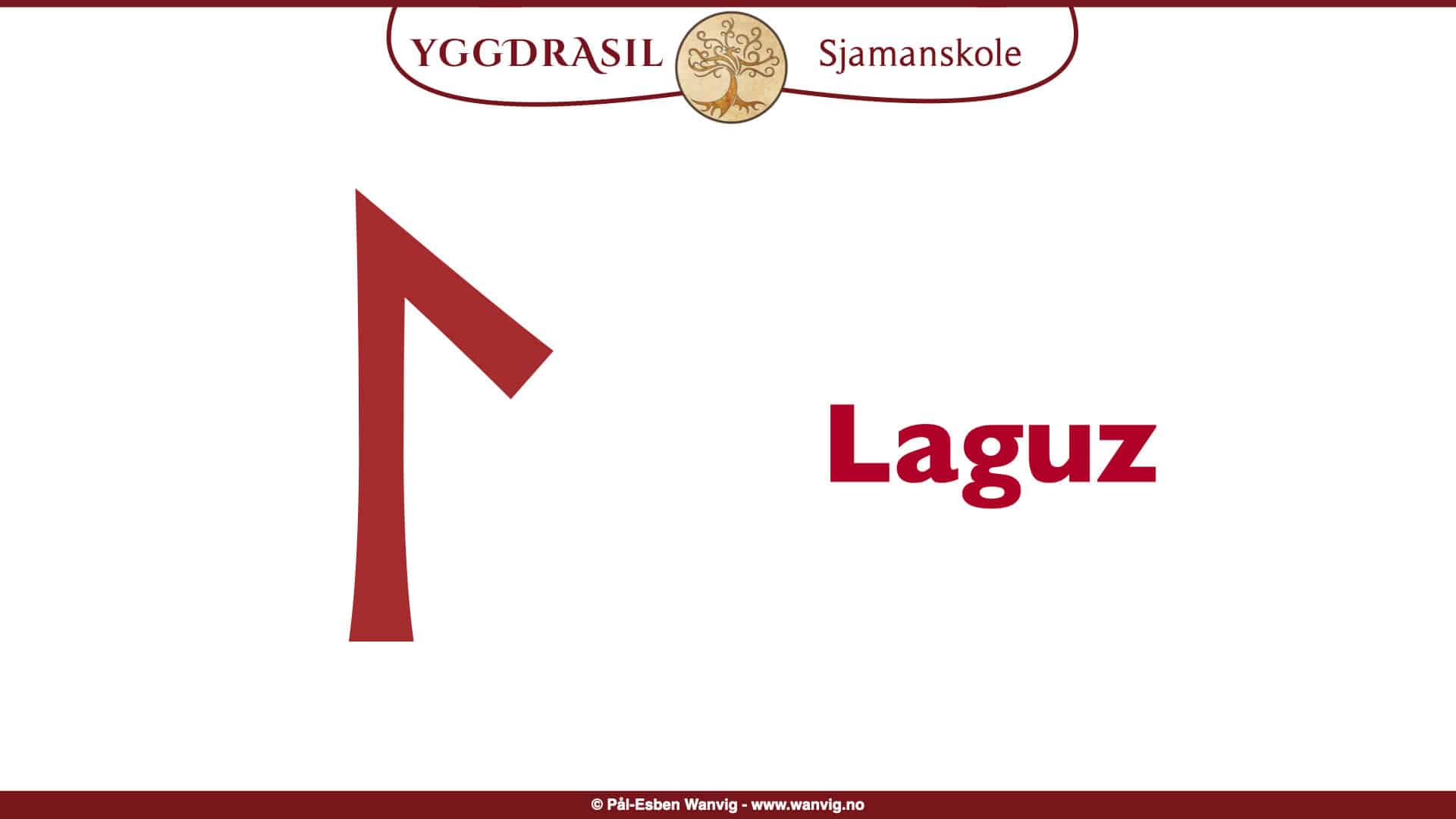
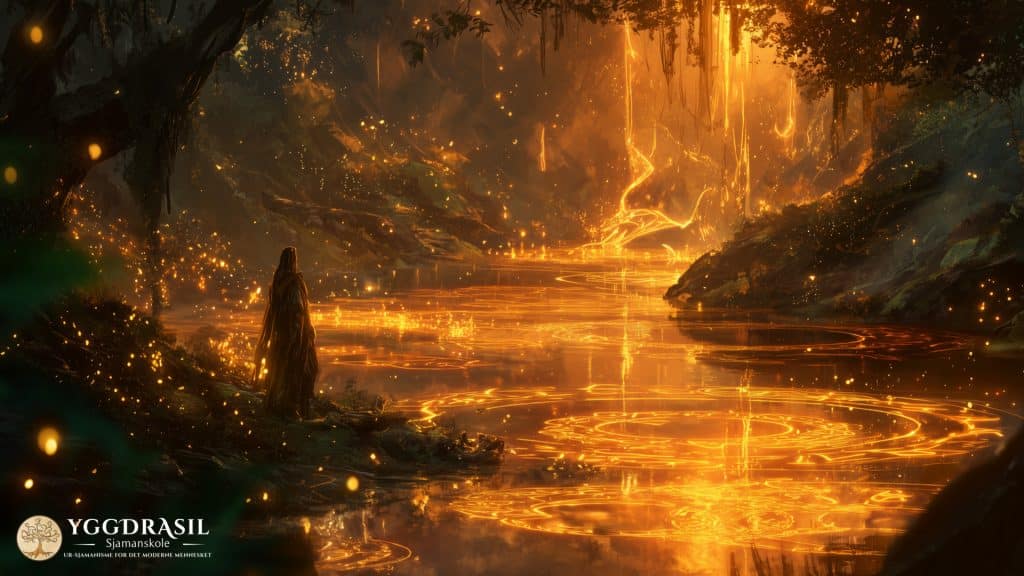
In the runic tradition, we find a beautiful reminder of this in the rune Laguz. Laguz represents the natural flow of water — the River of Life — the river every human being travels through in this physical existence. This river is shaped by the rhythms of nature and the universe. It is never completely still, never exactly the same, yet it always carries us forward.
Our task is not to fight our way against the current by resisting or ignoring these rhythms.
Our task is to learn to flow with the River of Life — with wisdom, humility, and an open heart.
Wu Wei — When Action Becomes a Natural Extension of Life Itself
In Taoist wisdom, there is a principle that resonates deeply with both Laguz and the River of Life: Wu Wei. It is often translated a bit dryly as “effortless action,” but its true meaning is far more deep, poetic, and intuitive.
Wu Wei is the art of letting action arise naturally from life’s rhythms, instead of pushing, forcing, or trying to control reality through sheer willpower.
It is the ability to be awake, present, responsive —
to listen, feel, and meet life without inner struggle.
It is not passivity.
It is alignment.
When we practice Wu Wei, the constant inner resistance fades. We stop paddling desperately against the current and allow ourselves to be carried by life’s natural movement. And then something remarkable happens: decisions become clearer, resistance dissolves, and life opens with a quiet strength that feels deeply true.
Wu Wei is not just a Taoist ideal — it is a practical, grounded, and profoundly healing way to meet karma, polarities, and the River of Life. It is the art of living in harmony with the current that already carries you.
Loving the Rhythms — Even the Challenging Ones
The River of Life has many phases:
- gentle stretches that give you rest,
- harmonious waters that bring balance,
- and turbulent rapids that challenge you, shake you, and move you forward.
The point of life is not to avoid these polarities, but to learn to live in relationship with them.
To acknowledge them.
To use them as fuel for learning, growth, and evolution.
When you begin to understand these rhythms — and see that they are not enemies, but teachers — something essential shifts:
You begin to love the flow of life itself.
Not because it is always comfortable, but because it brings you exactly the experiences your soul came here to explore.
A Life Without Fighting the Current
There is no reason your life needs to be filled with unnecessary suffering. Most suffering arises because we treat the River of Life as an adversary — something to resist, control, or shape entirely according to our will.
But when you begin to open to the rhythms within and around you, something entirely different unfolds:
You begin to flow —
not like a passive leaf,
but like an awakened co-creator
who understands the current and moves with it.
This does not mean life becomes friction-free. It isn’t supposed to.
Polarities — the calm waters and the turbulent ones — are the fuel of learning and personal evolution. They shape you, teach you, strengthen you, and guide you from birth until death.
Karma as the Foundation of Meaning
Without karma — the consequence of your actions — there could be no meaning.
Meaning is born from growth, from integration, from learning, from movement.
Karma is not something that holds you back.
Karma is what makes growth possible.
Karma is what gives your experience depth.
Karma is what turns your life into a meaningful journey instead of a random sequence of events.
Life is not about avoiding polarities, but about living with them — accepting them, working with the tension they create, and using that tension as inspiration and motivation to learn and to live the life your soul came here to experience.
Pål-Esben Wanvig
A Teacher Is Essential
Learning to flow with the River of Life — to love your karma, understand it, and use it as your most loyal teacher on the soul’s journey — is, in theory, simple. In practice, however, it can be one of the most challenging processes you will ever undergo.
Not because you lack the capacity,
but because the ego will fight to keep everything exactly as it is.
The ego fears change more than anything.
It clings to the familiar — old patterns, old stories, old limitations — and it will do everything in its power to hold you there.
This is why we need guidance.
If you feel that the time has come to begin your Soul’s Epic Journey in this lifetime (see also the article “When Life Feels Empty and Without Meaning: Are You Ready to Begin Your Soul’s Epic Journey?”), then finding a skilled teacher is one of the greatest gifts you can give yourself.
A true teacher can hold space for you, mirror you, challenge you, and guide you into depths you cannot safely or fully reach on your own.
For this journey is the most important journey you will ever take.
Personally, it is one of my greatest joys to guide my students through a profound primordial shamanic development process — a journey that often shapes the very course of the rest of their lives.
It is a path that demands honesty, courage, and a willingness to change…
but what it gives back is extraordinary:
clarity, freedom, inner strength, and a deeper understanding of who you truly are.
A Journey Toward Setting Yourself Free
I hope that this brief and simplified introduction to this fascinating topic has sparked something within you — a quiet flame that inspires you to embrace your soul’s journey in an active, conscious, and wholehearted way. For the moment you can say, with honesty and openness, “This is my karma,” something profound begins to shift.
In that same moment, you are also saying:
“I am responsible for healing my karma.”
And that is when the real journey begins.
That is the moment you take your first true step into freedom — the freedom to release old patterns, grow beyond old limitations, and move toward the life your soul has always known you were capable of living.
This is the journey home to yourself.
And although no one can walk this path for you,
you can choose to begin it today.


