
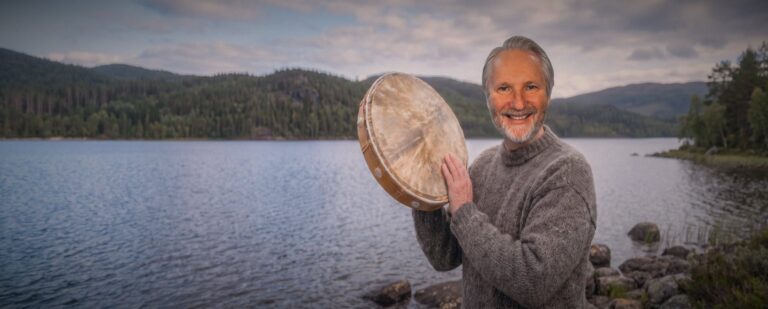
The Intelligence of Trees: Our Natural Guides to a Fulfilled and Happy Life

When you let your gaze wander among the trees and breathe in the air of the quiet forest, a door opens to the nature around you, and from there into an ancient wisdom that has stood firm for millions of years. Trees are something quite different from living features of the landscape; they are wise beings with an inner life and a wisdom that can teach us how we as human beings can live truthfully, meaningfully, and in harmony with ourselves and the world around us.
Come along on a journey of discovery into the world of trees: into the underground network that binds the forest together, and to their capacity for interplay, care, and unbroken growth. Through research, shamanic insight, and my own experiences, we look at what the intelligence of trees can teach us about balance, community, inner growth, and real quality of life.
From a shamanic perspective, nature holds the very blueprint for how we can live healthy, happy, and meaningful lives. Everything we need to know about balance, health, and inner harmony is already around us: in the forest, in the wind, in the stones, and not least in the trees.
In the article “Forest Bathing: Nature’s Medicine Against Stress, Anxiety, and Burnout,” I shared both the shaman’s insight and modern research showing why regular walks in the woods and fields, without an agenda, can have such a deeply positive effect, physically, mentally, and spiritually.
The research findings are astonishing:
- Stress and depression are significantly reduced1234
- Frustration and anxiety are eased5
- Children with ADHD concentrate better6
- Blood pressure can be lowered naturally7
- Sleep improves8
- Creativity increases8
- Energy levels rise8
- Mood improves8
- The immune system is strengthened through more natural lymphocytes8
- Recovery after illness and surgery is faster8
- People with burnout and exhaustion disorder see improvement9
The forest does more than influence us. It heals us.
Now we go deeper. We will listen to the trees themselves, to the ancient intelligence that lives in them, and see what they can teach us about healthy living and about the path to a truly fulfilled life.

The intelligence of trees
Trees are far wiser than we humans when it comes to the art of living itself: how to live healthily, in balance, in community, and with deep meaning. While we often struggle through life with stress, the pressure to perform, and inner restlessness, trees live in a quiet, unshakable wisdom that has developed over millions of years.
Since the 1990s, Professor Suzanne Simard of the University of British Columbia has uncovered some of the most important research findings we have on the intelligence of trees: their relationships, their cooperation, their communication, and their social systems. If you were fascinated by the connection between people and nature in the film Avatar, the film was inspired by the insights of researchers like Simard.
Trees are far wiser than we humans when it comes to the art of living itself: how to live healthily, in balance, in community, and with deep meaning.
Pål-Esben Wanvig
In her TED talks410, she describes how trees communicate through the so-called wood wide web, a network that is unimaginably more complex than our own World Wide Web. The same insight is central to the documentary Intelligent Trees11 and to the book The Hidden Life of Trees: What They Feel, How They Communicate3, written by the German forester Peter Wohlleben. Simard’s own book is called Finding the Mother Tree.
At the center of the network stand the oldest and largest trees, often called mother trees. Their role is to be central hubs that support and guide the life around them. They pass nourishment, information, and protection on to thousands of trees in their community.
What we see above ground, the trunks, branches, and crowns, is only a small fraction of reality. The most fascinating part happens out of sight: an exceptionally finely branched communication network below ground, where roots and mycorrhizal fungi live in a symbiotic partnership. The system binds the whole forest together. It enables the trees to warn each other, share nourishment, help sick neighbors, send danger signals, and create a community that functions as a single living organism.
Trees do not merely live in nature. They are nature’s living intelligence, and they carry within them a wisdom that can change our lives too.

What trees can teach us
Trees are not, first and foremost, majestic creatures. They are living masters who show us how a healthy, happy, and meaningful life is actually lived in practice. By studying their rhythms, their relationships, and their wisdom, we can discover principles of life that are just as valid for us humans as for the whole forest34101211.
Some of the areas where we can learn from the trees on the way to understanding what a healthy, happy, and meaningful life is really about:
- Flexibility: the art of bending without breaking. A tree that refuses to yield to the wind will sooner or later snap in the storm. The same goes for us. When we become too rigid in our mindset, too stuck in our beliefs, or lock ourselves into an “I’m right” mentality, we create fertile ground for stress, anger, frustration, and illness.
Just as the strength of trees lies in their ability to sway, our strength lies in our ability to be flexible, in body, mind, and biochemistry alike. A nervous system that cannot find its way back to balance (homeostasis) easily becomes overloaded and vulnerable. Flexibility is not a weakness. It is wisdom. - Community and social networks: we are made to belong. A tree that stands all alone dies sooner. That is one of nature’s most brutal, but honest, principles. Trees thrive and grow in community. They lift each other up, protect each other, and share nourishment with each other.
For us humans, this is just as true: community is pleasant, but above all it is vital. Social isolation is one of the strongest risk factors for illness, while good relationships are among the most healing things there are. - Communication: the heart of all harmony. Trees communicate without pause through their underground network of roots and mycorrhizal fungi, in a language everyone understands. They share information about dangers, nourishment, and needs. No one shouts. No one dominates. They communicate in order to understand, and to protect the whole.
Many human conflicts arise from a lack of communication: misunderstandings, hasty conclusions, a lack of respect, or an inability to listen. Most conflicts and wars arise this way. Trees remind us that real communication is about creating connection, not about winning. - Competition: community as the first priority. In the forest, nothing is about being the biggest or the best. The strongest trees support the weakest, so that the whole forest can grow in balance. The health of the community always comes first.
In our culture it is the other way around: the individual matters more than the community, and competition, often driven by fear, creates stress, anxiety, and suffering. Trees show us that we grow stronger together, not on our own. - Take it easy: nature’s rhythm is in no hurry. Trees live in a time frame that is completely foreign to us humans. They never hurry. They don’t push. They don’t chase. In the forest, speed is a threat, not a virtue.
For those of us who have ended up in the hamster wheel of demands, speed, and achievement, the trees are gentle but clear teachers: life does not blossom in constant haste. Chaos, racing thoughts, and stress are the recipe for both physical and mental suffering. The article “This Could Be Your Most Important Decision: Learn How to Live a Happy and Meaningful Life in Your Current Situation” goes into this in more detail. - Unbroken growth and expansion: always toward the light. From the moment the first shoot breaks through the soil, the tree reaches toward the light, and it goes on doing so until it draws its last breath. Growth is not a phase in a tree’s life. Growth is the tree’s life.
Trees show us that continuous, healthy expansion is natural; indeed, it is essential to life. And this applies to us too, as the article “Our Inner Expansion: Why Do We Want to Become Something More and Better Than We Are?” describes. Further on, we will see why this inner movement is the foundation of a happy, meaningful, and sustainable human life.
Lifelong growth is our nature
If you could ask a tree the question
“Why do you keep growing without pause, from the time you sprout until you die?”
the tree would not even understand what you meant. Growth is not something a tree chooses. It is its nature. It is the very way it exists.
The same is true of us humans, but many of us forget it.
We often think of growth as something that happens now and then, when life pushes us, or when we decide to “take charge.” But the truth is that continuous growth is just as natural for us as it is for the trees. When we develop a little every day, something deep happens on the inside:
- We feel more alive
- We experience greater meaning
- We build a stronger sense of self-worth
- We feel more complete, day by day
This is not about physical growth. It is about the inner development that shapes who we are: the mental, emotional, and spiritual maturing that makes us more fully ourselves.
When you look at a tree stretching toward the light, you may recognize something from your own life.
Think back to periods when you were actively developing, when you were learning, growing, challenging yourself, and exploring new sides of who you are.
How did it feel?
For many people, such periods bring:
- greater inspiration
- more energy
- a sense of meaning
- the joy of mastery
- joyfulness and enthusiasm for life
Compare that with times in your life when the days ran on autopilot, when everything was about “functioning,” getting things done, and keeping the wheels turning, while growth and development were pushed aside.
How did that feel?
Most people find that the absence of growth creates emptiness, stagnation, or a feeling of being disconnected from themselves. Not because something is “wrong,” but because we are living against our nature.
The trees remind us of a simple but important truth:
Most people find that the absence of growth creates emptiness, stagnation, or a feeling of being disconnected from themselves. Not because something is “wrong,” but because we are living against our nature.
Pål-Esben Wanvig
Life blossoms only when we grow.
And when we forget this, we lose something crucial, something we are actually born with.

One of the shaman’s most important tasks
As a shaman, one of my most central tasks is to help people back to nature’s healthy rhythms, the same rhythms that have carried life on this planet for millions of years. When a person rediscovers these rhythms and begins to live in tune with them, something deep happens:
They come into resonance with their true nature, their essence, and the quiet wisdom of the soul.
The trees show us one of these rhythms very clearly:
Continuous growth from birth to death is the very pulse of life.
From the moment we are born until the day we die, we are made for development, learning, broadening, and inner expansion. I go into this in more detail in the article “Our Inner Expansion: Why Do We Want to Become Something More and Better Than We Are?”
When we follow that rhythm, when we let ourselves grow and mature a little every day, we create the foundation for fullness, abundance, and deep meaning in life, just as we see in the forest.
But when we resist it, when we come to a standstill or close ourselves off, stagnation sets in. And stagnation leads to emptiness, frustration, stress, illness, and a lost spark of life.
Why this gives such good results
One of the main reasons I often achieve such good results with people in difficult phases of life is that I get them started on an active growth process right from the beginning.
Not as pressure, but as a revival.
Because when a person begins to grow again, even in small steps, the spark comes back. New perspectives open up. Hope awakens. And life begins to breathe again.
The article “To Kindle the Spark of Life, We Need Hope and a Positive Outlook on Life” goes deeper into this.
The consequence of a lack of active growth
When a person stops growing, something quiet, but deeply serious, happens on the inside. Life begins to run on repeat. The days become the same. The thoughts become the same. The feelings become the same. Little that is new comes along to awaken curiosity, spark, or vitality.
Change stops coming.
Challenges disappear.
New impulses dry up.
The blood no longer rushes with inspiration, passion, insight, or the small “wow” moments that expand life. And the older we get, the easier it is to become set in the familiar and comfortable:
the same people
the same tasks at work
the same food
the same opinions
the same evenings with tacos and Netflix
A life without fresh play, change, and positive impulses gradually loses its colors.
Play is not reserved for children. It is one of the most fundamental human sources of inspiration, joy, and meaning. When life becomes flat and routine, our motivation, our creativity, and our interest in what used to give us energy also sink.
And in the void, unhealthy compensatory patterns and addictions often arise:
more sugar, more junk food, more alcohol, more social media, more screen time, more of everything that brings a brief moment of relief but never fills the real need.
Because what we really long for is not more stimulation,
but more growth.
Boredom and illness
The more monotonous our life becomes, the bigger the void inside. And in that void, boredom thrives, a state that research links to an increased risk of depression, anxiety, addiction, stress, and even heart disease131415.
Boredom also makes us less flexible and less tolerant. We have all seen people who automatically reach for their smartphone in every spare moment. Try interrupting them, and notice the reaction. It says it all.
Many of the people I meet who struggle with boredom find it hard to admit. Partly because it is so common to spend several hours a day on social media and streaming services. But beneath the surface, something important is going on:
Every time we scroll, the brain hunts for something new.
The hunt activates the brain’s “novelty center,” which in turn triggers the reward system and gives a little dopamine kick, a moment’s feeling of well-being. And the moment the dopamine hits the system, the limbic brain says: “More.”
This is how a dopamine loop is created, a dependence on constant external stimulation16. Many people think they surf the web because it’s “fun,” but in reality, it is often an attempt to make up for a life that lacks inspiration, pulse, and meaning.
But there is also good news:
Many people think they surf the web because it’s “fun,” but in reality, it is often an attempt to make up for a life that lacks inspiration, pulse, and meaning.
Pål-Esben Wanvig
Boredom can be a friend.
It can be a gentle but clear warning that something needs to change. It tells us that we need new impulses, new growth, new movement, and that our soul longs to wake up a little more to life again.
Boredom is not a sign of weakness.
It is a call to development and growth.

What we regret most just before we die
The five things we regret most just before we die, as documented by the palliative care nurse Bronnie Ware17, are these:
- I wish I’d had the courage to live a life true to myself, not the life others expected of me.
- I wish I hadn’t worked so hard.
- I wish I’d had the courage to express my feelings.
- I wish I had stayed in touch with my friends.
- I wish that I had let myself be happier.
These sentences carry sorrow, but they also carry wisdom.
They show us which path leads away from regret, and which path leads us home to a life that actually feels lived.
The more we take the trees’ wisdom about continuous growth to heart, the more securely we stand in ourselves. Then it becomes easier to develop, change course, and create the life we long for deep down, without being stopped by society’s expectations that the most important thing in life is to “function.”
You don’t have to wait until the end of your life to realize what really matters.
There is no reason to meet death with regret.
Life is here now, in this moment, and it is never too late to begin living more in tune with yourself.
Let the quiet, patient wisdom of the trees show you the way.
Life is here now, in this moment, and it is never too late to begin living more in tune with yourself.
Pål-Esben Wanvig
Let them inspire you to take the first step toward a life you can later look back on with warmth, pride, and gratitude.
Tips for understanding the wisdom of trees
A few simple tips you can use to come into closer contact and resonance with the wisdom and rhythms of the trees:
- Make regular forest bathing a priority.
Give yourself time in the forest often. Silence, fresh air, and nature’s energy do something deeply fundamental to both body and soul. In the article “Forest Bathing: Nature’s Medicine Against Stress, Anxiety, and Burnout,” you will find more practical advice on getting the most out of those moments. - Protect the trees and the forest.
Trees cannot defend themselves. They depend on us to be preserved and respected. Taking care of the forest is also taking care of ourselves. - Learn about the life of trees through modern research.
Science gives us a fascinating insight into how trees communicate, cooperate, and create complex communities of life. When we understand this, our respect grows, and our connection grows with it. - Learn nature’s rhythms through the shaman’s perspective.
To understand the deeper wisdom of the trees, and what cannot be measured, you need guidance from a qualified shaman. In the article “ABC Guide to Finding Your Spiritual Teacher,” you will find advice on how to find a trustworthy and experienced mentor. - Share your insight with others.
Knowledge grows stronger when it is shared. Talk about the wisdom of the trees, invite others out into the forest with you, and help awaken a greater awareness of the value of nature.
The more you learn to understand and live by the rhythms of the trees, the more alive, meaningful, and inspiring your life becomes. It is not always easy; after all, we have been taught to overlook nature both within us and around us. But the reward is enormous.
I am a living example of this myself.
Before my collapse in 2003, I thought I understood what life was about. I did everything “right,” but it led me into illness, misery, and a pervasive emptiness. When I began my shamanic journey in 2004, a whole new world opened up:
I began to understand what happens when you live in tune with nature’s rhythms.
I saw the connection between my inner life and nature’s ancient wisdom.
And slowly but surely, my life was transformed in ways I could never have imagined, with deeper meaning, more joy, more harmony, and an inner joyfulness that once seemed unthinkable.
If you feel that the time has come to go deeper into this ancient wisdom, and truly open the door to nature’s gifts, I am here to help you.
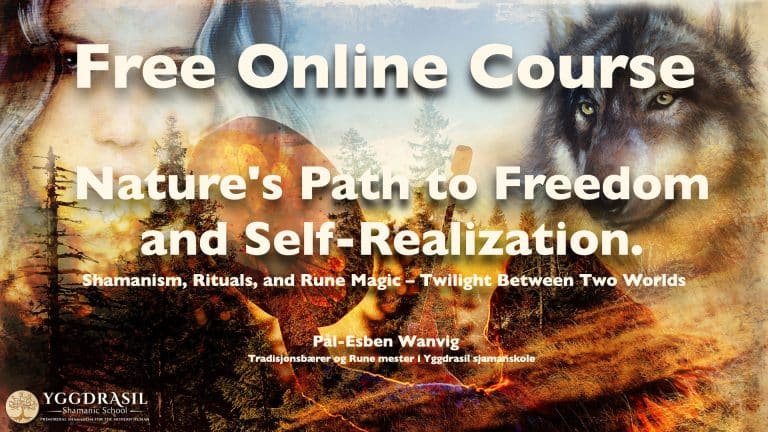
Do you want to go deeper? On my blog and in the podcast The Journey to Self-Realization, we explore the topics in this text in more depth. If you want to walk the path yourself, it begins at the Yggdrasil Shamanic School with our free online course on primordial shamanism: Nature’s Path to Freedom and Self-Realization. No path could begin more simply. How far it reaches is up to you.
This content does not replace professional medical help from a doctor or other health professional, and it is not intended as medical treatment. If you are ill, always see a doctor first.

Sources
- “Take Two Hours of Pine Forest and Call Me in the Morning,” Outside, https://www.outsideonline.com/1870381/take-two-hours-pine-forest-and-call-me-morning. ↩︎
- “The influence of urban green environments on stress relief,” Journal of Environmental Psychology, https://www.sciencedirect.com/science/article/abs/pii/S0272494413000959. PDF: http://www.tlu.ee/~arro/Happy%20Space%20EKA%202014/urban%20green_stress%20Ojala%20jt.pdf. ↩︎
- Peter Wohlleben: The Hidden Life of Trees: What They Feel, How They Communicate. ↩︎
- Suzanne Simard: “How trees talk to each other,” TED, https://www.ted.com/talks/suzanne_simard_how_trees_talk_to_each_other. ↩︎
- F. E. Kuo and W. C. Sullivan: “Aggression and violence in the inner city: effects of environment via mental fatigue” (2001), https://is.muni.cz/el/1423/podzim2011/HEN597/um/Readings_Env_Psy/Kuo__F.E.__Sullivan__W.C.__2001_.pdf. ↩︎
- “Children With Attention Deficits Concentrate Better After Walk in the Park,” Journal of Attention Disorders, https://www.researchgate.net/publication/23192434_Children_With_Attention_Deficits_Concentrate_Better_After_Walk_in_the_Park. ↩︎
- “Blood pressure-lowering effect of Shinrin-yoku (forest bathing): a systematic review and meta-analysis,” NCBI, https://www.ncbi.nlm.nih.gov/pubmed/28814305. ↩︎
- “The Science of Nature & Forest Therapy,” https://web.archive.org/web/20211020194646/https://www.natureandforesttherapy.org/about/science. ↩︎
- “Personer med utmattningssyndrom mår bättre av skogsbad” [People with Exhaustion Disorder Feel Better from Forest Bathing], SVT, https://www.svt.se/nyheter/vetenskap/personer-med-utmattningssyndrom-mar-battre-av-skogsbad-1. ↩︎
- “Nature’s internet: how trees talk to each other in a healthy forest,” TEDx Seattle, https://tedxseattle.com/talks/natures-internet-how-trees-talk-to-each-other-in-a-healthy-forest/. ↩︎
- Intelligent Trees, a documentary featuring Dr. Simard, among others, https://www.intelligent-trees.com/. ↩︎
- Michael Pollan: “The Intelligent Plant. Scientists debate a new way of understanding flora,” The New Yorker, https://www.newyorker.com/magazine/2013/12/23/the-intelligent-plant. ↩︎
- “Nature experience reduces rumination and subgenual prefrontal cortex activation,” PNAS, https://www.pnas.org/content/112/28/8567. ↩︎
- “City living and urban upbringing affect neural social stress processing in humans,” NCBI, https://www.ncbi.nlm.nih.gov/pubmed/21697947. ↩︎
- Peter Enticott: “What does boredom do to your brain?” School of Psychology, Deakin University, https://this.deakin.edu.au/self-improvement/what-does-boredom-do-to-your-brain. ↩︎
- Daniel J. Levitin: “Why the modern world is bad for your brain,” The Guardian, January 18, 2015, https://www.theguardian.com/science/2015/jan/18/modern-world-bad-for-brain-daniel-j-levitin-organized-mind-information-overload. ↩︎
- Bronnie Ware: “The Top Five Regrets of the Dying,” https://bronnieware.com/blog/regrets-of-the-dying/. ↩︎
Nature’s Path to Freedom and Self-Realization
Curious about what primordial shamanism really is, behind the mystique and the misconceptions? In this short online course I tell the story of my own path from skeptical engineer to teacher of primordial shamanism, and give you a first introduction to what I teach: what shamanism and primordial shamanism are and are not, how rituals and rune magic are used in practice, and why the longing for growth matters so much for a good life.
The lessons are recorded in Norwegian; the English version will be ready in November or December 2026. Leave your email on the course page, and I will tell you when it is.