


Learn How to Love Your Karma
Karma is one of the most misunderstood concepts in our culture. Many people associate it with punishment, burden, or something they would rather be rid of, a kind of cosmic ledger that judges our actions. But what if karma is instead one of the most valuable resources you have? What if it is the very foundation that makes a meaningful life possible?
Here you will meet karma in a completely new way: as an inner guide, a source of clarity, and a quiet teacher that shows what your soul wants to understand and grow through. You will gain insight into:
- what karma really is, and why it has nothing to do with punishment or reward,
- how karma is shaped by your actions, your intentions, and your inner motivation,
- how you can build a friendship with your karma, so that it becomes a compass for growth, freedom, and inner harmony.
When you stop resisting and instead learn to cooperate with life as it unfolds, an exciting change takes place: things begin to flow more easily, insight arises more clearly, and you gain access to a power that comes from a truer and deeper place within you.
Loving karma?
To many people, that sounds completely unreasonable. But the truth is far more liberating than that.
You will get to see karma through the eyes of a shaman: what karma really is, why it exists, and how it is in fact the very driving force that makes a meaningful human life possible.
Once you understand the true nature of karma, it can go from feeling like a burden to becoming one of your most important sources of clarity, growth, and freedom.
What is karma, really?
The most common misunderstanding is that karma is a kind of cosmic reward-and-punishment system.
But that is completely wrong.
Karma has nothing to do with punishment or reward.
Karma is quite simply a vast, living storehouse of memory: the sum of all your choices, actions, reactions, and experiences, in this life and in previous incarnations. It consists of the traces of who you have been, how you have lived, and what energy you have created in your encounters with the world.
Karma is not our enemy.
Without karma, we could not exist in human form. Without karma, all life would slide back into pure oneness, without contrasts, without choices, without experience, without any possibility of growth. Karma is the very structure that makes human life possible.
When you learn to relate wisely to your karma, it becomes one of your greatest resources. If you do not understand it, or if you fight against it, the same mechanism can lead you into stagnation, suffering, and limitation.
Karma means action
The word “karma” comes from Sanskrit and means action.
But this is not first and foremost about what you do physically.
Karma consists of four dimensions of action:
- Physical action
- Mental action
- Emotional action
- Energetic action
Everything you do, think, feel, or send out as energy, both consciously and unconsciously, awake and asleep, leaves an imprint within you. Like footprints in the sand, these imprints remain as small strings of information in what might be called your “karma cloud.”
Every thought.
Every feeling.
Every intention.
Every impulse of life energy.
Everything is stored.
Together, these traces make up your karma: the memory of how you have moved through your lives and the ripple effects this has created.
Intention creates karma, not the action alone
The most important thing in the law of karma is not what you do, but why.
Your intention, the motivation behind the action, is what carries the greatest power.
Two people can perform exactly the same action and yet create completely different karma, depending on what was going on inside them when they did it. That is why karma is not moral, judgmental, or “fair” in the human sense. It is neutral, precise, and deeply intelligent.
Karma mirrors only one thing:
How you met life, outwardly and inwardly.
When you understand this, karma stops being a frightening concept.
Instead, it becomes a map, a guide that helps you understand where you are, what you carry with you, and what your soul wants to learn in this life.
Karma is the only universal concept that describes the real and complex roots of all human suffering. But karma is not an enemy.
Pål-Esben Wanvig
In the podcast The Journey to Self-Realization, Amina and I go into karma in depth in episode 22, “Karma – The Choices That Shape Your Life,” and episode 23, “Karmic and Dharmic Synchronicity: The Invisible Rules of the Game That Govern Your Life.”
Why matter cannot exist without karma
Everything that exists in the physical world, from the smallest atom to the largest galaxies, depends on karma. Without karma, matter could not hold its shape, its properties, or its stability. This is how it is understood in the yogic tradition, which describes eight types of karmic memory:
- Elemental memory
- Atomic memory
- Evolutionary memory
- Genetic memory
- Personal karmic memory
- Sensory memory
- Unconscious memory
- Conscious memory
The first four make up the collective karma, the memory on which the whole universe rests. The last four are the individual karma, which shapes the experiences of each and every human being.
It is this enormous field of memory that makes life largely cyclical and repetitive. This is the very engine of evolution: that nature can keep building, layer upon layer, generation after generation. But the same memory also creates a kind of inner “straitjacket” in which we unconsciously repeat the same patterns over and over again.
Only when you learn to create distance between yourself and this karmic memory, when you are no longer completely identified with it, do you gain access to something greater: the existential reality, the soul aspect of who you are.
How free will arises
Your free will is not a given.
It arises because you experience yourself as separate, as an “I.” And this sense of separation springs from karmic memory. You see yourself as a single individual because your memory tells you that you are one.
That is why it is entirely correct to say:
Karma is memory.
What you call “me” is essentially a collection of experiences and imprints from your entire past, not only from this life, but from all the lives that have shaped you. Everything you have ever been, from simple single-celled life forms to the complexity of today, is stored in your inner memory bank, the karmic “cloud.” And you carry this archive with you from incarnation to incarnation, as a foundation for growth, learning, and development.

Why no matter can exist without karmic memory
It is actually easy to understand why the universe cannot exist without these karmic memories.
Think of atomic memory, the precise “architect’s drawing” that determines how all atoms are to be structured, how the elements of the periodic table work, and how matter behaves.
Without this atomic karmic memory:
- trees could not grow
- animals could not live
- human beings could not exist
- stars and planets could not form
The universe would be pure, unstructured energy, or a state of pure oneness, as everything was before the “Big Bang” some 14 billion years ago.
And when a human being is able to enter this state of oneness consciously, dissolving their identification with their karmic memory, it is called true spiritual awakening or spiritual enlightenment.
Your free will determines your karma, and your free will arises from your identification with separateness.
Pål-Esben Wanvig
Evolution, expansion, and growth
To truly understand human nature, we have to lift our gaze and see ourselves in the great cosmic picture. The entire universe, everything that exists, has been in uninterrupted evolution and expansion since the immense breakthrough many call the “Big Bang” around 14 billion years ago. Stars, galaxies, planets, and our own Earth have followed the same rhythm of constant movement, development, and change.
And we humans are no exception.
The same driving force that makes the universe expand is also found in us. It lies in our nature. We are made for growth, for development, for reaching toward something more than what we were yesterday. Evolution lives in every single cell of our body, in our impulses, in our curiosity, in the urge to learn, understand, create, love, heal, and become more whole human beings.
Seen from an evolutionary perspective, it becomes clear:
Human nature longs for expansion.
We instinctively seek to become more, and better, than what we already are.
This is no flaw in us. It is our essence.
There is more about this in the article “Our Inner Expansion: Why Do We Want to Become Something More and Better Than We Are?”
Seen from an evolutionary point of view, our human nature longs and searches for continuous development and expansion. It wants to become something more and better than what it already is.
Pål-Esben Wanvig
Nature’s rhythms and growth
If you could ask a tree, “Why do you grow every single day, from the moment you sprout until you die?” the tree would not understand the question. For growth is not something it chooses. It is the very nature of the tree. It cannot do anything but grow.
Many people forget that the same is true for us.
Daily growth is part of our fundamental nature. When we learn a little, understand a little more, open our heart a little more, or heal a small piece of ourselves every day, we move forward. And progress, no matter how small the steps, is one of the most important prerequisites for true meaning.
Why?
Because growth gives us a deep sense of self-worth. It gives us the experience of fulfillment, of becoming more ourselves, more whole, more alive. Little by little, it builds a quiet but strong sense of inner completeness.
This growth is not about the body.
It is about you as a human being.
Mental growth. Emotional growth. Spiritual growth.
It is this inner development, this daily movement toward what the heart and the soul long for, that makes life blossom.
Meaning depends on growth
When nothing new happens in our lives, when the days blur into one another and everything carries on in the same rut, it is easy to sink into a pattern in which the spark gradually goes out. The small moments of joy, delight, and inspiration that once gave our days color slowly wither away. Soon we are stuck in a repetitive existence where one year resembles the next.
And then something paradoxical happens:
Even though we may have “everything” we need, such as a job, a family, security, and material goods, we can feel a growing emptiness inside. A subtle unease. A feeling that something is missing, without quite knowing what.
This is often where the midlife crisis creeps in, not as a mistake, but as nature’s own alarm clock. A strong signal that the soul longs for more depth, more truth, and more growth. There is more about this in the article “The Midlife Crisis: Nature’s Own Invitation to Spiritual Awakening.”
Many of the people who come to me describe exactly this:
A feeling of being stuck.
A gnawing frustration.
A quiet, inner listlessness and emptiness that does not go away, even when life looks good on the outside.
These people come from all walks of life. But almost all of them have one thing in common:
They have no projects in life that give them daily growth, development, and direction. No living processes that lift them, inspire them, or challenge them to become a better version of themselves.
In other words:
Their personal evolution has come to a standstill.
And when growth stops, meaning begins to disappear.
Keep in step with nature’s healthy rhythms
One of the most fundamental rhythms in the entire universe is the same rhythm that has carried all life since the dawn of time: a continuous movement of growth, improvement, expansion, and evolution. Trees, animals, and all other living beings follow this rhythm instinctively. They are one with their nature.
The only living being that has lost its connection to the rhythm is the modern human being.
As a shaman, one of the most important things I do is help people back to nature’s own pulse. Nature works like a tuning fork: when we listen to its wisdom, we can “tune” our inner rhythms and bring them into harmony with the deep balance that life is built on.
The seasons are perhaps the clearest example: summer, autumn, winter, and spring, an eternal circle in which activity, rest, and renewal follow one another in a perfect dance. The trees do it. The animals do it. The earth does it.
But we humans?
We try to live in eternal summer.
We keep ourselves in constant activity, at a high pace, with high stress and few breaks, day after day, year after year. Body and mind rarely get the chance to sink into winter’s natural rest and recharging. The result can be anything from chronic stress and anxiety to depression, hormonal imbalance, and burnout.
If you feel tired or overwhelmed, or are in the middle of burnout, it is valuable to reflect on this:
- How do you meet the rhythms of the seasons in your own everyday life?
- Where is the balance between summer and winter in your life, between activity and rest?
- Do you give yourself enough breaks to breathe, let your shoulders drop, and regenerate?
- How often do you set boundaries, loving, clear boundaries, that protect your energy?
When we begin to live more in tune with nature’s rhythms, something profound happens.
We feel more calm.
More flow.
More meaning.
More inner fulfillment.
And conversely:
The more we live in disharmony with nature’s balance, the more frustrating, heavy, and meaningless life feels. Nature is the blueprint. It shows us what our own inner rhythms really are, because we ourselves are a product of nature.
The most effective way back to this harmony is often a shamanic development process with a competent teacher. Shamanism has deep roots in nature’s rhythms, and it opens the doors to a path in life where body, mind, and soul can once again begin to breathe in step with the healing pulse of Mother Earth.
One of the most fundamental rhythms that permeates all life is the constant movement toward growth, improvement, expansion, and evolution. Everything in nature follows this rhythm, except the modern human being, who has often lost touch with it.
Pål-Esben Wanvig
Karma is a natural rhythm
Karma is no threat, no mystery, and no judgment hanging over us. Karma is a natural rhythm, perhaps the most important of all the rhythms pulsing through the material and metaphysical world of the universe. Regarding karma as an enemy makes as little sense as seeing winter as an adversary. Both are part of nature’s cycle. Both play an absolutely necessary role.
Karma is woven into the very foundation of your existence. Without karma, without consequence, learning, experience, and development, neither you, nor I, nor anything else living could exist. Matter could not take form. Life could not unfold. There would be no journey, no evolution, no growth.
So the big question becomes:
Why has the creative force behind all that lives made karma one of the most central rhythms of the universe?
Why is this dynamic so fundamental to everything that exists, including you and me?
Several thousand years ago, the Taoists gave us a beautiful image of this through the teaching of yin and yang. This ancient wisdom describes the fundamental pulse of life: the movement between expansion and contraction, activity and rest, light and darkness, learning and integration.
Karma follows exactly this rhythm.
It shows us which areas need attention, which experiences are asking to be understood, and where the soul longs to grow. Karma is not here to stop you. It is here to tune you, in the same way the seasons tune nature.
When we begin to see karma as a rhythm, and not as a punishment, a whole new understanding opens up:
Karma is an ally.
A guide.
An inner pulse that helps you home to yourself.
Fields of tension and karma
Yin and yang are the very heartbeat of the universe, nature’s eternal dance between opposites. The two forces describe the duality of existence, not as enemies, but as complementary parts of the same whole, differences that need each other to create balance.
Yin carries qualities such as darkness, rest, depth, stillness, and the feminine.
Yang carries light, action, drive, expression, and the masculine.
The two are never separate. They flow into each other as day becomes night, and night becomes day. One does not exist without the other. They support, balance, and transform each other in a continuous movement.
The iconic yin-yang symbol, the circle divided by a curved line, shows exactly this: a living interplay, a relationship in which two seemingly opposite forces hold each other in unbroken equilibrium. Between them, a field of tension forms.
And it is precisely in this field of tension that karma arises.
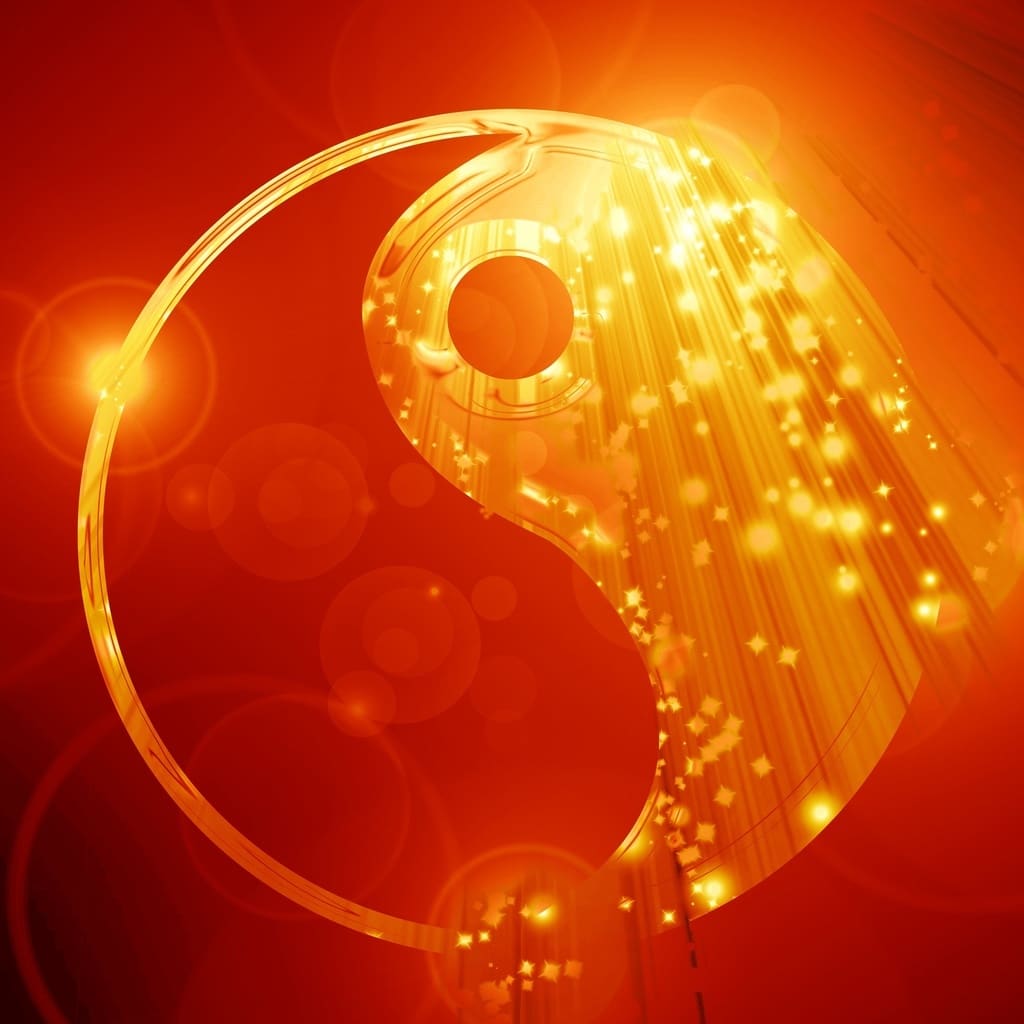
Karma, born in the space between two poles
Think of an area of your life where you are facing a challenge. It can be anything from inner unrest to relationship problems, finances, difficult emotions, or physical symptoms.
If you look more closely, you will feel the tension between two poles:
- low mood ↔ the longing for joy
- fear ↔ the wish for safety
- stagnation ↔ the longing for growth
- control ↔ the need to let go
This field of tension is not random. It is a space for learning, a place where something in you is trying to develop.
How you meet this space, consciously or unconsciously, awake or asleep, is what creates your personal karma.
Not as punishment, but as an echo of the way you find your path through the tension between the two poles.
Yin and yang describe the flow of forces between two poles. What arises between these poles is a field of tension, and the consequence of this field of tension is karma.
Pål-Esben Wanvig
The field of tension: the foundation of all growth
Without such fields of tension, learning would be impossible.
Without contrasts, we could not experience anything at all.
That is precisely why the soul chooses to incarnate in a physical life:
To learn. To grow. To experience.
To move through polarities and discover its own inner power.
The material world, with its limitations of time, space, and body, works as a kind of straitjacket for the soul, but it is a necessary straitjacket. It is precisely through limitation that experience can arise.
A life without polarities, without tension, without inner friction …
… would be a life without learning.
Without meaning.
Without direction.
Without a spark.
It is the tension between yin and yang that creates opportunities for development, and karmic patterns that lead us back to what needs to be understood.
Learn to make friends with your karma
Karma is not your adversary. Karma is the very foundation of your existence in a body, and the reason your soul could enter this life at all. That is why it is neither necessary nor wise to see karma as an enemy. Quite the opposite: when you understand it, karma can become one of your most important allies.
But to make friends with your karma, you first need a shift:
from being steered by your karma on autopilot …
to taking the helm yourself.
When karma steers you unconsciously, life often feels like a ship in a storm without rudder or sails. You are thrown around by events, reactions, and old patterns you have no clear view of. The same problems come back again and again, in relationships, health, finances, work, or inner balance. These are karmic cycles: recurring patterns that grow stronger and stronger when they are ignored.
Making friends with karma therefore means taking responsibility. Not for everything that happens to you, but for how you meet it.
Take responsibility for the fields of tension: the key to freedom
Every single day, you stand in small and large fields of tension, polarities that pull at you, challenge you, and at the same time open the way to growth.
Imagine that you end up in a conflict with your partner or a good friend. Inside, you clearly feel the tension between two poles, for example between hurt and the wish for closeness, between fear and the need for safety.
If you stand in this field of tension on autopilot, steered by old habits, patterns, and subconscious programs, you will often react destructively: perhaps with criticism, attack, or an argument. Such reactions strengthen the karma because you are not meeting the learning theme. You repeat the pattern, and create more of it.
But when you stop, own the reaction, and ask yourself:
“What am I really being invited to learn here?”
then the magic begins. This is how you take karmic responsibility. This is how you grow out of the pattern.
For if you ignore your learning themes, the karmic pressure will only increase.
And when the pressure gets high enough, life will eventually push you, either in this life or in the next ones. Karma can be postponed, but never escaped.
Karmic pressure is not blame but a call
We all come into this world with a certain karmic pressure. The greater the challenges we face, whether they concern health, trauma, conflicts, or seemingly repeated mishaps, the stronger the pressure.
But that does not mean you are to blame for everything that happens to you.
Accidents, illnesses, environmental influences, trauma, and genetics are often completely beyond our control. You are not responsible for everything that happens, but you are responsible for how you meet it.
It is in the field of tension between what happens and how you choose to react that your karma is shaped.
You do not always choose the challenges.
But you always choose how you will meet them.
And in this choice lie your power, your freedom, and the key to making friends with your karma.
You are not responsible for everything that happens to you, but you are responsible for how you deal with the field of tension that arises through the problems and polarities you experience, in other words, what you think and feel, and how you act in relation to them.
Pål-Esben Wanvig
Healing your karma
At its core, healing karma is far less mysterious than many people think. It is not about complicated rituals, quick energy cleansings, or “fancy” methods that promise to erase karmic baggage in an instant. Healing happens when you are willing to learn what life is trying to show you, and to grow out of what once created the karmic pressure.
I call these your learning themes in this incarnation: the inner areas where the soul invites you to mature, understand, and change.
An example from my own journey
One of my most important learning themes was about love, more precisely about how I functioned in relationships. Before I met Maria, all my relationships went through the same cycle:
First year: everything was magical, new, and exciting.
Second year: the relationship leveled out and became more neutral.
Third year: everything began to unravel, and eventually it ended in a breakup.
After six months alone, the same cycle started over again, with a new partner, but with the same dynamics.
This pattern would probably have continued for many years if I had not met a mentor who saw right through me and said what I needed to hear:
“You need to develop yourself in order to be in a healthy, stable, and happy relationship.”
Until then, the karmic pressure had steered me on autopilot. I reacted the way I always had, and the result was what it had always been: pain, breakups, and recurring heartbreak.
Karma loosens its hold when you take responsibility for your learning themes
Everything changed the day I realized that the problem was not my partners. The problem was the patterns in me.
And that the only thing that could set me free was my own growth.
When I finally understood my learning theme and took it on, the change began. But it was not easy. It took honest self-insight, hard work, patience, and a willingness to face sides of myself that I had previously avoided. It required me to change my behavior, my habits, my reactions, and the way I loved.
No esoteric shortcut could have done this for me. You cannot “erase” karmic memory without making new choices and learning what must be learned. It is the learning itself that transforms karma.
When you grow, life opens up
A few months after I completed my learning process, I met Maria, whom I have now been happily married to for more than two decades.
This was no coincidence. It was resonance.
When you change the pattern within you, the life around you changes.
When you heal your learning theme, the karma that steered you into the learning theme is healed.
And when you take responsibility for your own growth, you make room for a life filled with more security, love, meaning, and inner peace.
It is almost impossible to erase your own karma without making new, conscious choices and learning what is to be learned.
Pål-Esben Wanvig
Learn to love your karma
Life changes on a deep level the day you stop fighting against the rhythms of nature and the universe and instead begin to cooperate with them. Yet I meet many people who, without knowing it, resist these rhythms. Some do it out of ignorance. Others by ignoring them. And many because they unconsciously live by an “I want it my way” principle.
But living like that is like trying to paddle upstream in a powerful river. You become tired, discouraged, and overwhelmed, not because you are doing anything wrong, but because you are working against the very current of life.
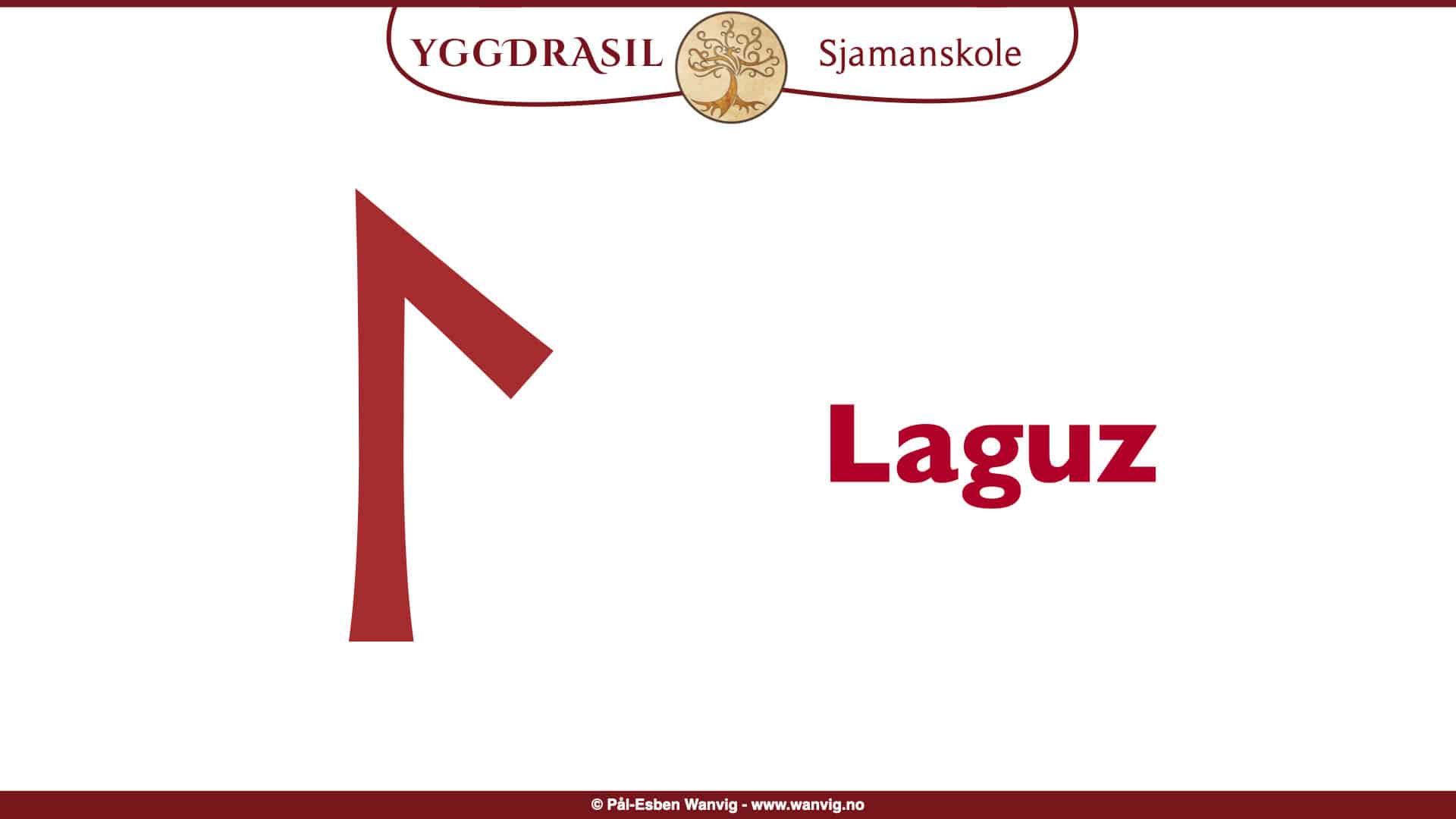
In rune lore, we find a beautiful reminder of this in the rune Laguz. It stands for the natural flow of water, the River of Life, the river all human beings journey through in their material existence. The river is shaped by the rhythms of nature and the universe. It is never completely still, never quite the same, but it always carries us onward.
Our task is not to fight our way upstream by ignoring or resisting these rhythms. Our task is to learn to flow with the River of Life, with wisdom, humility, and an open heart.
Wu Wei: when action becomes a natural extension of life itself
In Taoist wisdom, there is a principle that resonates deeply with both Laguz and the River of Life: Wu Wei. It is often translated, rather dryly, as “effortless action,” but Wu Wei is really a far more living, poetic, and intuitive phenomenon. It is about letting action spring naturally from the rhythms of life, instead of pushing, forcing, or trying to control existence with willpower alone.
Wu Wei is the art of being awake and present in the moment, of listening, sensing, and responding to what is happening, without inner struggle. It does not mean being passive. It means being in flow.
When we practice Wu Wei, the endless inner resistance ceases. We stop paddling frantically against the current and instead let ourselves be carried by the natural movement of life. Then something remarkable happens: decisions become clearer, resistance melts away, and we feel life opening up with a soft, quiet power that feels both genuine and right.
Wu Wei is therefore more than a Taoist ideal for the wise and the enlightened. It is a practical, down-to-earth, and deeply healing way of meeting karma, polarities, and the River of Life. It is the art of living in harmony with the current that is already carrying you.
Loving the rhythms, including the challenging ones
The River of Life has many phases:
- calm stretches that give us rest,
- harmonious stretches that give us balance,
- and turbulent stretches that challenge us, shake us, and drive us onward.
The point of life is not to avoid the polarities, but to learn to live in interplay with them. To acknowledge them. To use them as a driving force for learning, growth, and development.
When we understand these rhythms, and see that they are not adversaries but teachers, an important change takes place:
We begin to love the very current of life. Not because it is always pleasant, but because it gives us exactly the experiences the soul came here to explore.
A life without fighting the current
There is no reason your life should be filled with unnecessary suffering. Often, the suffering arises precisely because we treat the River of Life as an enemy, as something we must fight against, control, or shape according to our own will.
But when you instead open yourself to the rhythms that live within you and around you, something completely different happens:
You begin to flow, not like a passive leaf, but like an awake co-creator who understands the current and moves with it.
This does not mean that life becomes free of friction. Nor is it meant to be.
The polarities, the calm zones and the turbulent ones, are the very fuel for learning and personal evolution. This is how you grow, how you understand, how you develop from the day you are born until the day you die.
Karma as the foundation of meaning
Without karma, the consequence of your actions, meaning could not exist. For meaning arises only when we learn, grow, integrate, and move on.
So karma is not something that holds you back.
Karma is what makes growth possible.
Karma is what gives experience depth.
Karma is what makes your life something other than a random journey. It makes it a meaningful journey.
Life is not about avoiding the polarities, but about living with them, accepting them, and using the various fields of tension as inspiration and motivation to learn and to live the life you and your soul have come here to experience.
Pål-Esben Wanvig
A teacher is necessary
Learning to flow with the River of Life, to love your karma, understand it, and use it as your most loyal teacher on the journey your soul is making, is quite simple in theory. But in practice, it can be one of the most demanding processes in a human life.
Not because you lack ability, but because the ego will always fight to preserve the familiar. The ego fears change more than anything else, and it will do everything it can to keep you in old patterns, old stories, and old limitations.
That is why we need help.
If you feel that the time has come to begin the soul’s epic journey in this life, it is an invaluable gift to find a competent teacher who can support you through this life-changing process. Someone who can hold space for you, mirror you, challenge you, and lead you deeper than you can go alone. There is more about this in the article “When Life Feels Empty and Without Meaning: Are You Ready to Begin the Soul’s Epic Journey?”
For this journey is the most important journey you will ever take.
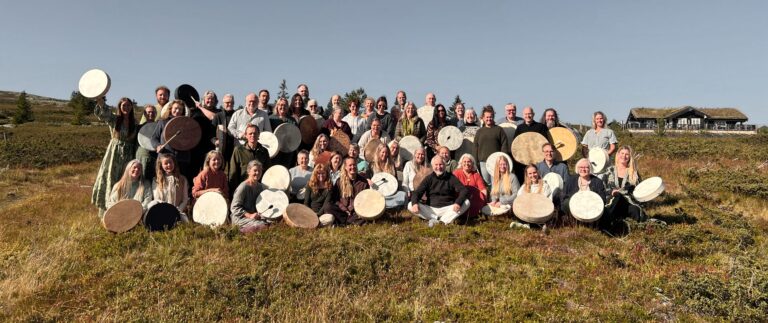
Personally, one of my greatest joys is accompanying my students through a deep primordial shamanic development process that often shapes the rest of their lives.
It is a journey that demands honesty, courage, and a willingness to change, but that gives back in the form of clarity, freedom, power, and a completely new understanding of who you really are.
A journey to set yourself free
I hope this short and simplified introduction to this fascinating topic has lit a spark in you, a spark that inspires you to take up your soul’s journey in an active and conscious way. For the moment you can say, with honesty and openness, “This is my karma,” something decisive happens.
In that same moment, you are also saying:
“I am responsible for healing my karma.”
That is when the real journey begins. That is when you take the first big step into freedom, the freedom to let go of old patterns, grow out of old limitations, and move toward the life your soul has always known you are capable of living.
This is the journey home to yourself.
And no one can walk it for you, but you can choose to begin it today.
Do you want to go deeper? On my blog and in the podcast The Journey to Self-Realization, we explore the topics in this text in more depth. If you want to walk the path yourself, it begins at the Yggdrasil Shamanic School with our free online course on primordial shamanism: Nature’s Path to Freedom and Self-Realization. No path could begin more simply. How far it reaches is up to you.
This content does not replace professional medical help from a doctor or other health professional, and it is not intended as medical treatment. If you are ill, always see a doctor first.
Nature’s Path to Freedom and Self-Realization
Curious about what primordial shamanism really is, behind the mystique and the misconceptions? In this short online course I tell the story of my own path from skeptical engineer to teacher of primordial shamanism, and give you a first introduction to what I teach: what shamanism and primordial shamanism are and are not, how rituals and rune magic are used in practice, and why the longing for growth matters so much for a good life.
The lessons are recorded in Norwegian; the English version will be ready in November or December 2026. Leave your email on the course page, and I will tell you when it is.