
Forest Bathing: Nature’s Medicine Against Stress, Anxiety, and Burnout

Forest bathing, the seemingly simple practice of walking consciously in the forest without an agenda, is proving to be one of the most effective methods modern people have for reducing stress, depression, restlessness, high blood pressure, and sleep problems. Recent scientific research now confirms what shamans have known for thousands of years: nature and Mother Earth are among the strongest and most accessible sources of healing we have.
In just a few months, Cathrine Emilie went through a remarkable transformation out of a serious life crisis. She was struggling with deep depression (major depressive disorder), social anxiety, self-harm, and exhaustion. A crucial part of her healing process was daily forest baths.
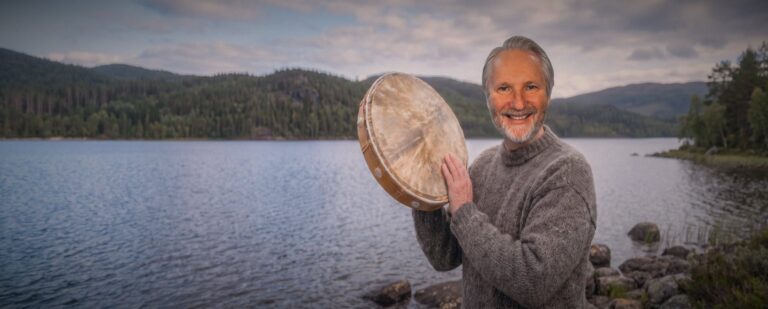
Shamanic insight, wisdom, and practice have probably been the most important force behind how a despairing civil engineer and entrepreneur, after burning out and nearly losing his life in 2003, found his way back to a meaningful, whole, and joyful life. Before the breakdown, I was convinced I had found the key to health and happiness, but looking back, I have understood that it was an illusion. Today I am deeply grateful for the life crisis that pushed me onto a path that would change everything.
Shamanism is neither a modern neo-religious construct nor a New Age phenomenon from the United States. And the shaman is far more than a healer in a trance. Shamanic traditions have existed on every continent for as long as humans themselves have been here, and the oldest known traces of shamanic practice are more than 70,000 years old1.
In our own culture, shamanism played a central role in pre-Christian times. For centuries, völvas and seiðmenn were important bearers of spiritual knowledge and shamanic practice in the Norse tradition.
Facts about shamanism
The word shaman comes from “šaman,” which is used by the Tungus people of Siberia and means “the one who knows, the one who sees, or the one who has insight” in their language. Since 1980, the World Health Organization (WHO) has recognized shamanism as a legitimate method on a par with Western medicine in the treatment of psychosomatic disorders.
A shaman is a person who helps others understand and respect nature, both outer and inner, and who at the same time guides people to live in harmony with their spiritual core and vision. The shaman’s insight and power come from the metaphysical levels, through contact with various energy fields, power animals, and other beings of light. In the shaman’s understanding of reality, everything that exists is alive (animism), and the creative force flows through everything that is (pantheism).
Shamanism is not a religion. Religions are built on dogmas, rules, moral belief systems, and authorities that stand between human beings and the divine. That is the core of a religious system.
In shamanism, by contrast, you experience the creative force directly, without intermediaries, doctrines, or outside authorities. The direct experience of the divine is called religio.
At the Yggdrasil Shamanic School, the shaman walks the Path of the Heart, where the foundation of all practice is values such as respect, humanity, love, empathy, integrity, honesty, forgiveness, gratitude, and tolerance.
Experience shows that anyone can learn shamanism. Through many examples among my students, I have seen how people, regardless of ethnic background, life situation, or innate abilities, can develop into shamans who bring about deep, positive changes both in their own lives and in the lives of others. If you want to read more, the articles “What Is Shamanism?” and “Shamanic Magic: A Glimpse Behind the Mystical Veil of Magic” go into this in more detail.
“In my experience, absolutely anyone can learn shamanism.”
Pål-Esben Wanvig
Nature’s wisdom
Almost all shamans have a deep resonance with nature and Mother Earth. In shamanic practice, nature is humanity’s greatest teacher, the most reliable source we have of healing, insight, and balance. Mother Earth is the very foundation of all existence. When a shaman seeks guidance, deeper understanding, or answers to life’s questions, their attention turns to nature. There, nature’s rhythms, patterns, and interplay are studied, and through meditative presence, the shaman listens to the underlying rhythms.
Nature is the foremost healing force we have, physically, mentally, and spiritually. Without nature, life on earth would not be possible. Yet modern humans have gradually lost touch with nature’s wisdom. The result is a society in which we undermine the very basis of our own existence through overconsumption, haste, and an ever-increasing destructiveness, toward ourselves, toward others, and toward the planet. Intolerance, conflict, and mutual insults are becoming more and more normalized, as if this were a natural development.
But that is not how it is, and it never has been. For hundreds of thousands of years, humans lived in close and respectful harmony with nature. Only with industrialization was the connection broken. In just a few decades, we have managed to damage large parts of our own ecological foundation through overexploitation, pollution, and widespread environmental destruction.
I believe the time has come for a new kind of “normal” to take hold, one that is healthier, more harmonious, and more in tune with our true nature. To create this shift, far more people need to rediscover what is truly natural, in both their inner and their outer landscape. Here, Mother Earth and the shamanic tradition have indispensable contributions to make.

Our foremost teacher and healer
Modern humans need, more than ever, to rediscover nature’s role as a healer and a source of self-knowledge. More and more people are drawn to the cities and surround themselves with concrete, asphalt, and artificial surroundings instead of the living nature that has nourished us for hundreds of thousands of years. In Norway today, around 80 percent of the population lives in urban areas, and the UN estimates that as much as 68 percent of the world’s population will live in cities by 20502.
In an everyday life marked by speed, demands, and mental distractions, few people set aside time for experiences in nature that can bring relaxation, recovery, and overall balance. Never before in human history have we been so disconnected from nature’s rhythms, and at the same time, we have never faced such extensive health challenges related to stress, anxiety, depression, frustration, and inner restlessness. These conditions lay the foundation for many of the serious and chronic illnesses that mark our society today3.
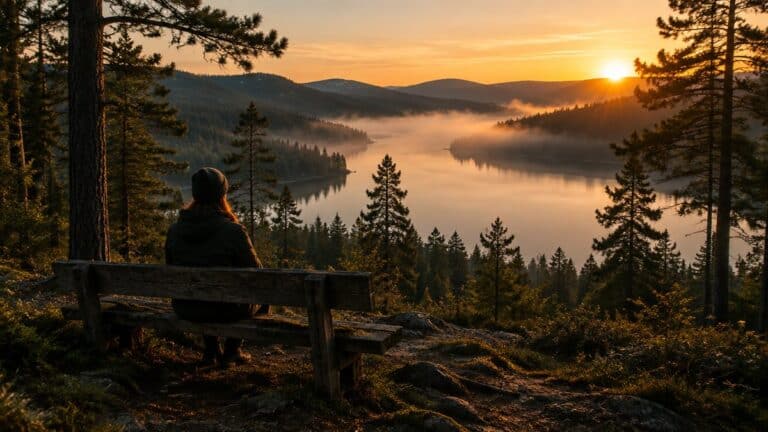
A simple but powerful practice for restoring the connection is to spend 30–60 minutes in nature every day for a period of 90 days. For many, this feels unfamiliar, since regular contact with nature has long been missing from their lives. The key is to be present alone, without goals or an agenda, without performance, and without distractions: no cell phone, no music, no planning, no evaluating the day, and no physical exercise that takes your focus away from the moment. It is just you, completely alone and fully present with nature.
It is quite simply about moving slowly and attentively through nature and letting all your senses open. The daily walk makes room for inner stillness, balance, and the rediscovery of a peace that lies deeper than your thoughts, a stabilizing counterweight to an otherwise hectic and chaotic existence.
Never before in human history have we been so disconnected from nature’s rhythms, and at the same time, we have never faced such extensive health challenges related to stress, anxiety, depression, frustration, and inner restlessness.
Pål-Esben Wanvig
Your daily forest bath can work wonders
Else Karin, one of my students, came to me several years ago for help finding her way out of a severe burnout. She was a classic workaholic, driven by perfectionism, a high pace, and a constant need to perform. Stillness and rest did not exist in her world; there were always new tasks, projects, and chores demanding her time and energy. After a focused development process, Else Karin managed to overcome her burnout, quit her job at the vehicle inspection authority, and grew into one of Norway’s most experienced therapists and spiritual mentors.
Even after she found meaning, joy, and deep contentment in life, an inner drive kept pushing her toward more work and more commitments. That inner voice created constant pressure and made it hard for her to keep the balance she had fought so hard to achieve.
A few years ago, I introduced her to the simple forest bathing exercise described above. We agreed that she would go out into nature every day for 90 days, without an agenda, and keep a “forest journal” throughout the whole period. At least every other week, she would also take a longer walk of at least two hours.
At first this was demanding, since her old pattern of activity was still strong. But after a few weeks, the first deep changes began to show.
“As the weeks went by, I felt an ever stronger inner peace. The inner voice that had driven me on without pause gradually grew weaker, and my life changed in a positive and profound way. I began canceling activities and saying no to new clients and projects, even the renovation of my own home, without feeling fear or guilt. For me, this was nothing less than a miracle. The voice that had chased me all those years had finally gone quiet. For the first time in my life, I experienced real, fundamental inner peace,” she says.
I recommend watching the inspiring interview with Else Karin, in which she shares her experiences and the life-changing insights she gained along the way.
Forest bathing: nature is your medicine
Research from all over the world has thoroughly documented nature’s deeply healing effect on the human body and mind. Especially prominent is the work done in Japan, where the practice of healing forest walks is called shinrin-yoku. Between 2004 and 2012, the Japanese authorities invested more than 40 million Norwegian kroner in extensive research on the physiological and psychological effects of regular time spent in the forest4. Some of the most striking findings from the research on regular forest bathing:
Positive research findings on forest bathing
- Reduced stress levels and depressive symptoms5
- Significant decrease in frustration and anxiety symptoms6
- Improved ability to concentrate in children with ADHD7
- Documented reduction in blood pressure8
- Marked improvement in sleep quality9
- Increased creative thinking and problem-solving9
- Significant increase in energy levels9
- Improved state of mind and mood9
- A stronger immune system through increased production of natural killer cells and lymphocytes9
- Faster recovery after medical procedures and periods of illness9
- Documented improvement for people with exhaustion disorder and burnout10
The scientific explanations for the effects of forest bathing are many, but stress reduction is central. When we walk contemplatively in nature, without goals, demands, or an agenda, our brain waves gradually shift into alpha rhythms, the same state that arises during deep relaxation, meditation, or yin yoga, for example. This calms the areas of the brain that handle stress, worry, and the fear response11, and it leads to a natural reduction in stress hormones12.
From a shamanic point of view, there are far more explanations for the extensive health benefits people experience through regular forest bathing. The subtle energy fields of the trees, the wide-open space of the sky, the beauty of nature, the melodic calm of birdsong, the soft humming of insects, the healing scent molecules of plants, the magnetic pulse of the earth, the mycelial network of the forest, the clean air, and not least the subtle energetic vibration behind nature’s healthy rhythms all make up a deeply harmonizing whole. I will go further into these fascinating sides of the forest in later articles.
The doctor’s and the shaman’s recommendation: take a walk in the forest
The World Health Organization (WHO) estimates that depression will be the leading cause of work disability by 203013. In Norway, nearly 30 percent of adults report having experienced mental health problems such as anxiety or depression in the past year14. Could forest bathing become one of the standard tools doctors use in the future to treat depression, anxiety, stress, and high blood pressure?
Both the shaman’s experience-based knowledge and modern research findings point in the same direction: forest bathing has strong, measurable effects.
Pål-Esben Wanvig
This is insight shamans have worked with for thousands of years, long before modern medicine existed. Perhaps the time is ripe to let this ancient wisdom inspire you to make daily or weekly walks in nature a natural part of how you care for your health?
Both the shaman’s experience-based knowledge and modern research findings point in the same direction: forest bathing has strong, measurable effects. My recommendation is simple: try forest bathing for 90 days. Practice it daily, and see how both body and mind gradually change. You have nothing to lose and everything to gain.
Ready for exceptional results in 30 days?
If you want exceptional results in a short time, I recommend combining daily forest bathing with a digital “cleanse.” That means avoiding the news (newspapers, TV, and online news) and reducing your use of social media to an absolute minimum for 30 days.
Most people are deeply surprised, often shocked, at how powerfully this affects their quality of life. Mental clarity increases, stress levels drop, sleep quality improves, creativity comes alive, and relationships become more harmonious. In short: you give your nervous system room to come back into balance, and you notice it in absolutely every part of your life.
Try it. The effect can be life-changing, as it has been for many of my students and clients.
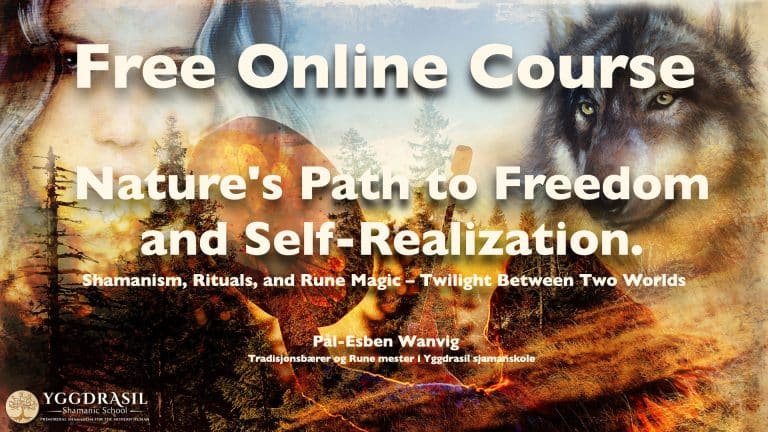
Do you want to go deeper? On my blog and in the podcast The Journey to Self-Realization, we explore the topics in this text in more depth. If you want to walk the path yourself, it begins at the Yggdrasil Shamanic School with our free online course on primordial shamanism: Nature’s Path to Freedom and Self-Realization. No path could begin more simply. How far it reaches is up to you.
This content does not replace professional medical help from a doctor or other health professional, and it is not intended as medical treatment. If you are ill, always see a doctor first.
Sources
- “World’s oldest ritual discovered. Worshipped the python 70,000 years ago,” Apollon, University of Oslo, https://www.apollon.uio.no/english/articles/2006/python-english.html. The interpretation of the find as a shamanic ritual is disputed among archaeologists. ↩︎
- “68% of the world population projected to live in urban areas by 2050,” UN, https://www.un.org/development/desa/en/news/population/2018-revision-of-world-urbanization-prospects.html. ↩︎
- “Hjertets klang: din sjels musikk. Få balanse i livet gjennom kunsten å regulere deg selv” [The Heart’s Resonance: Your Soul’s Music. Find Balance in Life Through the Art of Regulating Yourself], Medium no. 4-2018. ↩︎
- “Take Two Hours of Pine Forest and Call Me in the Morning,” Outside, https://www.outsideonline.com/1870381/take-two-hours-pine-forest-and-call-me-morning. ↩︎
- “The influence of urban green environments on stress relief,” Journal of Environmental Psychology, https://www.sciencedirect.com/science/article/abs/pii/S0272494413000959. PDF: http://www.tlu.ee/~arro/Happy%20Space%20EKA%202014/urban%20green_stress%20Ojala%20jt.pdf. ↩︎
- F. E. Kuo and W. C. Sullivan: “Aggression and violence in the inner city: effects of environment via mental fatigue” (2001), https://is.muni.cz/el/1423/podzim2011/HEN597/um/Readings_Env_Psy/Kuo__F.E.__Sullivan__W.C.__2001_.pdf. ↩︎
- “Children With Attention Deficits Concentrate Better After Walk in the Park,” Journal of Attention Disorders, https://www.researchgate.net/publication/23192434_Children_With_Attention_Deficits_Concentrate_Better_After_Walk_in_the_Park. ↩︎
- “Blood pressure-lowering effect of Shinrin-yoku (forest bathing): a systematic review and meta-analysis,” NCBI, https://www.ncbi.nlm.nih.gov/pubmed/28814305. ↩︎
- “The Science of Nature & Forest Therapy,” https://web.archive.org/web/20211020194646/https://www.natureandforesttherapy.org/about/science. ↩︎
- “Personer med utmattningssyndrom mår bättre av skogsbad” [People with Exhaustion Disorder Feel Better from Forest Bathing], SVT, https://www.svt.se/nyheter/vetenskap/personer-med-utmattningssyndrom-mar-battre-av-skogsbad-1. ↩︎
- “Nature experience reduces rumination and subgenual prefrontal cortex activation,” PNAS, https://www.pnas.org/content/112/28/8567. ↩︎
- “City living and urban upbringing affect neural social stress processing in humans,” NCBI, https://www.ncbi.nlm.nih.gov/pubmed/21697947. ↩︎
- “Depression looms as global crisis,” BBC, http://news.bbc.co.uk/2/hi/health/8230549.stm. ↩︎
- “Fakta” [Facts], Helsenett, https://web.archive.org/web/20230130085624/https://www.helsenett.no/142-fakta/fakta.html. ↩︎
Nature’s Path to Freedom and Self-Realization
Curious about what primordial shamanism really is, behind the mystique and the misconceptions? In this short online course I tell the story of my own path from skeptical engineer to teacher of primordial shamanism, and give you a first introduction to what I teach: what shamanism and primordial shamanism are and are not, how rituals and rune magic are used in practice, and why the longing for growth matters so much for a good life.
The lessons are recorded in Norwegian; the English version will be ready in November or December 2026. Leave your email on the course page, and I will tell you when it is.