What Is Shamanism?

As a civil engineer, I was among the most skeptical people you could find when it came to shamanism. Before 2004, I was sure that shamans were creepy men and women who lived in the forest, dressed in wolf skins and feathers, with painted faces. They all took psychedelic drugs, I thought, and they were all into extreme experiences in overheated sweat lodges, voodoo dolls, and black magic. And only a chosen few with special abilities could become a shaman. Pure superstition, in other words, and something I absolutely did not want to be associated with. Or so I thought.
Then came the burnout. On Christmas Eve 2003, I hit the wall so hard that the doctors eventually gave up hope of getting me well and began discussing disability benefits instead. For a former elite athlete who was used to keeping many projects in the air at once, it was a shock. It also became the driving force I needed.
The first crack in my skepticism came with a phone call. A friend told me about a healer in Oslo who had taken away back and shoulder pain that no doctor had been able to get rid of. I was desperate enough to get on a plane. Jan laid his hands on me, shook, and made strange sounds, and I lay there on the treatment table, understanding nothing. But for the next few days, I had more energy than I’d had in a long time. Then it was gone again, and I flew back. I kept that up for many weeks. The engineer in me protested but couldn’t explain away the result. Maybe there was something to this after all.
From there, I traveled across several continents and sought out the best doctors, specialists, and healers I could find. Some of them helped, but never for more than a couple of weeks. And somewhere along the way, I found myself at my first shamanic seminar, with all my prejudices still intact. The relief was enormous. No drugs. No extreme experiences; on the contrary, the teacher distanced himself from them and from anything driven by fear or by the wish to manipulate others. And then he showed us methods that changed matter, with results that could be measured. That was what the engineer needed. From that moment on, my path was clear.
For the first few years, I didn’t dare tell anyone. I was afraid of what colleagues, friends, and family would think. Today, more than twenty years later, I teach the very thing I once dismissed. But I never set the engineer aside. I still want objective, measurable results, and I want to know why something works. That is the standpoint I am writing this from. And I will come back to the prejudices I started out with further down, because they are the same ones many people have.
This article gives a short, general introduction to shamanism. In more recent articles, I go deeper into both shamanism and primordial shamanism. For those who want to go further into these topics, I recommend the podcast The Journey to Self-Realization, where Amina and I explore them thoroughly.
The word has no fixed definition
It is impossible to establish once and for all that shamanism is this or that. The reason is simple: there are thousands of shamanic traditions in the world, each with its very own views and ideas about what shamanism is. The word is not trademarked. Anyone can say anything about it.
So what I can do is tell you how I see shamanism, from my own perspective and that of my tradition. Others are free to define it in their own way.
One who knows
The term shaman comes in part from šaman, a word used by the Tungus people of Siberia that means “one who knows” or “the one who knows” in their language. In other words, not someone who has read a lot of books and gathered a lot of knowledge, but someone who knows.
Various forms of shamanism have been practiced on every continent for as long as human beings have existed. The oldest example found so far is about 70,000 years old 1, and the practice probably goes back much further than that.
Shamanism is not some newfangled thing or a New Age invention. It has been here almost since the dawn of time.
Pål-Esben Wanvig
In our own part of the world, shamanism played a central role for several hundred years in pre-Christian times. In Norse culture, völvas and seiðmenn practiced their form of it, and something similar existed before the Norse era too, just in a slightly different way.
Shamanism is not some newfangled thing or a New Age invention. It has been here almost since the dawn of time.
Behind the veil
Shamanism is about how we, as shamans, go through a development process that brings us into contact with what lies behind the veil. Let’s use the word “metaphysical” for it, meaning the invisible. For the material world we live in is only a small part of existence.
For the last hundred years, quantum mechanics has been saying the same thing, so there is nothing new here. We humans believe that everything that exists is matter. Well, matter doesn’t exist. Everything is energy; everything is light. Watch an introduction to quantum mechanics, and you will learn that what you think of as your hand is not matter in itself. It is energy, but energy that has become so compact in form that we believe it is matter. There is nothing esoteric about that.
A shamanic development process, then, is about learning what lies behind the veil and what the metaphysical consists of, and through that coming into contact with the beings who dwell there: beings of light, angels, power animals, gods, and so on.
We humans believe that everything that exists is matter. Well, matter doesn’t exist. Everything is energy; everything is light.
Pål-Esben Wanvig
By getting to know these sources of power, which are also intelligent beings, the shaman learns to be a messenger between the material and the metaphysical worlds. The shaman takes their issues into the metaphysical, gets answers to their challenges, and brings the wisdom, the knowledge, and the healing energy back again.
That is the most simplistic definition you can give. A shaman mediates between the material and the metaphysical worlds. But it is not a good description, because this is much more exciting than that.
In the shaman’s worldview, everything that exists is ensouled, from stones and trees to rivers and oceans. This is called animism. And the divine creative force permeates all that is, which is called pantheism.
If you would like a closer look at how the shaman works with what lies behind the veil, I go into it further in the article “Shamanic Magic: A Glimpse Behind the Mystical Veil of Magic.”
Nature’s rhythms, lived out
So what is a shaman? Someone who mediates between the two worlds, yes. But as I said, that is a simplistic definition. Someone who truly is a shaman is in deep contact with the natural rhythms that nature shows us. And the contact doesn’t stop there: she or he lives these rhythms out, fully and completely, in everyday life.
Go out into the forest, and you will never find a tree that is jealous of another tree. Nor will you find a tree that says, no, I have to protect myself against you, or one that is in conflict with the trees around it. That sort of thing belongs to us humans. In nature, we find a deep harmony that moves in set cycles. Ego, hatred, jealousy, and envy do not exist in the healthy rhythms.
To call yourself a shaman, you must have reached the point where you have gone beyond learning about these rhythms and have become a part of them. That is impossible without being connected to your heart. How does it add up if you call yourself a shaman while your everyday life is full of fear and jealousy? Then you have no contact with the natural rhythms, and you are definitely not a part of them.
Two kinds of shamanism
When I talk about shamanism, I therefore divide it into two categories.
Heart-based shamanism is the kind that is deeply related to the heart, to the primary emotions, and to the natural, healthy rhythms we find in nature.
Fear-based shamanism is the kind that has unfortunately become a problem in the modern world and that doesn’t have much to do with the heart.
If you search for shamanism online or read books about it, you will very often come across the latter. Then it is all about dangerous spirits, demons, fallen angels, and negative energy sent by others: that is the cause of my problems, so I need the strongest possible protection.
Experience shows that the more you believe in this, the bigger the problems you get in your life. I have had many clients and students who came from fear-based shamanism. They had been taught that the reason they are suffering is that someone is sending negative energy at them, that demons have possessed them, or that dangerous spirits are controlling them. And the solution on offer is always the same: I can show you how to protect yourself and how to cleanse away this negative energy.
There is nothing out there you need to protect yourself from
The problem is that you are then supposed to create protection against something that doesn’t exist.
I have been at this for many years now, and I have never met a dangerous spirit, never met a demon, never met anything destructive of that kind, no matter where I have been in the metaphysical. The only evil I have met is the evil that lives in human beings. Demons are culturally conditioned, and they often come from religious influences over the last 2,000 years.
If you come into a setting like that as a newcomer, more and more fear is heaped on you. Instead of taking self-responsibility for your own life, you are handed a cause: other people are the cause of your problems. The moment you believe you need protection against someone throwing negative energy at you, you have a real problem. Because then you believe others are the cause of your suffering. And if others are the cause, you can never heal unless they change. You have handed over the power over your own life.
The more protection you seek, the weaker you become. The only way I know to dissolve darkness is light. The more light you manage to bring into yourself, the less darkness can exist in you and around you.
For a sensitive person in an environment like that, the fear only grows stronger, and often the paranoia does too. As long as you believe it is so, you will also feel that it is so. It has nothing to do with reality. It is a psychosomatically manifested reality, and then you are trapped in the wheel of anxiety.
The more protection you seek, the weaker you become. The only way I know to dissolve darkness is light. The more light you manage to bring into yourself, the less darkness can exist in you and around you.
Pål-Esben Wanvig
As early as the first episode of our podcast, The Journey to Self-Realization: A Primordial Shamanic Journey Back to Your True Nature, Amina talks about how full of fear she was, why she was so afraid, and what we did to help her understand that there is nothing dangerous out there. There are no demons coming to get you. We have to learn how to heal and find the light within ourselves. Then the things you think are demons disappear (see episode 13, “The Fear of the Dark, Demons and Evil: Illusion or Reality? The Nature of Fear: When the Darkness Within You Takes Shape”).
That is why at the Yggdrasil Shamanic School you don’t learn much about protection. You learn how the light within you grows stronger and shines out from you more intensely. Where there is light, darkness cannot exist. This is part of the foundation of our tradition.
I have met many people who have found real help in modern shamanism, and I respect that. Anyone who finds relief, comfort, or courage there has found something valuable. But if you want to walk a path that is about setting yourself free from fear, a path that is itself built on fear will not do.
Signs you can look for
Fear-based shamanism has some hallmarks that come up again and again.
Other people and other shamans with a different worldview are seen as enemies. If you see things differently from us, you are the enemy. You find the same pattern in cults.
There is little grounding in objective, measurable results. It is more about experiences, sensations, and shamanic journeys.
The use of hallucinogens, such as ayahuasca and magic mushrooms (psilocybin), is often widespread in these circles.
And you often hear that only a chosen few can become a shaman. That is not true. Anyone can learn shamanic methods, and anyone can become a shaman. It has nothing to do with your bloodline or your culture.
Five misconceptions about shamanism
“Shamanism is only for the chosen few.” Shamanism is for anyone who is open to learning about nature’s healthy rhythms. But not everyone wants to become a shaman, because that step demands something of you. Learning methods and techniques demands nothing. Becoming a shaman means you need to become something: someone who lives out this philosophy in everyday life in a practical way. That is where the challenge lies: in moving beyond the imprints and orienting yourself back toward the heart. After more than two decades of teaching, I have yet to meet a student who couldn’t learn this, or who couldn’t perform a spontaneous healing the way we teach it in the very first beginners’ seminar.
“All shamans use drugs.” Hallucinogens are often part of shamanic cultures around the world, but not of all of them. In our tradition, we have nothing to do with them, because you don’t need them to find your way back to yourself. As a rule, they create a challenge that makes the path harder than it needs to be. At the same time, we shouldn’t be dogmatic about it: used as medicine for serious illness, such as post-traumatic stress disorder, severe depression, and severe addiction, plant medicines and hallucinogens can be effective in combination with therapy. But that is the therapeutic side of the matter, and in Norway it is not legal to use them in any case.
“Shamanism is about extreme experiences.” Some people think this is all about extreme sweat lodges, extreme heat, and vision quests without food for a week in the mountains. Some traditions have that kind of thing. But shamanism for modern life is not about that, because no extreme experiences are needed to go through a deep shamanic development process.
“Shamanism is a religion.” A religion has a belief system, it has dogmas, and it often has authority figures you must go through to be in contact with the divine. Shamanism has nothing to do with that. Shamanism is religio: how you yourself experience the divine in nature, without dogmas, without belief systems, and without intermediaries.
“Shamanic death means something has to die.” Nothing has to die. The shamanic death is about moving the ego from being the soul’s ruler to becoming the soul’s adviser. There is nothing wrong with the ego. Without an ego, the soul would not be able to relate to the material world at all. The ego is here to help. In a primordial shamanic development process, you gradually go from the autopilot running everything to taking back more and more of the power and showing the ego its proper place. In the end, it is the heart and the soul that make the decisions, with the ego as a helper.
Shamanism is religio: how you yourself experience the divine in nature, without dogmas, without belief systems, and without intermediaries.
Pål-Esben Wanvig
The Path of the Heart in practice
In heart-based shamanism, we try to relate deeply to the healthy rhythms of the nature around us, and more and more to our heart. By the heart, I mean the primary emotions, such as gratitude, empathy, and joyfulness.
We don’t do this through techniques where you are supposed to “be in a state of love,” because that in itself is meaningless. You need the exact steps for what you should do in practice to become more deeply connected to your heart in everyday life.
For that, we have the Seven Golden Keys, where you learn about consciousness, self-responsibility, free will, and character building. It is the first foundation, and it shows a practical way to live out the Path of the Heart. The Golden Keys are described in the book Beyond Positive Psychology: A Journey from Burnout to Enlightenment.
Then we have the 9 Pillars for Finding the Path of the Heart, which are practical tasks you can train in: becoming a master of gratitude, a master of forgiving yourself and others, and a master of self-regulation. In our tradition, then, this is a very practical path.
Other heart-based traditions have other tools, but when all is said and done, it comes down to the same thing: how the shaman lets their behavior, emotions, and actions spring from the heart, meeting others with humanity, empathy, and gratitude. And how you live it out in practice, with your kids, your partner, your friends, and at work.
Why I call it primordial shamanism
The shamanism we practice at the Yggdrasil Shamanic School is what I call primordial shamanism, adapted for modern life. The reason I don’t call it shamanism is that I want some distance between modern shamanism and what we do. Modern shamanism is often full of fear and dogmatism, as I have described above, and I want nothing to do with that.
Primordial shamanism is the shamanism that was practiced in the primordial cultures before religious institutions and dogmas began to influence them. The clearest example I use is the Aboriginal people of Australia. Before the white man arrived and destroyed their culture, they lived in a deep relationship with nature and Mother Earth. They lived off nature and with nature. And in their culture at that time, there were no words for jealousy, hatred, chronic illness, stress, demons, protection, or hell. These things did not exist, because they lived in harmony with nature.
For the Aboriginal people, this may mean going back a few hundred years. For us here in Europe, we are talking about two or three thousand years, which is how long we have had religious dogmas and ideas of devils and hell in our society. Primordial shamanism is what lies before this.
And it is tailor-made for people today, so that you can walk the path while living a completely ordinary life, with your kids, your family, and your job. You don’t have to move into a tipi in the forest. If you want to read more about what sets the two apart, I go into it more thoroughly in the article “Primordial Shamanism: Nature’s Path to True Spiritual Awakening.”
The Yggdrasil Shamanic School: a journey toward complete freedom
The Yggdrasil Shamanic School is a place of learning, but above all a deep primordial shamanic journey back to your true nature. Through effective shamanic practices, ancient wisdom, and modern understanding, I guide you step by step toward freedom and inner balance.
Whether you are seeking a greater joy of life, want to find your way out of burnout, fill an inner emptiness, or long for spiritual growth or the healing of old wounds, you will find the tools at our school that can help you. Our courses and training programs give you practical methods for daily use, supported by a safe framework and experienced guidance.
The Yggdrasil Shamanic School offers a modern approach to shamanism that is specially adapted to today’s busy people. Here you learn practical and powerful shamanic rituals and ancient wisdom that can easily be integrated into everyday life, whether you are at home, at the office, or out in nature. We put a strong focus on achieving concrete, measurable results quickly. In the very first course, you will learn a form of spontaneous healing that gives objective and visible results without physical contact with the person you are treating!
At the Yggdrasil Shamanic School, we distance ourselves from the use of drugs or hallucinogens in our work. Instead, our tradition teaches you effective techniques for changing your state of consciousness naturally and safely in a short time. We practice a down-to-earth form of shamanism that is about living in harmony with nature and finding answers through that connection.
As a student at the Yggdrasil Shamanic School, you are energetically initiated into fundamental magical tools and methods by experienced shamanic teachers and beings of light connected to our tradition. This forms the foundation for developing your own unique form of magic. All our shamans develop their personal practice based on their individual talents, rooted in the school’s core methods and in a philosophy built on the 9 Pillars for Finding the Path of the Heart.
What makes the Yggdrasil Shamanic School unique is our systematic approach to shamanism. We place great emphasis on students achieving quick, measurable results with the techniques they learn, wherever they are.
At the Yggdrasil Shamanic School, we offer a personally tailored journey into the world of primordial shamanism, where you yourself decide the pace and depth of your spiritual exploration. Whether you want to take your first steps through an introductory course or are ready for a deeper, life-changing journey toward true spiritual awakening, the path is yours to choose. Our tradition sets no limits, but instead opens the doors to unlimited personal development and growth. Read more about the Yggdrasil Shamanic School here.

How a shaman works
A shaman’s work is deeply rooted in creating concrete and life-changing results. Through vision quests, the shaman helps people who have lost their direction, or who are seeking deeper meaning, to rediscover their genuine spiritual path in life and make it their own.
In soul hunting, the shaman travels deep into the inner world to find fragmented parts of the personality. These parts may have been repressed through traumatic experiences such as accidents or abuse, or they may have been rejected because of social norms or religious beliefs.
With the support of power animals and beings of light, the shaman finds their way through the shamanic dreamworld to locate the lost soul parts. These are gently brought back and integrated into the client’s personality and energy field. The shaman works closely with the client to make sure the reunited parts are respected and nurtured in everyday life, while together they develop practical strategies to prevent future fragmentation. For more about soul hunting, see podcast episode 25, “Soul Hunting – Reuniting with the Lost Parts of Yourself.”
With deep insight and experience, the shaman uses powerful rituals to activate healing energy and to communicate with beings of light. These rituals can affect both physical ailments and emotional challenges such as anxiety and addiction. Through this magical practice, fundamental changes can be brought about in the physical, mental, and spiritual dimensions of a human being. For a deeper understanding of rituals and shamanic magic, I recommend listening to the podcast episode “Shamanic Magic – The Gateway Between the Visible and the Invisible.”

The shaman’s tools
In my experience as a shaman, I have discovered the power of a wide variety of tools and methods that can help people, animals, plants, and landscapes regain their natural balance and vitality. In my daily work, I use instruments such as drums, rattles, crystals, feathers, and incense. I also bring in song, poetry, galdr, meditation, and rituals, together with astral journeys to the three shamanic worlds: the Upper World, the Lower World, and the Middle World, as well as other astral dimensions.
When we activate these shamanic tools, we step into the Dreamtime, the timeless dimension that the Aboriginal people of Australia have preserved with the help of the didgeridoo. In this state, we can communicate directly with beings of light such as power animals.
Here is a short, general description of some shamanic tools:
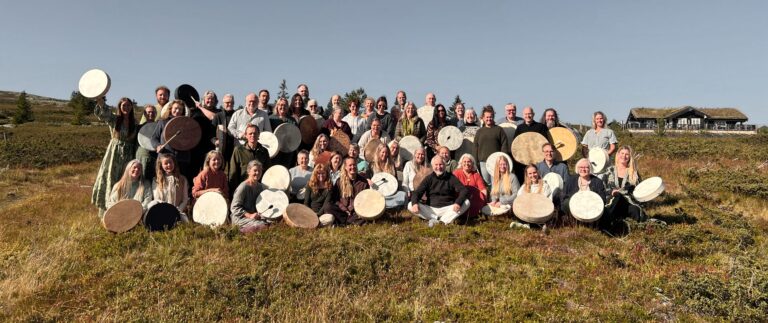
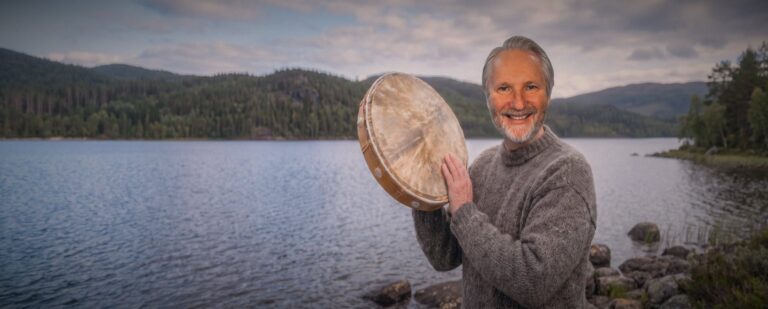
Drums are portals to trance states that make astral journeys to the shamanic dreamworld possible, and they act as bridge builders for ritual energy work and for communication with beings of light such as angels and power animals.
Rattles are another powerful tool, used to harmonize both hemispheres of the brain and to promote healing. In my practice, I often combine rattles and drums, as they create archetypal sounds that take us back to our time in our mother’s womb, when we were still in close contact with our soul and our spiritual heritage. The rhythm of the drum echoes the mother’s heartbeat, while the rattling recalls the rhythm of her voice. When we shamans work in a group, we combine drums and rattles with mantras and power songs, which adds a deeper spiritual dimension and fuses individual shamans into a single healing unit.
Feathers are a tool used to cleanse the aura and the chakras, and in cleansing rituals for both homes and landscapes. Ritual feathers can be used to activate and direct energy during ceremonies, and to carry messages and healing to people, animals, beings of light, and particular places.
Magic wands come in many varieties and forms of expression. They can represent the healing power of spiritual beings, power places, plants, or stones. Some wands carry the shaman’s individual powers and are tailor-made for specific purposes. Others are used for telepathic communication, psychic surgery, meditation, and astral journeys. There are also personal wands that are directly linked to the shaman and that manifest the shaman’s wisdom, magical powers, and the spiritual beings of light who work with him or her.
The chalice symbolizes the spiritual water element. It can be used to bless water, which is transformed into a powerful healing remedy. The chalice also helps to channel fresh life energy (ki or prana) to where it is needed.
Cauldrons are tools for making magical and healing potions, and for rituals that call for a strong presence of the spiritual fire element. The cauldron symbolizes the source of life, the mother’s womb where new life is created, and thus also Mother Earth herself.
Incense is deeply connected with both the air element and the fire element. Incense can be used for the energetic cleansing of people, rooms, and landscapes, and during rituals to strengthen or attract specific energetic qualities.
Knives such as the Bolline (the white magical knife) and the Athame (the black magical knife) have many uses. The Bolline knife can be used for harvesting herbs and for inscribing candles. The Athame knife can be used to cut magic circles, focus energy, carve runes or other power objects, and block unwanted energetic influences through circles of protection.
Rope is a tool that can be used effectively for knot magic, in which you can bind and release energy as needed. It can also be used to create magic circles or to establish connections with spiritual beings, plants, minerals, people, and animals.
Crystals, and quartz crystals in particular, have become an essential part of my work. I use them regularly to focus and store various forms of energy and rhythms. They can add extra power during healing and rituals.
The bell represents a direct connection to Mother Earth. It can be used to invite her presence into the rituals. During healing, its sound can be a catalyst for dissolving blockages.
Candles are perfect for focusing spiritual energy toward specific healing purposes, or for changing life structures for the better through structural magic.
Runes serve me as an oracle, a source of wisdom, and a powerful magical tool for carrying out extensive structural magic. They have proven to be invaluable tools for healing and personal development.
The pentagram can be used to clear away negative energy or to attract positive energy. It can also serve as a portal to other dimensions.
Power songs can be used to raise spiritual energy and to communicate with spiritual beings. They can also be used to influence life structures in a positive way.
The Book of Shadows is a personal magical journal in which the shaman records all experiences with magic, rituals, and communication with beings of light.
There are many more tools connected to different traditions and cultures.
In closing
When all is said and done, shamanism is about how we learn to understand all the facets of nature’s healthy rhythms. How we come into contact with them, both what we see with the naked eye and what is invisible to it. And how we begin, more and more, to relate to our heart.
Anyone who is willing to put in the effort can walk this path. For nothing happens unless you engage and begin to live out and test what you learn. This is not a theoretical path. It is a practical path, built on experience.
Do you want to go deeper? On my blog and in the podcast The Journey to Self-Realization, we explore the topics in this text in more depth.
If you want to walk the path yourself, it begins at the Yggdrasil Shamanic School with our free online course on primordial shamanism: Nature’s Path to Freedom and Self-Realization – Shamanism, Rituals, and Rune Magic – Twilight Between Two Worlds. No path could begin more simply. How far it reaches is up to you.
Sources
- Found in the Tsodilo Hills in Botswana, reported by the University of Oslo in 2006: “World’s oldest ritual discovered. Worshipped the python 70,000 years ago,” Apollon, https://www.apollon.uio.no/english/articles/2006/python-english.html. ↩︎
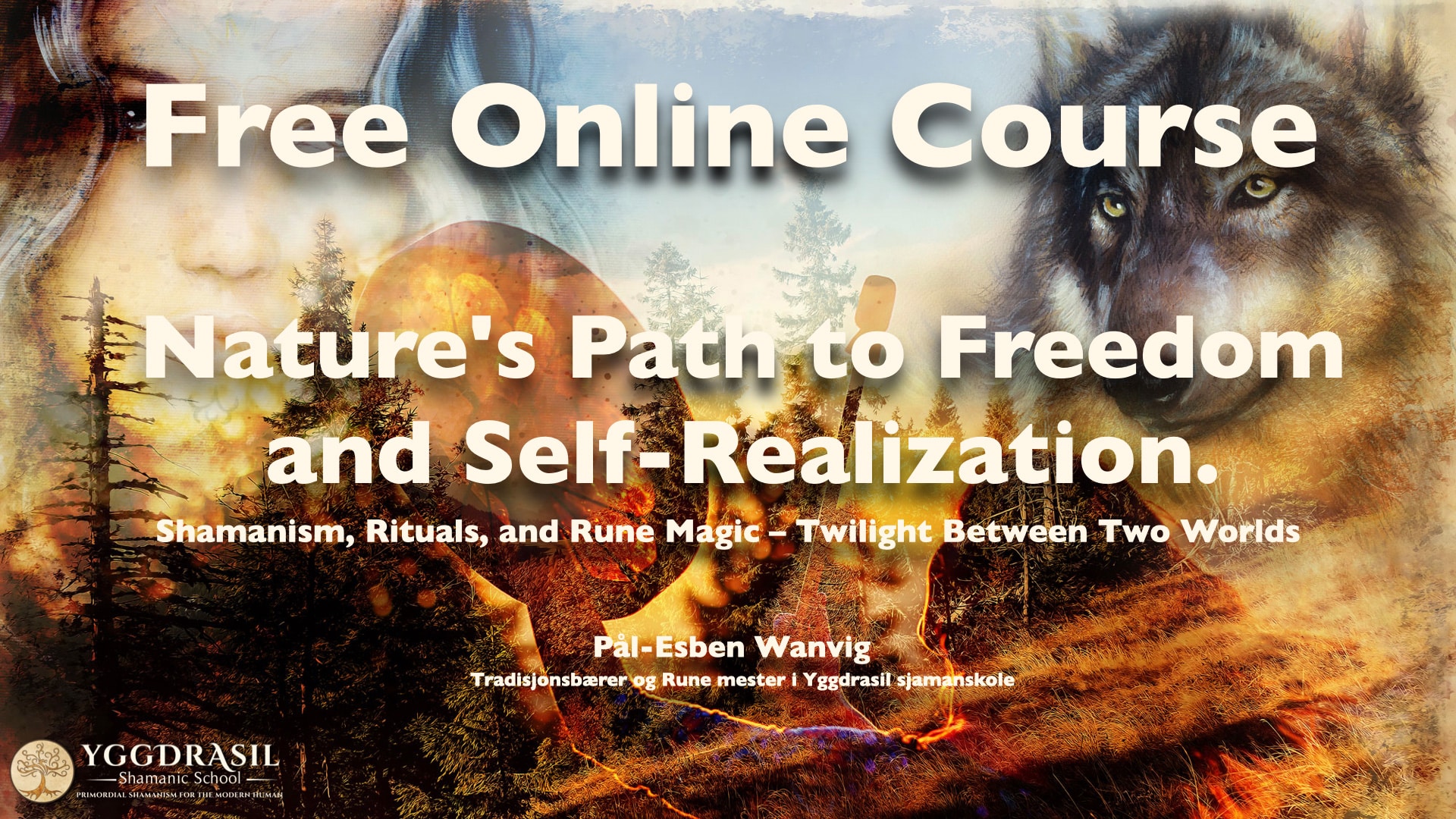
Nature’s Path to Freedom and Self-Realization
Curious about what primordial shamanism really is, behind the mystique and the misconceptions? In this short online course I tell the story of my own path from skeptical engineer to teacher of primordial shamanism, and give you a first introduction to what I teach: what shamanism and primordial shamanism are and are not, how rituals and rune magic are used in practice, and why the longing for growth matters so much for a good life.
The lessons are recorded in Norwegian; the English version will be ready in November or December 2026. Leave your email on the course page, and I will tell you when it is.