
Episode 20 – Shamanic Magic – The Gateway Between the Visible and the Invisible
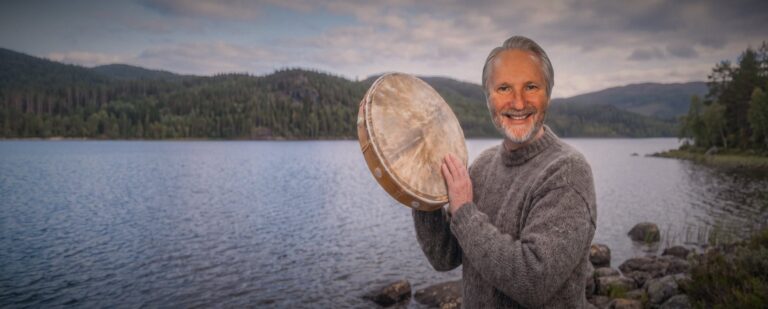
On the huge stones of the Externsteine in Germany, Pål-Esben bellowed out his first rune ritual in his Trøndelag dialect, so loudly that the others said they had never heard anything like it. Two or three months later he met his wife. Amina wrote a song for her own ritual to attract the right partner, and two months later Erik was sitting in the audience at her talk.
In this twentieth episode, Amina and her teacher and guide, Pål-Esben Wanvig, talk about magic. They explore the difference between ego-driven and heart-driven magic, how structural magic sends an impulse into a stuck life structure so that it changes direction, and why the magic only works when you are willing to do your own part. It is part of “The Journey to Self-Realization”, a podcast about the bravest journey a human being can set out on: the journey home to yourself.
This episode is an English translation of our Norwegian original, voiced by the digital avatars of Pål-Esben and Amina.
In this episode
- From a childhood magic wand to real magic: Amina’s first light ritual, and the ritual that led her to Erik
- The sceptical engineer: Pål-Esben’s rune ritual at the Externsteine, the castle with the moat, and why the tradition is about experience, not belief
- Ego-driven versus heart-driven magic, and a tour of the many forms of magic, from hermetic magic and folk magic to chaos magic
- Structural magic: how a current of energy from the beings of light turns the thread running through a stuck life structure
- Why the beings of light ignore the ego, the danger of reptile forces, and why voodoo priests don’t rule the world
- The steps of structural magic: the initiation, a crystal-clear ritual text, the right inner state and the practical steps, and the house that wouldn’t sell
- Water pistol versus loaded weapon: the inner conflict when you don’t do your part, and why self-responsibility is the key
- The emulsifier that stops life separating like oil and water, how structural magic differs from reiki, and what comes next: the runes
This podcast is for you if you:
- Seek real depth in your spiritual practice
- Want to understand yourself on a more fundamental level
- Are curious about shamanism but tired of superficial “new age” spirituality
- Have taken many alternative courses but still feel that something is missing
- Feel an inner longing for freedom, love and wholeness
In a time when so many get lost in external methods and promises of quick fixes, this podcast invites you back to the only place where true answers can be found: your own heart.
Listen above, or read the full conversation below.
Transcript
A warm welcome to the podcast “The Journey to Self-Realization”, a primordial shamanic journey of development back to your true nature. This podcast is a collaboration with our favourite magazine, the health and lifestyle magazine Medium, and is devoted to exploring the bravest journey a human being can set out on: the journey home to oneself. We follow Amina, a student at the Yggdrasil Shamanic School, as she goes through a deep primordial shamanic process of development together with her guide and teacher Pål-Esben. It is a raw, unpolished journey of discovery towards true joy in life, deeper meaning, and a life that truly feels good to live.
This episode is an English translation of our Norwegian original, voiced by the digital avatars of Pål-Esben and Amina.
Pål-Esben: A warm welcome to a new episode, dear Amina.
Amina: Thank you, Pål-Esben.
Pål-Esben: Thank you, and a warm welcome to you too, listener. Today we’re going to talk about an exciting topic. We’re going to talk about magic.
Throughout the episodes of our podcast so far, we’ve talked a great deal about the practical aspects behind a profound process of development, like the one you’ve been through to change your life completely: something the intellect can relate to. We’ve talked about the Path of the Heart and those things. Now, in the coming episodes, we’re going to move into magic: shamanic magic, rune magic, soul hunting and things like that. That means we’re changing gear a little, Amina. And I hope that for you too, dear listener, what we’re going to discuss will be very, very exciting.
But first: what was your relationship with magic in the old days, before you started your process of development with me?
From magic wand to real magic
Amina: Oh, exciting. The closest I came to magic was probably a few new moon and full moon rituals, ceremonies, that kind of thing. Looking back, I understand now that those were ritual acts of a kind, but nothing like what I know from Yggdrasil shamanism and the magic that exists there.
It was only when I really got to feel magic in my body that I felt the difference between performing ceremonies and ritual acts with heart and without it. Because back then I didn’t know any better. I used it a bit like one plus one equals two: you follow a recipe, and then it turns out well. And that can be really lovely and nice too. But real magic? I remember saying to my friend after I started at the Yggdrasil Shamanic School: “Good heavens, magic actually exists.”
When I was little, I had a magic wand, and I remember, quite early on after I’d got one of those wands, that I couldn’t understand why it didn’t work. Because in my head, in my inner world, magic did exist. So magic got a bit lost in the ordinary world.
Pål-Esben: Yes, you got to know magic quite early in the training and had some pretty powerful experiences with it. And magic is a slightly tricky topic, because there are so many ideas about it. That’s especially true if you’ve seen a lot of films and have this idea that the druid Getafix from Asterix waved his staff or brewed his potion, and then everything changed, and that you can use your will to get what you want. There’s a great deal of strange belief, let me put it that way, and a lot of strange opinions around the topic of magic.
What we’re going to do in this episode is try to bring this down to earth a bit and separate things out, so it becomes easier for you as a listener to relate to the different types of magic: what they are, and how they can affect our lives.
Because the way I think about this, performing a ritual act can be wonderful for many different things. It can be wonderful in cultural contexts, in emotional contexts, in social contexts, for the placebo effect that comes from believing in what you do, and so on. So there can be many, many benefits to these things.
But there’s a difference between that and doing magic that gives objective, measurable results almost immediately after you do it. That kind of magic has nothing to do with belief and nothing to do with willpower. It’s a complex but easily accessible type of ritual magic, which we’re going to discuss, where you actually see changes with the naked eye, more or less there and then.
The sceptic who became a shaman
And if you’re a bit sceptical about these things, I understand that very well. Because in the old days, growing up, I didn’t really have any relationship with magic. I was interested in films and that sort of thing. But after my burnout in 2003, out of sheer desperation, I began searching in the alternative world for help with my difficult health situation, and I came across all these different things. And I don’t know what to say, but I thought it was all a load of nonsense. I mean: it’s nonsense, bullshit, idiots running around in all kinds of costumes and outfits.
That was me at the time: completely disconnected from nature, completely disconnected from everything except the intellect. And the engineer in me only wanted to look at what could be observed with our senses, and at what research had proved to be so. That was the level I was at. So I can understand that people today are sceptical about this, and I have complete empathy for it.
And the truth is that most of what’s taught as magic isn’t all that effective either. There’s also a lot of strange stuff in the esoteric world. So it’s OK to be sceptical. But our thing, Amina, is that when we introduce a new person, a new student, to magic, it isn’t about believing in anything at all. It’s about going into experience and really experiencing how magic can change a person’s life. Only then do you gain certainty about it.
Experiencing, not believing
Believing is something you can do in church, definitely, but not here with you and me. Here you don’t come to believe; you come to experience in your own body what this is really about. Only then do you get this certainty: wow, something is happening in life here. After all, believing just means that you don’t know.
So perhaps you could tell us about your first real magical experience, when you started learning this form of magic that we teach?
Amina: One of the first, or one of the…
Pål-Esben: It doesn’t matter. Just take an experience that shocked you a bit, perhaps, or that took you a little by surprise.
The first light ritual
Amina: I’d say the first light ritual I learned to do. It’s a fairly simple but very powerful ritual. I think this may be one of the first pages in my book with a light ritual on it. Yes: in the first powerful ritual I felt in my body, I asked for help with what I can do to feel less overwhelmed by daily tasks in everyday life. I might have phrased it a bit differently today, but it was my first light ritual.
What I felt then was that it went into the deep emotional state connected to what I wanted from the ritual: that this is something I really need help with, and something I really want to put effort into. I went through practical steps: what can I do afterwards? Because that’s also something very important for us. And quite quickly I found that when the overwhelm came over me, it passed straight through my body more easily, because I remembered my practical steps. It was much easier to deal with the theme I was working on. So that was one of the biggest experiences I’ve had with magic.
The seasonal rituals we have, the eight seasonal rituals, are also extremely powerful. They come a bit later in the training.
The ritual that led to Erik
But I also made a magical ritual to attract the right partner. That was two months before I met Erik. I made a ritual to attract a partner who suited my shamanic path of development. Someone with a backbone, someone who could be my Othala, that is, my home, you could say.
Pål-Esben: Your anchor?
Amina: Yes, my anchor, yes. And someone who was committed to developing and living from the heart, someone who suited my path of development. I also made a song for this ritual. I really threw myself into it, body and soul, with heart and enthusiasm and the whole package. And it took no more than two months before he was sitting at a talk I gave on The 7 Golden Keys, your book, Pål-Esben, which is much more than a book. There he sat in the audience, came up to me afterwards, and one thing led to another.
And he’s probably the first man I’ve met who really suits my path. You could say that my other partners perhaps suited my destructive karmic path more, while he suits my dharmic path. And it’s a bit like: wow, magic actually exists. It’s completely crazy when you really do this from the heart, and of course are in contact with the right elements and things like that. So extremely powerful.
Pål-Esben: And that’s the exciting thing: this is right at the start, the way we teach it at the very beginning. It’s very simple to carry out, but done correctly, it’s very, very powerful stuff.
The rune ritual at the Externsteine
And I have to tell you about my first experience with a ritual. It was something similar. First of all, as I said earlier, I was very, very sceptical. But I wasn’t sceptical in the sense of saying “it’s just bullshit, I don’t even want to try this”. I was sceptical, but willing to give myself over and try out what I learned, fully and completely. That was my attitude at the start. And a healthy scepticism is always good.
At that time I was also looking for a partner who suited my path. Because I’d also been through a number of relationships that didn’t suit me very well. I’d gone through cycles, the same chaos all over again. The first year was very good, the second year was OK, the third year was chaos, then half a year on my own, and then a new three-year cycle, half a year on my own, a new three-year cycle. And that’s how it went.
And my teacher at the time says: “Well, Pål-Esben, there are things you need to understand for this to change.” So he prepared me, and we did a number of things. And then I was to do this ritual, which was a rune ritual. It’s much more powerful, let me say, than the ritual you talked about; it’s the kind we come to a bit further into the basic training, when we start structural magic with the runes. That was the kind of ritual I carried out.
I remember writing the ritual text, writing the Galdr poem, working with the runes, and setting everything up the way it was supposed to be done. We were at the Externsteine here in Germany; I was at that seminar here, and it was my first rune seminar. The Externsteine are a bit like Stonehenge in England, but they’re here in Germany, where I live: a gigantic place of power in an incredible setting.
The whole group stood up on the stones there, the huge stones, doing their rituals. And I bellowed out the ritual text in Norwegian, in my broad Trøndelag dialect. It was so loud, so powerful. My wish behind that ritual was so intense.
And what happened was that after this ritual we sat together, and everyone looked at me and said: “That was strange stuff. I’ve never heard anyone bellow out a ritual text so loudly.”
And then, after two or three months, I met my wife. It was a really strange thing, because I wasn’t even at the seminar she was attending with the teacher she had at the time. I wasn’t even at that seminar. I was staying with a friend of mine from Austria, and we just stopped by the restaurant, and there the group was, sitting and eating, and we found ourselves a place. There’s a story behind this that’s actually pretty exciting. And I just go over and hand a note to a woman from that seminar, asking whether she’d like to come out with me for a cup of coffee. It was a pretty clever thing. And she, for some reason… we meet, and we hit it off. And we’ve now been married for a long time: it’s getting on for 18 years or so. And I’m still just as happy as I was.
The castle with the moat
And that was one of my rituals. I also did another ritual like that, one of my first rituals for a health issue. My friend and I rented a castle here in Germany, with a moat and the whole thing. It was pretty cool: very cold, but pretty cool. There I was to carry out a different type of ritual that we’d learned. And the same thing happened. He was staying in a completely different part of the castle from me, but he comes running during the ritual, because the house is shaking, the lights are going on and off, up and down, and there’s a terrible smell. He wonders whether something is wrong.
And as a consequence of that ritual, something very interesting happened with my health: I found a therapist who really understood my situation, and I made some of my greatest breakthroughs in my health situation.
And that was just the very start. Today it’s different, of course, because the more you learn, the cooler the things you can do. But those were my first two real rituals, which shocked me a bit and made me say that there must be much more between heaven and earth than I’d understood so far.
So that’s where it started: by going into an experience, and through the experience getting a feeling and a certainty about what this does for me. That’s what we’ve focused on in our tradition. It isn’t that you should believe in something, or just do some ritual, symbolic stuff, but that you can actually see and observe and objectively measure the changes that happen in everyday life and in your life, in connection with the ritual you carry out. That’s a bit of the background to this.
What is magic?
And perhaps, before we go into the practical side of how we do this, we should say a little about what magic is. That’s the first question we need to answer.
Amina: Yes.
Pål-Esben: What is magic, and what’s the difference between magic and other types of energy work, to separate them a bit? It’s a very complex question, because there are so incredibly many schools of magic.
The first distinction we can make is between magic that comes from the heart and magic that comes from the ego: that is, the ethical foundation the magician has when carrying out their ritual and their magic. That’s the first thing we can look at. Because much of what’s taught in magic is connected to fear and to having control over other people. That’s what I call ego-driven magic. And then we have heart-driven magic, which is driven by the heart and the primary feelings and what we call the Path of the Heart, which we talked about a lot in the first episodes of our podcast series.
That’s the first distinction. And as I see it, at least 80 percent of the magic being taught out there is driven by ego: you’re supposed to do something or other to get what you yourself want. And it doesn’t matter what others get or don’t get, as long as I get what I want, as long as things go my way. That’s ego-driven magic. But we’ll talk about heart-driven magic afterwards.
The many forms of magic
But first, briefly, about the different forms of magic that exist. The first type we often hear about is ceremonial magic, or hermetic magic. This is the magic connected to Hermes Trismegistus and Thoth, if you go back to Egypt and Greece. That type of hermetic magic is often formal and very, very complex. There you use rituals, symbols, names and so on.
A very well-known example here is the magic connected to Aleister Crowley. Everyone who’s read about magic knows who Aleister Crowley is, because he’s one of the best-known magicians of the last hundred years. A great deal of what’s known about magic in the world comes from Aleister Crowley, for example Thelema magic, and the Golden Dawn magic he came out of. Then we also have Enochian magic and Kabbalistic magic. This is what often comes under ceremonial and hermetic magic.
The next type is what we might call folk magic, or witchcraft, which we find is often practical and down to earth, where you stand in circles connected to nature, with herbs for everyday life. There we also have Wicca magic, hedge witchcraft and granny magic. Norwegian sorcery and seidr also belong here.
Then we have a category we can call shamanic magic: for example Norwegian and Scandinavian shamanism, but also Siberian and Sami shamanism, South American shamanism, North American shamanism, Amazonian shamanism and curanderismo shamanism. So there’s a lot of cool stuff here.
Then you also have a type called chaos magic, which is, let me say, more the modern new age kind of magic. It’s a more experimental form of magic with very, very few fixed systems, such as sigil magic, personal symbol systems and created spirit beings. There you create these golem beings, which we discussed in an earlier episode, and which we also find in Hebrew magic and so on.
Then we have a category we can call alchemical magic, that is, alchemy, which is very well known. Then we have divination magic, which you know: tarot, runes, astrology, the use of mirror magic and these things. Then there’s something called elemental magic, where we work with the elements and balance earth, air, fire, water and also the ether element, something we also find in feng shui, for example.
And then we have something called occult magic, where we also often hear about Aleister Crowley and the Golden Dawn. It’s often based on very strict systems, and you very often hear that it’s about imposing your will. And then you have protection magic, love magic, prosperity magic: many, many forms of magic. So it’s no wonder people can get a bit overwhelmed and have lots of misunderstandings and ideas about this, because it’s a gigantic topic.
Structural magic and life structures
But we at the Yggdrasil Shamanic School practise a very specific type of magic, which is called structural magic. And could you say something about the background to our magic, and what’s important for the type of magic we do?
Amina: Yes. I’d say the most important thing is that you’re connected to the heart: that the ritual isn’t just beneficial for yourself, but for everyone else involved. It’s a bit like what you touched on once in some episode or other, about a student who’d said “my ritual didn’t work, I want to sell the house”. And then you could see that it had a bit more to do with ego than heart. There wasn’t any fairness in that ritual. So that’s probably one of the first and most important things: that you’re connected to the heart.
Pål-Esben: Yes. And the question is why, because you should also know the answer to why this is so important. Then we come to the question: what is the source, or the sources, of this magic? What is it that affects the magic?
If we go back a little and say a couple of words about what structural magic is: in earlier episodes we’ve talked about life structures, that is, the cycles of life and death. And each life cycle has a structure.
Take an example. Our life itself, from birth to death, has a structure. It has a thread running through it, and that thread is the structure the life revolves around. And then life is lived out along this thread, this structure. Most of the structure is one you choose yourself, and it plays out through the choices you make. Part of the structure is rooted in our karma, and also in the soul’s prism, which we talked about in some of the earlier episodes.
Take a very practical example of a life structure: you have challenges in your relationship. That means the life structure connected to the relationship, the thread running through it, has developed to a point where it has created many, many problems. There are conflicts; perhaps you scream and yell at each other, or you no longer talk to each other. Whatever it is, conflicts and discomfort arise. The life structure connected to the relationship has developed to a place where we have big problems.
The impulse that turns the thread
Structural magic sends an impulse, through the magic we’ll talk about afterwards, into this point in the structure, to change the direction of that thread. Instead of heading towards more and more chaos, strife and problems, it turns perhaps 45 degrees, so that you find solutions to your problems and go back to respect and harmony and love.
You could say it’s a form of energetic light, an energetic ball, just to use a metaphor, an energetic current. Through the sources we have access to for using magic, we shamans send it into this stuck life process that needs to change. It’s as if the life process gets a kick, and then it changes direction.
That’s why structural magic is the form of magic we teach in the basic training: it gives objective, measurable results in connection with the life the shaman lives, in a practical way. There’s nothing you need to believe in, nothing you need to imagine. It’s simply something that will happen, as long as you use the steps and the model this is carried out with, that is, as long as it’s carried out correctly.
The first time I learned about these things, two decades ago, I thought: this is really exciting. It means I have life structures in absolutely everything. I have life structures in connection with relationships; I have a life structure if I’m looking for a partner and don’t have one; I have a life structure in connection with my job. The process of moving house is a life structure of its own. You reach the point in the life structure around your home where a change is needed, that is, you want to sell your house and find a new one. Another form of life structure can be connected to finances. Another example can be health situations. Other forms of life structure can be connected to daily life, or to the kids. Everything has its own life structure. And it’s this that we influence, through the magic taught in the basic training, so that it changes direction.
The sources of power: the beings of light
And then the question is: where do we get this current of energy from? That’s a crucial point when it comes to shamanism. Where does the magician, or the shaman, get the current of energy that’s going to influence the life process? Where does it come from?
Amina: Beings of light.
Pål-Esben: Well, in our tradition, yes. For us it comes only from beings of light, whether that’s power animals, angels, Norse gods, or the Primordial Dragons as part of our tradition.
All the magic we teach at the Yggdrasil Shamanic School is directly connected to nature, directly connected to the sources found in nature, and directly connected to these various forms of beings of light that are there and help the shamans in our traditions. They’re the ones who provide the energy potential. They’re the ones who, together with our ritual magic, send the current of energy into the life structure that needs to change, and who make the actual changes in the life structure.
Why the Path of the Heart is the foundation
And then we come to this: what does it take for us to have access to these sources of power? That’s the reason we’ve spent many episodes on the Path of the Heart. Because suppose you’re coming from your ego: from the ego’s wishes for control and power, wanting what you want, not giving a damn about anyone else as long as you get your way. In other words, your magic or your wishes are driven by your ego. Then not a single one of these beings of light is interested in helping you.
These are beings who are so close to the creative power, so close to oneness, so close to the source of where everything comes from. Imagine a human being with their ego and their intellect saying: “Dear, mighty bear, could you come and help me fix things so my neighbour gets a few problems, so I can take revenge because he cut down the tree on my property?” Then Grandfather Bear will just give this a bemused look, the way he looks at us primates.
Humans think they’re so intelligent, so wise, but compared with these beings, who understand the wholeness of things, we’re really not much better than primates. They will never, never ever, listen to a human being who tries to steer this with their will and their ego. They’re only interested in cooperation, only interested in relating to people who live from their heart, and whose wish behind the ritual comes 100 percent from the heart.
That’s one of the reasons we’re so focused on this, at the start and really all the way through. However far you train in our shamanic school, you’ll keep hearing about the Path of the Heart. You’ll keep hearing about the 9 Pillars for Finding the Path of the Heart. You’ll keep hearing about how you become able to live them out: how you become able to embody more forgiveness, more gratitude in your life, more natural self-regulation, and so on. We talked about that a lot in the first episodes. And the more you embody this in your life, the more the beings of light open up their potential to you.
Amina: Mm.
Pål-Esben: And that’s what’s so spectacular. Here’s one of the main reasons why shamans like you and me and the others in our tradition often get such spectacular results with our magic: we’ve understood the foundation that this form of magic needs in order to work fully. That’s the foundation for having access to the sources of power, to the current of energy we want to send into the life structure that’s going to change.
So we keep coming back to what we talked about in the first episodes, and we keep riffing on it until people get completely dizzy: “Can’t you ever finish talking about the Path of the Heart?” But the point is: as long as you’re run by fear, as in fear-driven shamanism, for example, no beings of light will have anything to do with it. Then you have to use completely different kinds of sources of power that have nothing to do with this, and that’s a completely different story.
Reptile forces and other sources of power
Amina: What you might call black magic, perhaps?
Pål-Esben: Yes, that’s a harsh word to use for it. You also have various forms of nature-based magic that use reptile forces, for example, the core of spider forces and so on. It’s more uncontrollable magic that has no wisdom in it, but it can be used if you’re operating from your ego. Of course, it’s nowhere near as effective as the kind of current of energy that comes from the beings of light we’re discussing.
And to handle reptile magic, for example, you need to practise for many, many years. You need a teacher who really knows what this is, and you’ll often get big, big problems in your life when you work with these things. So it’s something I recommend absolutely no one get involved with. It can be very, very harmful to people who engage in it.
But when we relate to these brilliant beings of light, no problems can arise. The magic that’s carried out can only help and never harm: not the one the magic is sent to, not the one who receives the magic, and not the one who performs the magic. So it’s 100 percent safe.
Amina: So what happens if you try to do magic to weaken another person? Will it work at all? Does it rebound on you? What happens then?
Pål-Esben: Well, these beings of light will just look at you, bemused. They’ll think: “Poor primate. They think they understand everything, but they really understand nothing.” We’re talking about humanity as a whole here. We really understand nothing about how things fit together, but we’re so arrogant that we think we understand everything, and that has led us to create the world we live in today. It’s very chaotic, with a great deal of destructiveness. But in reality they’ll just ignore these things.
Why voodoo doesn’t rule the world
So if you want to do magic connected to other things, you need to find other sources of power. If you want to project something destructive, you need to find other sources of power, as in hoodoo and voodoo, for example. There they slaughter chickens or a goat, take the life energy released through the death of the goat or the chickens, and project it on to the person who’s meant to receive it.
But again: it’s a very, very weak form of magic that doesn’t work very well. It’s completely dependent on the recipient believing in it and being part of the culture, as we talked about in an earlier episode. Because if these voodoo priests in Haiti had been as powerful as people think, they’d have ruled the world. Then Trump wouldn’t have been alive, or Putin, or Obama, or others. Because then anyone at all could have spent a couple of thousand euros and hired all these voodoo priests, and they’d have gone ho-ho-ho, and people would have dropped like flies. After all, if it worked like that, Haiti wouldn’t be one of the poorest countries in the world.
So this form of magic works terribly, terribly badly, but it does considerable harm to the person who tries to carry it out.
The ritual text: a crystal-clear intention
So what we prefer, in our tradition, is heart-based magic, where the magic and the wish behind the ritual come from the heart. And you learn a process to go through to make sure that happens. The first thing you learned was the importance of your intention being crystal clear, and that’s what we call the ritual text, which has to be written down. What were your thoughts when you worked on this for the first time?
Amina: Oh. Yes, I remember that at first I was very overwhelmed, because I found it hard to write a good ritual text, and I thought: what if it went wrong, and this and that. But then I got good help from you. I sent you emails with my ritual text: “How does this look?” “Yes, it looks good”, or: “Perhaps you could make these changes here”, and so on.
Those were my first thoughts about it. And I actually think I went into it with a very open mind. I’m not quite sure whether I believed in it, but throughout the whole training I’ve just been open. It hasn’t mattered what I’ve believed or not believed; I’ve noticed the effect on me.
When you don’t do your part
And one of the times I had a real aha moment about the current of energy that’s sent into the life process through the ritual I’ve done was when I didn’t do my part. Because it isn’t just a matter of doing a ritual and waving the wand, and then everything turns out fine and you get what you want. It isn’t that simple; it also demands something of me: the practical steps afterwards. How can I meet the ritual halfway?
One of the big aha moments, which I now see is very important, was one of the rune rituals I’ve done, where I didn’t do the practical steps. Then I noticed that it became even more intense inside me, with an even greater polarity, if you can call it polarity. It churned all the more inside me, because the magic was being sent one way, and then I was in a way working against the magic that was being sent in. I was working against that structure, that is, the power that was being sent in. So a real opposing pole formed inside me.
And I remember talking to you about this then: could it be because I haven’t done my practical steps, including the ones connected to the consequence runes I drew about the consequences of carrying out this ritual, and things like that? That was when I realised how powerful this really is. And I think it was a very important part of my process: experiencing what it was like when I didn’t do my part.
The steps in structural magic
Pål-Esben: So let’s go through the steps of what it takes to do this form of structural magic. First of all, the shaman needs to be connected to their heart. And then it isn’t enough just to close your eyes and say “I am love”; something more is needed. We talked about that in the first episodes: what being connected to your heart means in practice, throughout your life. Because it isn’t enough to put on your shaman’s pelt and be holy and loving for half an hour when the ritual is to be done, and then take off the shaman’s pelt and scream and yell at your kids, and do whatever else you do in life that isn’t very connected to the heart.
That’s number one. And it’s a process that goes on continuously, one you continuously cultivate. You do it yourself today: now, as we’re recording this, it’s a couple of years since you had your first experiences, and we’re still cultivating this. Because just by cultivating the Path of the Heart, life changes quite considerably in itself.
Number two: you need a shamanic energetic initiation from a teacher in our tradition, which opens up access to the sources of power that are to be used in the ritual. Otherwise this is very, very difficult to do. In that case you’d have to practise for many, many years to build up partial access yourself, if you manage it at all. So we do this from day one, with a shamanic energetic attunement process, an initiation process. The teacher opens things up so that the new student gets direct access to the sources, the sources of power that these beings of light and others offer, which you can use and turn to when you’re going to do your ritual magic. That’s number two.
Number three: you need a very clear and distinct intention behind the ritual, unambiguous, as it’s called in mathematical engineering language. An example: an intention that says “I want help to get rid of all my anxiety”, which is very generalised, will work terribly badly. But if you go in and say “I’d like help to heal the cause of my fear of heights”, then you’re very, very focused on one thing. The first thing is a really crystal-clear, razor-sharp intention.
The house that wouldn’t sell
And that’s often the hardest part at the start: getting a suitable, clear, working intention for what you want. It’s hard to separate ego from heart at the start. You say: “Yes, but I need this money for this house I’m selling, and preferably I need more than the asking price, because I really do need it, and surely that must be the heart.” No, that has nothing to do with the heart.
Take the example we used a few episodes ago, with my student who wanted to sell the house and who said in her ritual text: “Yes, I want to sell the house, I want a buyer who comes quickly, and I want a buyer who pays above the asking price.” So, very ego-driven. Then she comes to me after a few months and says: “Why isn’t this ritual working?” And I answer: “It’s because you’ve made a useless ritual text; it isn’t connected to your heart, but to your ego.” And when we changed that ritual text, the house was sold within two or three weeks.
That’s often the hardest part at the beginning: finding this in the ritual. Then we often end with: “May this ritual be for the common good of all involved.” That means it isn’t just about me, but about everyone else involved in this too. We want what comes out of the ritual magic to be for the common good of everyone involved in the ritual and those connected with it. It’s not just for me, but also for my partner, if the ritual is about the relationship, and for the kids too, for that matter, if you have any, since they’re part of everyone involved here. That’s the next step.
Once we have the intention clear and distinct, we need a setting, a ritual process to go through, where we activate access to the various sources of power, bundle them together and send them out in a particular direction so they hit the life process. Our ritual structures make that part very clear and precise.
Before you can do a ritual like this, you need to shift into a suitable inner state. That suitable inner state needs to be filled with love and primary feelings. You need a genuine wish for this ritual: it has to be important to you. Because doing a ritual like this just for a bit of hocus-pocus and a nice time is meaningless. Once you’re going to do one of these rituals you learn, it has to be important.
The practical steps
And the last thing, before you should do a ritual at all, is what we call the practical steps. You need to understand that magic will never be able to live life for you, and will never be able to change life for you, unless you’re willing to do your own part. Magic can create tendencies, or strengthen tendencies, but it can’t just change your relationship unless you and your partner are willing to do the practical things that are needed.
Take an example here. You were looking for a partner; let’s take the ritual from when you found your partner. You set this up, and you wanted to find a man who suited your heart and your path, and who had a backbone. Not some sort of, I don’t know, softie, but a real man. Because you need someone with a backbone, since you have a lot of yang and power yourself. But not an aggressive man, like the ones you’ve been through many times before, with the abuse and the things we’ve talked about.
And then we talked about the practical steps. What were your practical steps, the ones you had to take in connection with this?
Amina: I’ll have to have a look here.
Pål-Esben: Just to mention one misunderstanding around this: you do a ritual to attract a suitable partner, but then you just sit watching Netflix day in, day out, and don’t move in circles where potential partners can be found. You expect the partner to come down the chimney like Father Christmas and stand in front of you.
It may sound a bit flippant, but unfortunately a great many of the misunderstandings around magic in the esoteric world are exactly this. People are looking for a special method, technique, magic, game or whatever it is, so that things will happen without them needing to do the practical things. And in this case it would mean just sitting passively and hoping that Mr Perfect will ride in on his white horse, knock on the door and say: “Right then, shall we get married?”
Amina: Yes, that’s what I’d been waiting for all my life, you know. And speaking of those cycles: I’ve had those three-month cycles, and it gets very tiring after a while. But yes: I definitely had practical steps, and one of them was to work on the things I needed to work on in myself in order to attract that kind of partner.
Pål-Esben: Yes. And that’s one of the important things. You’ve gone through cycles, three-month cycles, or cycles where you’ve attracted very unsuitable men, very aggressive men, very destructive, belittling people. Clearly that’s something you need to learn to change. That’s your thing, part of your soul’s learning themes, which you need to take responsibility for.
That was also the reason we discussed it, and there you often need a mentor, guide, teacher, therapist or someone else. That way you can understand, in this case through the two of us talking it over, what the reason is that you keep needing to attract these aggressive men. And then we deal with it. You deal with it: you thought it through, did your homework, and we also did shamanic healing. You also worked on practical things around this.
Because clearly, magic can’t live life for you. Magic can strengthen tendencies; it can create tendencies. You can send this current of energy into this life structure, this thread: unsuitable man, unsuitable man, new unsuitable man, new unsuitable man. That was your life structure in connection with relationships.
The conflict when the impulse meets resistance
Suppose you then expect a magical current, an impulse into this stream of life, simply to change it 90 degrees so that everything becomes fine. That’s not how the world works. It’s as silly as learning The Secret and then wishing, in a very special way, that tomorrow a Porsche will be standing at your door waiting for you. It’s meaningless. It’s downright psychotic; that’s not how the world works. But people make a great deal of money offering solutions like that, where you learn special methods from The Secret and are supposed to wish in special ways, and then life will simply change. The world doesn’t work like that.
So in this case, we’ve sent this energy, which is a very powerful current of energy, into your life structure. If you haven’t been willing to take responsibility for what’s your part, for what you need to learn around this, then something very interesting would have happened: this impulse would have started creating inner conflicts in you, like the ones you described.
And the conflict is between two things. One is: “I’m not willing to do anything at all myself.” And then there’s the impulse, which says: change, change, change, change. For you to find a suitable partner, bigger changes were needed. Suppose you take responsibility and say: “OK, I have to take responsibility for that, I have to figure that out, I have to change and turn that around.” Then you’re working in step with the current of energy and this 45-degree turn. But if you haven’t done that, you have the inner conflict, which can often become very uncomfortable. You yourself are saying: “I don’t want to change, I just want to keep things the way they are.” And the energy has said: “Yes, but you did ask for change, you did ask for change. I’m offering change, I’m offering change.” And then you say: “No, no, no, I don’t want to change.”
That’s what creates the conflict, and it’s why you’re told very clearly and distinctly in our tradition: never do one of these rituals you learn without being willing to do your part, without being willing to take self-responsibility. Because then it will only create discomfort in your life.
And you did that once, as you told us earlier. What was that like?
Amina: Which time were you thinking of now?
Pål-Esben: Earlier in our conversation today, you talked about having done a ritual but not being willing to do the practical things you had to take responsibility for.
Amina: Yes: an extremely big inner conflict. It was as if the situation got much worse, without my really understanding why. Because nothing outside had got worse, but it got worse inside me. But it eased a lot after a conversation I had with you, where I actually understood: oh, this isn’t something you mess around with. You shouldn’t be afraid of doing magic, but you really should know that you’re willing to play on the same team as the magic. Otherwise, setting magic in motion and not doing your part is also hugely disrespectful towards the beings and elements and those who help us. So I learned a very important lesson there.
And it’s also the case that you don’t always notice straight away whether you’re on the right track or not. That’s why it’s so important to always come back to this follow-up work, with reflection, contemplation, writing in your book and reading a bit: “Oh, maybe I haven’t followed this up; maybe I should do that.” Because it can be very easy to just carry out the magic and then shelve it, but I’ve realised so many times how important it is to follow up.
And it can be very easy; I’ve had a part inside me that’s been like: “Oh, I can’t be bothered with this. Oh, this is boring. Do we have to do this again?” Then I’ve had to acknowledge that, but also look at my deepest why: why am I doing this? Why do I want this? Because sometimes it comes from an energy of “yes, but I have to take practical steps, I have to do this, I have to do that”. No, I don’t have to do anything. I’ve chosen this, I choose this, and now I have to take responsibility. The inner moaner has also been a very important part of my journey here: constantly coming back to why I’m doing this.
And gradually, at least for me, once I’ve applied some discipline at the start, the longing comes after a while, and it simply becomes the right thing to do. You don’t want to do it any other way, because you know you’re in sync with it. It comes from the heart.
Water pistol and loaded weapon
Pål-Esben: Yes. And this is a bit like the difference between using a water pistol and a loaded weapon. I’ve had many, many students who’ve come to me after being in many other traditions where they learned other forms of magic, everything from seidr magic to Wicca magic. They say: “It’s very nice to be part of this ritual circle and what you do there, but very little actually happens in life, apart from it being a nice and exciting experience.” Not very many practical, objective, measurable things happen in life.
You can see that as a water pistol. And metaphorically speaking it can be important in many areas, socially and so on, so I’m not saying it’s just nonsense. But there’s a difference between that and using magic and having access to magic that gives sharp, clear, objective, measurable changes in life. That’s what I call a loaded weapon here.
And when you use a water pistol, you don’t need to take any self-responsibility at all. You can be part of a magic circle and dance and have a nice time and have a magical setting around things, but there’s no need to take any self-responsibility for anything at all. You’re often taught that the magic will just happen magically, and that if you can live in love, your life will change. But that simply doesn’t happen.
When you come to the magic we teach, you can see it as a loaded weapon: one you can’t do harm with, but which has the effect of a loaded weapon compared with a water pistol. And when you’re going to do this, with the magic we teach, it’s so important that the shaman is willing to take self-responsibility for their own things, that you’re mature enough to take self-responsibility. You can’t just stay where so many are, doing something or other and then hoping the beings of light and the angels will fix your life. That’s a lack of self-responsibility.
Self-responsibility
And that’s something that isn’t taught very often either: the importance of self-responsibility when you do magic, but also when you do healing work. Self-responsibility is an exceptionally important topic. In the old days I treated a lot of people. I don’t any more, since I simply don’t have time for it, but people came to me for treatment, when I lived in Trondheim and then here in Germany. They lie on my treatment table, having come for treatment, and I ask: “What is it you’d like treatment for?” “Well, I’d like treatment so I’ll lose weight”, for example. And yes, I’m happy to treat you, and perhaps do all sorts of stuff and everything else too, but nothing will work unless you’re willing to change your diet. You have to be willing to do these things and take the self-responsibility that’s needed, alongside the treatment and the help you get from me.
You can go to a healer and get a wellness treatment, which is OK. But our soul brings learning themes with it so that we’ll learn and grow. And one of the most important learning themes, themes of growth, that we need to be observant of, seen from the soul’s perspective, is illness. That’s the reason I no longer treat people for their illness, but teach them how to treat it themselves. That’s the difference between how I did it at the start, when I tried to fix other people’s problems, and today, when I only teach you how to fix your own problems: through magic, through healing, through self-responsibility, through everything else you learn. And then the soul rejoices too, because then it has understood: “Aha, I’m taking responsibility for my process of development and growth.”
So those are some of the reasons for what we do. It’s of course much easier, for example for those who offer seminars and courses, to say: “Come to me, and I’ll teach you a special method, and your life will sort itself out.” And people are drawn to that like flies to flypaper; they want easy methods.
That’s something different from what we’re talking about in this podcast. It isn’t made for everyone. When we call it a profound shamanic process of development that really changes a person’s life completely, very different kinds of qualities are needed than throwing something magical up into the air and expecting things to sort themselves out. This is what I call the real work, if you want to make profound improvements and changes in your life. But very few are willing to do it. Most people break into a real sweat when we talk about the first Golden Keys: “Well, that sounds difficult. No, I don’t want to do that. Isn’t there a shortcut? Isn’t there something easier?”
Amina: Yes. It really demands something of you, and that’s the difference, in my experience at least, between other kinds of things I’ve taken part in and learned, and this. Because this really goes to the core, and it also demands something of me. It isn’t just a matter of joining a circle, or a seminar, or a course, and then life changes.
And I notice that with my students too, when they share their experiences: “Oh good heavens, I did this light ritual, and suddenly I got lots of clients.” And it was like: wow, magic is real. And other kinds of things too, where you can see that changes have actually happened in the person’s life. It’s pretty spectacular. It’s magic, so to speak.
And it also goes very much hand in hand with The 7 Golden Keys and the 9 Pillars for Finding the Path of the Heart: this profound personal development, in addition to the spiritual and, call it, esoteric development. You have all the parts with you: the magic, but also this very human side, you could say, if you can call it that.
So being able to see and guide people through this process gives me so much: seeing how this magic can change a person’s life, how self-responsibility can change a person’s life. Self-responsibility may sound very drastic, but good heavens, how much power you gain over your life when you take self-responsibility. And not least when you understand it, which is perhaps the most important thing.
The emulsifier: why learn magic
Pål-Esben: Completely agree. And as we wrap up here: why should you learn these things? Now we’re talking about magic, for example: why should you get involved in learning it? The answer is that it will become much easier to go through life.
I often use this image. When we want to mix oil and water, we know we shake the oil and water together, and it’s very, very difficult to get them mixed. And then we see that now it’s mixed, now we’ve worked really hard, and then we put the glass down, and the water and oil separate. Then you have to start shaking again, and working again, and working again. Adversity, adversity, adversity. And then you put the glass down and think all is well, and then it separates again, and there’s more shaking. That’s how life used to go.
But this form of magic we’re talking about now, and the energy work with runes that we’ll come to later, and the other, more spectacular methods we use, work like an emulsifier between the oil and the water. And what’s so good about an emulsifier is that when you put an emulsifier into a mixture of oil and water and shake it a couple of times, it’s mixed, and the oil and water stay mixed permanently.
That’s why a person should learn these things: so that everything isn’t so heavy. Everything doesn’t have to be so difficult. Life can be spectacular to live, and that’s what I believe people deserve.
Amina: Yes, I completely agree with that.
Pål-Esben: So that’s how it is. And you’ve already started with students, and over a couple of decades I’ve had thousands of students, several thousand students, and I’ve never seen this fail to work for a student, if they do it right. I have so many stories. It’s absolutely spectacular, wild and unbridled when you look into a student’s eyes the first time they experience it: “Wow, this actually works!” That goes for everything from the first spontaneous healing in module 0 at the beginners’ seminar: “What is this?”
So that’s part of my life mission now: helping people set themselves completely free, so they can live the spectacular life that’s possible to live. That’s what you’re beginning to experience more and more, with students too. It’s quite wild, really, what’s possible if you reach that point and are willing to engage wholeheartedly in your life and your process of development. That’s how I see it, at any rate.
Amina: I completely agree. And that’s what makes it so much fun to take part, with you too, in helping other people through these processes: a real process of development, where you go from water pistol to loaded weapon. You actually start hitting the target, instead of a jet of water that goes three metres and hits the ground. Then something happens, and it’s spectacular to get to experience.
Structural magic and other healing
Pål-Esben: Do you have any other questions about magic up your sleeve, Amina?
Amina: Yes: what’s the main difference between structural magic and other types of healing and energy work? You touched on it a bit earlier perhaps: that you send this magic, this power, into a life structure, and that the other is perhaps a bit more about well-being, you could say. But yes.
Pål-Esben: That’s a complex question you’re asking, because the answer is very long, so it’s easy to oversimplify. There are as many forms of healing methods as there are of magic. Let’s take an example where you learn the most basic, simplest form of healing system that exists in this world, which is reiki: learning to channel universal life energy, which is completely harmless and entirely for beginners. It’s the simplest of the simple. You add ki, life energy, reiki, to a person, or to organs, or to a room. And that is of course something completely different from sending a current of energy into a life structure that’s going to change. They’re two completely different fields, and they demand two completely different things.
There’s a difference between charging up a person’s energy system, the ki system, and structural magic. Structural magic goes into the person and is connected to the life structure. Reiki is non-polar energy: neither yin nor yang, neither cold wind nor warm wind, but a pleasant, mild breeze right in between, which you can give as much of as you like without being able to harm anything at all. It’s completely harmless, and that’s why many people have learned these things.
But when you start on somewhat more advanced healing, for example healing with the runes the way we teach it, we come into polar forces, yin-yang forces, and then you have to know what you’re doing. Because if you only send heat in, it eventually gets so hot that it can become too hot. If you send cold in, it can eventually become too cold. Then you need to know what you’re doing. And when we start working with the runes and the rune forces, we also start working with other forms of magic that aren’t directly connected to structural magic, but that’s a topic for a later episode.
Amina: Yes, that’s very, very exciting. I’m looking forward to the continuation of this.
From engineer to shaman
Pål-Esben: It’s spectacular. Perhaps we should wrap up now. When I look at where I started in this, I was a burnt-out engineer who thought he’d understood everything. All this magical stuff was rubbish, just idiots running around in their costumes, and I simply thought magic was bullshit. Then, as a beginner many years ago, I experienced my first magical events and saw with my own eyes how things changed and played out in my life. And now look at where I stand today. It’s totally wild what’s possible.
But it’s a craft you need to learn, and that craft is difficult to learn. When I learned this, I spent many, many years at the start. But today, in our shamanic tradition at least, we use the most modern teaching techniques and pedagogical techniques, so what took me ten years to learn, you can easily learn in one year today.
Amina: Yes.
Pål-Esben: Hello?
Amina: It’s pretty cool, yes.
Pål-Esben: I mean, it’s just: wow. So, do you have any words of wisdom to finish with, dear Amina?
Amina: Oh, yes. My word of wisdom here is: join the Yggdrasil Shamanic School, because then you’ll get to experience what magic actually is, and how it can change your life. It’s perhaps the most direct thing I’ve said in the whole podcast, but it’s also because it’s the only thing I’ve experienced that works. It’s the only thing I’ve experienced that has actually, practically changed my life, and that also gives me hope of future changes. Because I’m constantly changing, developing, expanding. There will always be something I need to work on, goals I perhaps want to get closer to.
And knowing that I can get help, help from things you can’t see with the naked eye: it actually exists. And getting to feel it in your body is absolutely… well, you have to experience it to really understand what I’m talking about here. So if you’re curious, you’re very welcome to look into the Yggdrasil Shamanic School a bit.
Pål-Esben: Yes. And whatever the case: if you really want to learn magic, you should find yourself a teacher who’s connected to the heart, so you don’t end up in something that increases fear, increases unrest and so on. There’s far too much of that. At the very least you have to seek a path where the magic is connected to the heart, and where the magic is rooted in this: we don’t do magic for the sake of magic, but so that life actually changes in an objective, measurable way.
Because life doesn’t have to be so difficult. We can also make it easier for ourselves. And that’s my encouragement: why make things so difficult, when they can be done in a way that’s so much more exciting and spectacular?
The road ahead
So, that’s it, Amina. Next time we’ll talk about a new, exciting topic. What have you picked?
Amina: I’ve picked… we’re going to go a little into runes and rune magic: understanding what runes are really about, where they come from, and why we use them. Very, very exciting.
Pål-Esben: That’ll be great. We do go on a bit long in our episodes, but we talk until we’re done. In the next episode we’re going to talk about the runes: the background of the runes, where they really come from, why Norse mythology isn’t quite what you might think, and why that isn’t where the runes come from, and so on. So it could be very, very exciting. Thank you so much for staying with us all the way, dear listener. We really appreciate your feedback, and a five-star rating on Spotify helps our podcast reach more listeners. And thank you so much for being here with me, Amina. I really appreciate it.
Amina: Likewise, Pål-Esben.
Pål-Esben: Thank you for being with us, dear listener. I hope you’ll join us again in the next episode. And until then: have a truly wonderful day, evening, night or morning, wherever you are listening from. Take care.
Outro
Thank you so much for listening to this episode of “The Journey to Self-Realization”, a primordial shamanic journey of development back to your true nature. We hope Amina’s story has inspired you to explore your own journey of self-discovery and development. Remember that the path from suffering to self-realization can be demanding, but with courage, patience and support from a competent guide, mentor, teacher or therapist, almost anything is possible. We wish you all the best on your journey, and we’ll talk again in the next episode.
The Journey to Self-Realization
Nature’s Path to Freedom and Self-Realization
Curious about what primordial shamanism really is, behind the mystique and the misconceptions? In this short online course I tell the story of my own path from skeptical engineer to teacher of primordial shamanism, and give you a first introduction to what I teach: what shamanism and primordial shamanism are and are not, how rituals and rune magic are used in practice, and why the longing for growth matters so much for a good life.
The lessons are recorded in Norwegian; the English version will be ready in November or December 2026. Leave your email on the course page, and I will tell you when it is.