
Episode 41 – The 9 Pitfalls That Stop Most People on the Path to Freedom
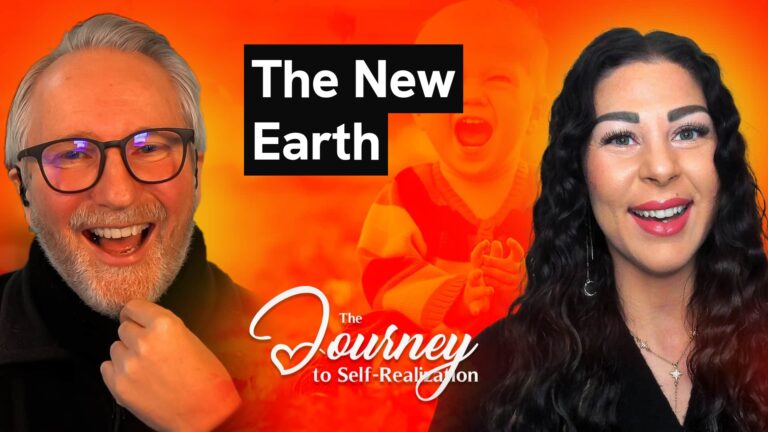
In this forty-first episode, Amina and her teacher and guide, Pål-Esben Wanvig, talk about the nine pitfalls that stop most seekers on the path to freedom. They explore why there is no hero’s journey without a guide, why the old you has to die, and why real awakening is about letting go rather than learning more. It is part of “The Journey to Self-Realization”, a podcast about the bravest journey a human being can set out on: the journey home to yourself.
This episode is an English translation of our Norwegian original, voiced by the digital avatars of Pål-Esben and Amina.
In this episode
- Why the brain and the ego run from discomfort, the soul as a brave maverick, and problems seen as a potential for growth
- Amina’s demons, and the courage to test what a guide says instead of shying away from anything that challenges your belief system
- Pitfall 1, starting without a guide: the hero’s journey, the guru as the bringer of light, and why AI, trained to be a sycophant, can never do the job
- Pitfall 2, refusing to let the old you die, and the difference between doing forgiveness and becoming forgiveness
- The false masters at the fair in Baden-Baden, Pål-Esben’s first meeting with a real master, and the shaman’s-pelt syndrome
- Pitfalls 3 to 5: seeking comfort instead of truth, the people who disappear from your life, and wanting a map and guarantees in an open landscape
- Pitfalls 6 and 7: your own mind as your greatest opponent, and the fear of silence, from the chill-out exercise to Amina’s first five minutes
- Pitfalls 8 and 9: learning more instead of letting go, the rune books Pål-Esben put away on the shelf, and stopping when it gets uncomfortable
This podcast is for you if you:
- Seek real depth in your spiritual practice
- Want to understand yourself on a more fundamental level
- Are curious about shamanism but tired of superficial “new age” spirituality
- Have taken many alternative courses but still feel that something is missing
- Feel an inner longing for freedom, love and wholeness
In a time when so many get lost in external methods and promises of quick fixes, this podcast invites you back to the only place where true answers can be found: your own heart.
Listen above, or read the full conversation below.
Transcript
A warm welcome to the podcast “The Journey to Self-Realization”, a primordial shamanic journey of development back to your true nature. This podcast is a collaboration with our favourite magazine, the health and lifestyle magazine Medium, and is devoted to exploring the bravest journey a human being can set out on: the journey home to oneself. We follow Amina, a student at the Yggdrasil Shamanic School, as she goes through a deep primordial shamanic process of development together with her guide and teacher Pål-Esben. It is a raw, unpolished journey of discovery towards true joy in life, deeper meaning, and a life that truly feels good to live.
This episode is an English translation of our Norwegian original, voiced by the digital avatars of Pål-Esben and Amina.
Pål-Esben: Hi, Amina, and a warm welcome to a new episode.
Amina: Hi, Pål-Esben. Thank you so much, and likewise.
Pål-Esben: Thank you. And a warm welcome to you, dear listener. Today we’re going to talk about a topic that is also very interesting for us, one that many seekers on the path to oneness and enlightenment struggle with, and that stops a great many people from reaching this freedom we’ve been talking about in recent episodes. In the previous episode we interviewed three of your fellow students, who have begun to bring the real experiences of oneness into their daily lives, and who described how those experiences turned a human being’s life upside down in a positive, radical way. Both you and they have gone through the challenges we’re going to talk about today. Because it’s not that simple to start out on a journey like this, Amina.
Amina: No, it isn’t. Several times I’ve wanted to run, not home, I almost said, but run away, because it’s been so uncomfortable. How can this be the path to freedom? It doesn’t feel free at all. And then there are all the things we have to face on the way and really confront, in order to become free.
Not so simple to start the journey
Pål-Esben: And that’s the challenge here. When we go through what we call a profound primordial shamanic process of development, which we’ve been talking about for 40 episodes now, and that’s starting to add up, then on the one hand it’s a liberating process, as we’ve discussed. But on the other hand, when we go through a real process of development like this, we all have something called the intellect and the ego, which hate every form of change. On top of that, our brain is made in such a way that we run away from what we don’t like, and we’re drawn to whatever involves the least possible work. That’s how we humans are built genetically: we run away from discomfort, and the brain wants to save as much energy as possible, so we want things to be as easy as possible.
And that’s a bit of a challenge when we go through a process of development like the one we’re talking about, to find the path to complete freedom. We’re talking about real spiritual awakening, we’re talking about real Spiritual Enlightenment. So of course what we long for is something enormous. But the path there isn’t that simple. It doesn’t have to take very long, as we’ve seen with you and your fellow students, but it does demand something of the person who walks this path. It demands that you stand up to this autopilot we have, which wants things as easy as possible and tries to avoid every form of discomfort. Because as we’ve talked about in these episodes, it isn’t all fun and games. We come up against our fear, we come up against our resistance. But without confronting these things, it isn’t possible to find the path to complete freedom either.
Amina: Yes, I can vouch for that. There’s no way around it.
The soul: a brave maverick
Pål-Esben: Unfortunately. We wish there were a way around it, but I believe that’s how our soul has come into this life, into this dream: to learn and experience without having such strong contact with its full resources. We’ve explained how the first birth happens, how the imprinting happens, and how the adult human being is more or less completely disconnected from their soul and from this fundamental spiritual insight into how reality really is.
There’s a reason for that. Our soul isn’t stupid. It isn’t some masochistic entity that puts itself into a situation without understanding what it is, just in order to suffer. Perhaps that’s how some people experience this: as a life that’s a heavy yoke, with lots of problems and challenges. Why can’t it be easier? But your soul is a maverick in itself. It’s incredibly brave, choosing to come into this world at all, which we’ve called the elite university for souls. Our soul is no novice; no beginner chooses a task like this, where we’re put into this straitjacket without the faintest idea of what we are. And that’s the whole point here: there is a process of growth that our soul wants, and how we deal with that process of growth is governed by our free will.
I, at least, see the challenges and problems we come across in a process of growth like this as something important and good. Because they show that we’ve engaged in something our soul wants to engage in anyway. And we see a problem, or whatever challenges we come across in life, as a potential, not as a problem in itself. A potential for growth, a potential to do your development, a potential to understand more of what things are.
Problems as potential
Pål-Esben: That’s a very different way of living life from trying to avoid all problems and saying: “Every problem is a problem, and it’s terrible. Why is life showing me this, why is the world being mean to me?” It’s a completely opposite way of experiencing life: a victim mentality, as opposed to taking life into your own hands and saying: “This is my life, I do with this life what I want, and I don’t want to suffer.” And suppose you’re willing to start that process, the way you did. At the start it was pretty hopeless for you too, with lots of discomfort. Suppose you’re willing to say: “I’m willing to go through this, however much resistance my ego tries to put in front of me, because I’ve decided that freedom is what I want in my life.” Then you have a good foundation. Because this isn’t for the faint-hearted. It’s taken a strong woman to get through what you’ve been through.
Amina: Yes, absolutely. For a long time I’ve cared about taking responsibility for my own life and for what happens to me, and from early adulthood I’ve been aware that I can’t change other people, I can only change myself. And then of course I’ve also been in the victim mentality, where it’s been like this: “Now I’ve done everything right, everything I thought was right, so why is this happening to me?” I thought that if I met those criteria, or did these things, then everything would be fine, and I wouldn’t come across anything that’s negative from a human perspective, or any obstacles in the way.
And then I realised that those obstacles, the things I might see as obstacles or as something negative from a human perspective, are there for a reason. They’re there so that I learn something, and they keep coming until I learn what I’m meant to learn. And I’ve also been through the phase where I did a bit of bypassing: “OK, that happened, but there was probably a reason for it,” without really diving into what the reason was. And the things I’ve really worked on, I’ve seen them stop being challenges in my life; they’ve evaporated.
And I really do believe that coming closer and closer home to our true nature doesn’t necessarily mean that life will just be good. You still have a life to live, a karmic structure, and children, and a job, and a car, and you can get a fine. That’s very easy to misunderstand, but it’s about meeting it all in a completely different way. And then of course we have dharmic synchronicity, which we’ve talked about in an earlier episode, and which you’re also lucky enough to get to experience more and more of.
Pål-Esben: That’s definitely something that happens. And at bottom, all of this is about which perspective a human being chooses to observe their life from and to live their life from. That’s probably one of the things we’ve talked about a lot in the last 40 episodes: it makes all the difference to how you experience your life. You can choose to see your life and your challenges and problems from a negative perspective: “Why me? Why is this happening to me?” Or you can see it from a perspective that says: “OK, this is what has happened to me; how do I find a solution to it?”
And I could have chosen to see my burnout in 2003 as very negative, which of course I did while I was going through it. Nobody experiences a crash like that as positive. But gradually I understood the potential in my crash, where I almost lost my life. Gradually I understood that it was one of the greatest gifts life has shown me, because it was the foundation for my choosing to go through a process like this at all, which has brought me to where I am today. And I shudder to think of it: if that burnout hadn’t happened the way it did, I’d probably have been sitting there as one of the managers at Microsoft, and perhaps been the unhappiest person in the world, with every material comfort, but totally empty and grey inside. I shudder to think of it.
But of course you can’t see this the moment the accident or the problem arises, at least not when it’s something really severe. But gradually we learn it. When I got my head a little above water after the burnout, I thought: “Wow, what an opportunity, what a gift.” That’s one perspective from which to see what happens.
You could also have seen it from the perspective: “Oh God, why is this happening to me, why is it so bad, everything is terrible,” and made yourself a victim. Well, then life is experienced in a completely different way. That’s just how it is. And the more skilled you become at shifting these perspectives, and at deciding instead which perspectives you want to see and experience things from, the easier it is to go through a process of development like the one you’ve been through.
The demons: the first resistance
Pål-Esben: As for finding the path to our real Sahara: it isn’t some mystical, foggy thing that’s only available to a few supermasters up in the Himalayas, who have learned mystical things nobody else is allowed to learn. The belief that real spiritual awakening lies behind a distant, mystical fog somewhere doesn’t hold true. It’s available to every single human being.
But the challenge is that most people who start out on a path like yours, the one you’ve come so far along, give up at the first resistance they meet. The first discomfort that comes, when the journey starts getting hard, that’s when they give up. Then they think: “No, this isn’t for me, I’d rather do something else, I’d rather listen to that YouTube channel, or read that book.” That’s how our ego is set up. As soon as we start bumping into what gets a bit difficult, what do most people do? Well, they say: “No, not for me. When it’s difficult, I’m not willing to go through my resistance.” Just as you noticed at the start, in the first episodes, with the darkness and the demons you experienced as real. Just having the courage to go through a process like that, to hear that there are no demons, that it’s all our imagination: that takes courage. Because you could already have stopped there and said: “What’s he saying, that guy from Trøndelag? Is he saying the demons are just my illusion, is he saying there are no demons?” Then you could have got angry with me and said: “I don’t want anything to do with him.” What do you think your life would be like today, if you had stopped there?
Amina: Well, then I’d probably have been on my hundredth demon-exorcism process with a jungle shaman in the Amazon, I almost said, or in Norway, most likely. Busy with all this protection stuff, and never really getting rid of it either, because it’s an eternal battle. It’s something that was stuck very deep in me, and that would still have been running my everyday life, mostly unconsciously perhaps, but with a lot of suffering. Because I’d have been fighting these demons all the time, and they’d probably have taken on new faces, new ways of showing themselves, and really stopped me from finding the way all the way home. I think it would have been a real crisis.
Pål-Esben: It wouldn’t only have stopped you; it would have blocked you completely, because you’d have been stuck in this illusion and in your imagination. And what would you have done then? Well, you’d have started seeking out people and teachers who confirm your fear. Right at the moment you met me, you could have made that choice: “No, that’s uncomfortable, I don’t want this, I’m not interested in doing this.” And what you would certainly have done is go on searching for teachers who talk about demons and all the terrible things, and who would have taught you 15 ways to drive out demons. That would have been your world and your focus, and it would have stayed that way for the rest of this life.
Suppose you’re caught in patterns of this kind. The demons are just one example; it applies to every belief system you have that you think is reality and that has nothing to do with reality. As long as you believe that something that isn’t real is real, in this case that these demons exist, and you cling to it, you’ve lost your bearings completely, and you never find your way out. Because you believe that something that isn’t real is real, and then you’re completely blocked. Then you don’t stand a chance.
And that’s one of the challenges when we meet resistance on this path: our brain and company, the ego and company, want at all costs to avoid resistance, to avoid anyone who says something that flies in the face of our belief system. We shy away.
Amina: Yes.
The method of the brave
Pål-Esben: But the person who is brave enough is willing to do the following. They’re willing to say: “Aha, OK, does this person in front of me have experience with this? Have they helped other people out of their problems? Is there evidence that this person, this teacher, this guide, actually has something solid to show, that they’re authentic? Are there people who have gone before me and come out of this hell?” Then you do your research, and you find: “OK, this is a person, a therapist or a teacher, who is truly authentic and genuine, and who has the track record of having helped lots of people through processes like this.” And once you’ve done that, you ask yourself the question: “Am I ready to try out what this therapist, guide or teacher recommends to me, instead of just shying away and saying I don’t want to listen to people who say the opposite of my belief system?”
And that’s the one thing that sets you apart from many others: you were willing to say: “Let me try this. Let me try to find the reference experiences, whether this matches reality or not. I’m willing to try going into direct experience.” And I believe that a person who is seeking true spiritual awakening, oneness, their Sahara, and who is willing to have that attitude when they start their path, has a high probability of finding the path to complete freedom.
Amina: Yes.
Pål-Esben: If we’re going to boil it down to one central thing that characterises you and your fellow students with the same kind of experience, it has to be exactly this.
Amina: Yes. And as you say, it takes a lot of willpower and courage. The demons were my image of fear, of what fear represents in me: this has to be shut in, this has to be locked away, this mustn’t be in control. And of course also the traumas from childhood, but for me it’s always the demons that have shown up, and fear shows up differently in everyone. So that’s been my personal image of it.
And I also remember feeling a bit alone with these demons, because I didn’t hear my 50 fellow students talk about coming across demons in the meditation process. When I first started, it was just: “Heavens, what’s wrong with me, why am I coming across this?” And the more I gave it the benefit of the doubt and carried on with my process, the clearer all of this became. You go into the greatest terror of your life, and you don’t know whether you’ll survive.
Nine pitfalls on the hero’s journey
Pål-Esben: Yes, this takes a strong man or a strong woman, definitely. But it’s very accessible. And right at the start of a process of development, when people come to me and say: “Pål-Esben, I’m ready for a profound process of development, I have a longing to find the way all the way home,” then from day one I tell them about the pattern I’ve observed over more than two decades as a teacher and guide: what it is that stops most people from finding the path to this freedom. Right from the start, before you begin your process of development, you’re told about the biggest traps and pitfalls that make people lose their way.
And it’s an advantage to know right at the start what the biggest traps are that you can fall into, the ones that can make you lose the path to freedom. When I began to analyse and look at what makes people fail, where it is they come to a halt, I found nine main reasons why most people who are really seeking freedom don’t get there: they fall into one of these nine pitfalls, often unconsciously, without knowing that they’re landing in the pitfalls, and they don’t understand why.
And here’s the challenge: you can have a deep wish, you can have a willingness to really do the work it takes, you’re fully motivated, and you have a deep longing. But it’s of little help if you land in one of these pitfalls, because then it’s game over. If, on the other hand, you know in advance that there are nine pitfalls, nine places on the path ahead where you need to be very observant as you start getting close, and especially when you start getting a taste of them or tumble a little way in, then you realise: “Oh, so now we’ve come to pitfall number three. I’ve been prepared for this since before I started my journey: what it is, and what I need to do when it starts to show itself in my life.” Through that, the probability of reaching this freedom is of course radically greater than if you know nothing about these pitfalls in advance. Without that, you’re a seeker who has motivation and inspiration, who really has the desire and the longing, and who sets out on the hero’s journey, but you never come home. Because you lose your way along this hero’s journey.
If we’re going to use Joseph Campbell’s “The Hero with a Thousand Faces”, which describes the hero’s journey very well: when we study the old stories, which unfold over thousands of years of human history, we find certain kinds of archetypal processes that govern a human being’s behaviour. And Joseph Campbell was one of the people who described these stories. By studying the myths of many cultures over many, many years he found them, and he was one of the first to put a name to one of the most archetypal journeys we humans have programmed into our subconscious through our archetypes: the hero’s journey.
And people who understand these mechanisms, for example people who make films: when they make a film based on the hero’s journey, they draw an enormous audience. “The Lord of the Rings”, “Star Wars”, “Harry Potter” and so on: it’s the hero’s journey that’s being told in the film, and when people watch it, they recognise it on the subconscious level as the most natural thing in the world. And the same goes for people who understand this in marketing: they reap the benefits.
Pitfall 1: starting without a guide
Pål-Esben: But when it comes to our journey, your journey, Amina: that’s also the hero’s journey. The hero, Amina in this case, or you, dear listener: we have a challenge or a problem, and we set out on a quest, a journey, to solve that challenge, that problem. And the first step in the hero’s journey, after we’ve identified our problem or our longing, is to find a guide.
There’s no hero’s journey without a guide. Like Gandalf for Frodo. Like Yoda for Luke Skywalker. You’ll see this again in all the biggest, best-known and most successful films and series. And even trying to start the hero’s journey without a guide means you have very little chance of reaching the goal. Because your patterns, your belief systems, all these adversaries, will keep steering you through the process, and there’s very little chance that you’ll manage to get through the challenges and everything you come across on the hero’s journey, all the way to the last part: coming home with the insight, with the experiences, with the torch of light in your hand, to the people standing there waiting for you. Do you recognise yourself in this, Amina?
Amina: Yes, absolutely.
Pål-Esben: So here’s the first point where the vast majority fail in their quest to find the path to freedom, to their Sahara, to real fulfilment, to real spiritual awakening. It goes by many names. They lack a qualified guide, mentor, guru or something similar. Without that, the chance of finding what you’ve found is minimal.
And that isn’t just something I say. That’s what history shows, what the hero’s journey shows, what all experience shows. Look at the yogic tradition, at Zen, at the esoteric part of Buddhism, the esoteric part of Shinto, and any of these larger spiritual paths that can lead to the Sahara, to oneness: they will all say, absolutely all of them, that there’s no journey without a suitable guide.
So that’s the first point where most people fail: they don’t have a guide who has walked this path before them. And without one, it’s so easy to get lost in your own endless labyrinths of nonsense, fear and belief systems and all the bullshit that’s up in your head. You get trapped in your thoughts, your games, your ego and your illusions, the things that make this hero’s journey definitely impossible.
So that’s the first point the vast majority fail on: they don’t have a suitable, qualified mentor, guide, guru, teacher, therapist, whatever it’s called. I call it the guide, since it’s the hero’s journey we’re talking about here. Amina is the hero, and I’ve had the privilege of being the humble guide. I’ve been your Gandalf, to bring you all the way. And now you’re starting to get close; you’ve begun to enter into and experience this complete freedom. So now it’s just a matter of further cultivation, until this becomes more and more permanent in your life. But the hardest part is already over. You already have the torch in your hand. So that’s the first point. What are your thoughts about number one?
Guru: the bringer of light
Amina: I think that especially when you’re interested in walking a path to come all the way home to who you really are, it simply can’t be done without a guide. And we’ve talked before about the idea that the guru’s time is over, and that we humans now have everything within ourselves and don’t need help from anyone else in that way. Then it becomes a bit of spiritual sweets here and there: a teacher here, a mentor there, a therapist over there. And that may well help with certain things, but not on a path like the one we walk at the Yggdrasil Shamanic School.
And I also think that especially if you want to come home to your true nature, you need a guide who has walked the path, who knows all the pitfalls, and who can mirror you for better or worse. Because even if you have good friends in the spiritual and alternative scene, you’ll never get the same kind of mirror from a friend as you get from a guide or guru. I still choose to use the word guru a bit, because I think we need to reclaim it. It’s kind of become so…
Pål-Esben: Negatively charged?
Amina: Yes, so I’m fighting a bit for us to reclaim it. Guru means the bringer of light, doesn’t it? That’s what it really means.
Pål-Esben: Yes. Guru is the bringer of light into the darkness, so I think it’s quite a beautiful word. But of course, if you use the word guru in various circles now, people get the picture that you’re submitting to someone who is really abusing you.
Amina: You’re in a cult, aren’t you?
Pål-Esben: You’re in a cult. And the thing is, I understand it, because there are many people out there who are abused, especially women, when you have a male guide, a male guru, a male shaman. I’ve seen a great deal of that. And not least the cults: you have a longing in you, you really want to come home, and you search for a teacher, a guide, a guru on this path, and then you’re really just led even further into the darkness. And not the darkness you have to stand in to free yourself, but truly the negative darkness.
Amina: I can understand it too, because everything has become so easily available today, and a great many people have negative and bad experiences with it. But as we’ve talked about before: do your research. Look at students’ experiences, look into the mentor, guide or guru you’re interested in learning more from. Because I certainly wouldn’t have managed to face myself in that way without you as my guide, Pål-Esben. I wouldn’t have.
Pål-Esben: Or a qualified guide.
Amina: Yes.
A qualified guide, not a sycophant
Pål-Esben: We’re not talking about me, but about a qualified guide, where you’ll gradually become as qualified as I am. As you walk your whole path, that’s what the two of us are practising here: I’m trying to pass on all of myself, or at least my experiences, to you, so that you can carry this on many years after I’ve died. That’s what we’re doing here. It’s the next step of your process of development.
Our point is that we need a guide, and without a guide this is as close to impossible as it gets. And then people think: “Yes, but let me use AI as my guide.” But you’ll never get there with that either, since AI is trained to be a sycophant. And the more sycophants you have around you, in other words echo chambers that tell you what you want to hear, the further you end up in cloud cuckoo land. So AI is completely useless here. Even though AI can say a great many sensible things and come up with wise words and messages, no AI will ever see you for who you are.
Amina: No, I think it takes a soul-to-soul connection, which you can’t get there.
Pål-Esben: And there’s no AI that has walked this path of development either, that has gone through and resolved all these traps. It may have read about it, with all the books written in India about these things, but it has absolutely no experience. It’s only theory, and it doesn’t see the human being and can’t mirror the human being back. Because the sycophant, the AI in this case, can only say what you like to hear. Because if the AI says something you don’t like to hear, you switch to another AI. Bad business for these AI companies. So they train their AI to be a sycophant, and it just babbles away. And that’s completely useless in a process of development like the one we’re talking about here.
And the same goes for jumping from one thing to the next, a bit of YouTube here and a bit of Instagram there. That never turns into a hero’s journey. It turns into a great deal of interesting theory, but what we’re doing has nothing to do with theory. It’s a profound process of development that is based on experience. In it we come across many experiences. We have to discuss experiences, good ones and problematic ones, and then we need to find a solution. How do you think you’re going to discuss and find a solution to an experience you’ve had with someone who has never had that experience?
Amina: Very, very difficult. Or with someone who thinks they’ve had the experience?
Information is not transformation
Pål-Esben: Correct, and that’s just as big a problem, especially in the esoteric world. There are many people out there who go around believing they’re in their Sahara. But when you first touch your Sahara, it feels very different from what people describe. We heard some examples in the previous episode from some of your fellow students, who described exactly how life changes. They’re quite radical changes in life, and they happen as a direct consequence when you begin to touch your Sahara.
Because real spiritual awakening isn’t about information. It isn’t about having read 1,400 books on Spiritual Enlightenment. It’s directly about processes of transformation. It isn’t about consuming content, but about really facing yourself, in the place you can’t click your way past.
There. That’s the first point, where the vast majority miss the mark from day one: they don’t have a suitable guide who can lead the hero through the process, until they come home with this light. Number one.
Pitfall 2: refusing to let the old you die
Pål-Esben: Number two, which is perhaps the most challenging on a purely personal level: you refuse to let the old you die.
What we’re talking about here isn’t just becoming a better version of ourselves, some cosmetic personal development where we become a bit nicer, a bit more peaceful to deal with, communicate a bit better, live a bit more in our hearts and a bit more in love. It has nothing to do with a small adjustment of the personality, turning the old wreck into a slightly better wreck in how you handle yourself and others. Being a bit nicer and a bit more pleasant. No.
It’s a radical dissolution of your belief systems, of your ego, of what you think you are. We’re talking about the second birth here. In episode 29 we talked about the preconditions for going through the second birth, what we in the shamanic world call shamanic death. And that’s nothing cosmetic. It’s a fundamental change of the patterns that live in you and that lead to limitation and suffering. A fairly intense process that isn’t over in a week, but takes longer to go through.
And that’s the next point where most people stop. Because letting the old you, your false self, your false identity, die, so that there’s room for what you really are: that’s also a process that takes a strong woman or a strong man.
Amina: Yes, definitely. And as you say, it isn’t just a cosmetic thing, about making slightly better choices here and there. Of course it’s a precondition that you’ve done a bit of the cosmetic work too, or at least that you start there. But this goes very deep. I used to think: “OK, Amina can reach a state of oneness; that’s what Amina longs for.” But Amina can’t feel or experience it. Amina has to die for it to arise in me. I don’t know whether I’m able to describe it properly, but that’s how I’ve felt it inside: that I’m dissolving. What I think is me dissolves, so that what I really am can come forward. What’s actually already there.
Pål-Esben: That’s what we’re talking about here. We’re not talking about physical death, but about dissolving our false self, our false identity, our false constructs and belief systems that lead to limitations and suffering; in other words, healing them.
Amina: Yes.
Pål-Esben: So that there’s actually space and room for what lives in our depths.
Amina: Yes.
Becoming forgiveness
Pål-Esben: Let’s take a very simple example, which we also discussed in our first episodes, when we talked about the 9 Pillars for Finding the Path of the Heart. Cosmetically, it means for example that we’re going to learn forgiveness. So you learn a method for forgiveness, and then perhaps you forgive the people you hold the biggest grudge against. Then things get a bit better. And then there’s someone you won’t forgive, because they’ve done such bad things, though you’re willing to forgive a little. So what we’re talking about then is cosmetic, surface stuff.
The day you are forgiveness, on the other hand, meaning that you’ve become forgiveness, then first of all you bear no grudge against anyone at all from your past. And when something comes up in your life that would normally have led to a grudge before, forgiveness arises spontaneously, then and there, without you even needing to think about it. You’ve become forgiveness. It’s no longer something you do. That’s the difference between the cosmetic stuff and becoming something. And you’ve walked that path yourself, from doing forgiveness to becoming forgiveness, more and more.
Amina: It is a challenge. It isn’t something easy; it’s a huge challenge. On this path I’ve been like this: “OK, but I’ve forgiven people in the past, and that’s good. I can do forgiveness, I can let go.” And then those situations come along in life where someone does something that isn’t so pleasant or OK, or something you don’t like, and there you stand thinking: “OK, I was supposed to be brilliant at forgiveness, so what’s going on here now?” That’s where I’ve really been put to the test and seen: “OK, here I wasn’t forgiveness; it was much easier back there. Why not? Which belief system? Where am I giving away my power, and why?” And then examining it, and seeing it again and again with new eyes.
And the first time you talked about going from doing the methods and techniques to becoming it, I got a real eye-opener, because there’s such a big difference. We’ve talked earlier about the 9 Pillars for Finding the Path of the Heart, and there’s a big difference between using spiritual self-regulation or mastery of the almighty syndrome as a technique and a method, and actually becoming it. That’s also something that has to be experienced to be described well. But I can speak for myself: the more experiences I have of my true self, the more natural certain things become too. Because that’s who I am. So it’s no longer something I need to do or remember, because it’s the most natural thing in the world, once you’ve begun to have that contact.
The test: everyday life reveals it
Pål-Esben: Yes, and this is one of the things that reveals whether someone has really arrived or not. Any human being, without having the faintest idea of what real spiritual enlightenment and self-realization are, can observe whether a person is just babbling about enlightenment like an echo chamber, or whether they’ve actually begun to touch their Sahara.
Because what happens when you begin to touch your Sahara, the timeless and spaceless, and you begin to have experience of what you are, is this: it becomes more and more pointless to go around being irritated and frustrated and grumpy and lacking forgiveness and all these things. It’s actually pointless to comment on things people say that are completely off the mark, things you would normally have fought against before and said: “No, that’s not how it is!” You sit and listen to what the person says, and you have absolutely no need to comment on it, even if it’s completely meaningless. Because a comment would only create suffering then and there.
That means your personality changes radically, not because you do anything for it, but because you’ve begun to have reference experiences in your full being, your complete self, which understands that this dream is a dream and has nothing to do with reality. That makes you begin to interact with other dreaming people from a more awake state. And from there, there’s never any need to say something or contradict something, because you simply have no need for it.
So notice, the next time you meet someone who claims to be what’s called spiritually enlightened: notice how they handle their everyday life. How do they handle a discussion? How do they interact when they’re not on the stage, when they’re in the back room? What happens then?
The story from Baden-Baden
Pål-Esben: I have to tell one story here. More than 20 years ago, when I started my process of development, I was invited to a big esoteric fair in Baden-Baden, which is one of the elegant spa towns in southern Germany. Baden-Baden is for high society. And there was something called The Rainbow Festival, and all the so-called enlightened gurus from all over the world came there. It was so posh. Holy men came from India in fine clothes, and people came from other countries. Everyone had their costume, and everyone looked very holy. And for me as a beginner: “Oh, such fine clothes, let some of it rub off on me too!” I was just like a little child: “Wow.”
My friend and I travelled together. When I moved to Germany more than 20 years ago, I was lucky and found myself a castle to live in, an Art Nouveau castle, part of which we rented. It had moats, with water all around, and towers and the whole thing. But that’s another story. So we ended up in Baden-Baden, and we were both so fascinated by these enlightened masters. So we went from satsang to satsang, from one enlightened master to the next.
And the typical message was this: “You don’t need to do anything. You just need to be with me, be near me, and your development towards oneness will happen by itself.” And I thought: “What the fuck is this?” I wasn’t completely stupid back then either, so I thought: “Something must be wrong here.” Here were people sitting on a high seat, on a throne on the stage, saying: “There’s nothing you need to do, there’s no development; just be one of my students, my subjects, just be near me, and this will rub off on you.” Time after time.
And one day I was standing in the toilets. In comes one of these enlightened masters together with one of his subjects, who was probably quite close to him. And the discussion that played out there was the most hair-raising thing I’ve ever heard, the worst of the worst. It shocked me. I thought: “What is this?” It showed what the person really was: as far from enlightened as it’s possible to get. Venom and bile were flying everywhere, “children” and “bloody idiots” and “amateurs” in every direction. And I thought: “What is this?”
And that’s where you often see the truth about people, where they really stand in the process of development: when you meet them in the toilets. Not face to face, but when you’re sitting in a cubicle and hear people come in who think there’s nobody else there: that’s where you really see what’s going on in a person, where they stand.
So we went from enlightened master to enlightened master, and they wandered around this fair as if they were kings. And perhaps we were a bit frustrated about it: “Is that how it is?” And my teacher at the time said: “Yes, that’s exactly how it is. Most people who claim to be enlightened have read lots of things, and they may be wise, but they’re as far from enlightened as it gets.”
Meeting a real master
Pål-Esben: Then comes the last part of this story. We come into a room where there’s a fellow from India, an Indian guru, probably in his forties, quite young. We tumble in a bit late; there are probably 100 to 200 people sitting in the room, and we come creeping in at the back. Then he stops, comes over and says: “A warm welcome to you.” Very friendly. And I think: “OK, what’s this?” We hadn’t experienced that before at this fair.
So we sit and listen to him. And what does he do? Well, he sits there talking about life. He talks about life as it is. He talks about how belief systems create problems in people’s lives, he talks about forgiveness, and he talks about how, in practice, we learn to live out these things that are called spiritual in our everyday lives, together with our children, our partners and our friends. What? This is something different. Even though at the time I couldn’t have said what was what, I said: “This is genuine.”
He didn’t push himself forward, and that was so refreshing. We were very busy in town at the time, so of course we had to leave a bit before the end, because we were going on to mantra singing; we’d gone completely monkey. And when we stood up, he came over and said: “Thank you so much for coming.” We were completely thrown.
And later that same day, right at the end of this story, I met this guru again. We were standing waiting for a big concert with Deva Premal, which we were looking forward to. And outside the big concert hall, he just comes walking along, all alone. I’m standing there and I meet him. He stops for a moment, and then he smiles at me. Then I think: “What is this?” Then he asks me: “How are you?” And it’s as if tears start welling up in my eyes. And I think: “What is this?”
That was my first meeting with a real master. He didn’t claim to be anything at all, but he was genuine. All the rest was junk. Falseness. The kind I call false gurus: people who may have thousands, even millions, of followers, but with nothing to back it up, except that they may be wise men or women, philosophical by nature and clever. This was my first meeting with a real guide.
And I don’t know why I told that story, but I just felt a need to tell it. Because that’s how I started. And in the world we live in now, the guru’s time has unfortunately been declared over. Now it’s supposedly the case that all truth lives within us, so now I’ll just listen to my truth. OK. How are you going to get away from your grudges, and your hatred, and your convictions, and all these belief systems of yours, just by listening? What is it you want to listen to? You can’t listen to what lies underneath all this. Work has to be done to uncover these things, so that you can gradually listen to the truth. You’re standing right in the middle of that now: this truth, what you are, comes up more and more often in your life.
You haven’t reached the point where you’re perfect, and you’ll never be perfect; nobody becomes perfect. Now and then we take a knock: someone does something hurtful to us, and then it gnaws at us for a moment or two. But then you wake up and think: “What is this? My construct, and the ego, and cloud cuckoo land taking over now.” You take a breath. And then you let go. Because you see that reality is something else, you experience that reality is something else.
Amina: Yes.
Pål-Esben: So that’s the challenge of being a seeker today, in the world we live in: simply finding a guide who is competent at all, who can help you.
Amina: That was a really lovely and inspiring story, because there you also touch on this: when you’re in contact with someone who is truly home, you feel it. It goes beyond words, it goes beyond thrones and hats and fluffy things; you just notice it. You brought that out really well with that story. It was really lovely.
The shaman’s-pelt syndrome
Pål-Esben: This is very interesting. Because many people in the esoteric world misunderstand and believe that the truth lies with those who are quiet, and in their hearts, and living in love. That’s simply a misunderstanding; there’s no more truth in that than in anything else. But it’s part of the shaman’s pelt, as I say to people, this business of showing a specific image to the world. The shaman’s-pelt syndrome. I think we’ve talked about it before.
It’s the people who, when they’re in front of others, at fairs or giving talks, put on their spiritual clothes, their spiritual costume, their spiritual emotions and their spiritual opinions. You wear this shaman’s pelt, and then you express something or other through it. Then you come home, take off the shaman’s pelt, and howl and scream at your partner because things aren’t good enough. That’s what I call the shaman’s-pelt syndrome. An impostor act, you might say.
And unfortunately we’re trained in this through how we’re brought up. For example, a woman is taught that you have to dress in a particular way, you have to put on a certain kind of make-up, so that the people around you will have a certain image of you and think certain things about you, the things you want them to think. That has nothing to do with you. It’s just an image you want to project onto another person, so that they’ll believe and think and feel specific things.
Amina: Oh yes, absolutely.
Masks off: the freedom of being yourself
Pål-Esben: Just imagine this now, Amina: that you’d come to this podcast recording today straight out of bed, with your hair sticking up, no make-up, in the clothes you wear in the morning. What do you think about that?
Amina: Well, no, it doesn’t come naturally to me. It doesn’t. But personally I’ve come a long way there, because I was the kind of person who couldn’t even go out of the door unless I was groomed and fixed up and looked just so. Now I can go to the shop looking like a complete scruff. That’s completely fine. So of course I have preferences in the physical world, but if that’s a dare, I can turn up like that for the next podcast recording, Pål-Esben.
Pål-Esben: No, no, that’s completely fine. It was just a thought.
Amina: Yes.
Pål-Esben: And that’s how it was with me too. In the old days it was important to be dressed correctly. I’m thinking of the time before my burnout: then you had to have a suit and tie, and you had to have new shoes. As I am today, I buy clothes perhaps every five to ten years. I have a couple of things, even some that aren’t organic, but the rest is organic. Then I have two or three of the same thing. That’s all I have. I have one pair of shoes. I don’t need anything more, because I no longer have any need to put on masks. I am what I am, and some people like it, some don’t, and I couldn’t care less whether people like me or not. Because I am what I am. And for those who want my help, I’m there.
And it’s a liberation to reach the point where you’re not the least bit interested in what people think or say about you. Then you can really be what you are, without playing a game, without playing with masks. Then you can say what you want to say, at any time, without fear of what people might think or say about what you say. That’s freedom.
Amina: Yes. That’s freedom.
Media-shy: no need for the spotlight
Pål-Esben: OK, let’s move on. I have a couple more stories, among them one about the next spiritual master I met, who actually also became my friend, but we can save that for another time. Go ahead, I interrupted you.
Amina: Yes. I’d really love for us to record an episode about your life, Pål-Esben.
Pål-Esben: About my life?
Amina: Yes.
Pål-Esben: Whoa. Perhaps one day. A few years ago a Norwegian TV channel wanted to come with a film crew and the whole thing and record this story about me here in Germany. But since I’m what you might call media-shy, I say no to everything. I say no to all interviews. So when people say they’d like to interview me about the path to oneness, I say: “Talk to Amina or others instead.”
Amina: What’s the reason for that?
Pål-Esben: Why I say no? For me, it’s that I spend my time and energy on what makes me happy, and that’s helping my students, you and others, on their path. I have no need to put myself forward, and I have no need to stand in the spotlight. I simply don’t want it. I don’t really do any marketing. I have my website, and the people who stumble onto it, and who think what I write is OK, get in touch with me. And in the course of a year I take on one, two or three students. I don’t take on more in a year, because I have to train them the way I do with you. But then they’re truly qualified to come into my world. And I don’t need any more than that. Because what makes me happy is what I’m doing right now with you: helping you with your process, and helping your fellow students. That’s what my life is made of. I’m very content with it and have no need for anything more.
And one day I’ll tell you about my good friend, who grew up in a temple in Tibet from when he was a very small child, and who 30 years ago came to a point where he had his real awakening, together with one of the most famous spiritual masters in history. That’s a story that perhaps one day deserves its own episode; perhaps I’ll get him on our podcast one day. He’s shy too. He no longer wants to talk to people; he’s come to the point where he’s withdrawing and doesn’t want anything more to do with anyone at all. He’s done, he says. He doesn’t want anything more.
And that’s part of the challenge: the deeper into the rabbit hole you get, the less need you have for these things, the less need to be anything special. You’re just happy to be able to close your eyes and be present with everything that is, at all times. You don’t need more. You no longer need people around you, you don’t need anything at all. You’re completely content in your own existence. But it’s nice to have people around us, so you choose it because you want to, not because you have to.
Pitfall 3: comfort over truth
Pål-Esben: So let’s move a bit further down our list; we’re getting a bit sidetracked. The third main reason and pitfall is that people seek comfort, not truth. They look for someone who says that everything is OK, everything is fine with you, you’re complete after all, so why should you change something that’s already good? You seek comfort, and it’s our ego whispering in the background: “Why do something uncomfortable? We’re actually doing quite well.”
But as long as you’re seeking comfort, you won’t find much truth. Because the way into the truth isn’t comfortable. To reach the truth, we need to go through the ego’s resistance. We need to go through the ego’s control mechanisms, its beliefs, its hatred, its grudges, all of that. And going through that, breaking through it, is the opposite of lying on the sofa watching Netflix.
Amina: Yes. And that’s how it is for me. It’s not that I seek discomfort, but one of the most important things I’ve come across on this path is actually being told the truth straight to my face. So when you’re direct with me about things it’s important to be direct about, or to point out, I love it. Even though it can feel uncomfortable, because then I can feel: “OK, this is something I can look at more closely.”
Pål-Esben: Yes. It requires that the two of you know each other well enough to understand, over time, that there’s no longer any need to beat about the bush. At the start I’m always very careful, because it’s about building trust, so we start gently. For most people there’s a lot of beating about the bush at the start, so that you get to know each other and understand that it comes from a good heart. It’s a process of getting used to it. But as we get to know each other, you stop beating about the bush. Then you go straight to the heart of the matter and describe what is, and then we see what we can do about it. Of course that saves a lot of time, but it takes a little time to get there.
And now, when we talk together, I always say what’s on my mind, without a filter. It’s liberating for me; then I don’t have to wrap it up all the time. And for you it can sometimes be a bit uncomfortable, but you’ve come so far that you’re willing to think about it, and then you gradually see that the solution often isn’t very complex, even if it’s a bit tricky for the ego now and then.
Amina: Yes, definitely.
Pål-Esben: So a process of spiritual awakening never happens in the sheltered harbour of the comfort zone. It never happens there. It doesn’t happen by sitting cosily with a podcast episode and saying that everything is fine, or by going on YouTube and Instagram, or listening to some spiritual stuff while you’re driving. This will never happen that way, because it isn’t comfortable.
But what awaits at the end must surely be the ultimate comfort: that you’ve become the complete you, where you no longer depend on anything at all, neither people nor anything else, to be complete. Where you’re together with the people you want to fill your life with, not because you have to have people around you, but because you choose it.
Amina: Beautiful.
Pitfall 4: people who disappear
Pål-Esben: The fourth point can be a bit challenging: when you’re on your way into a process of development like the one we’re describing, some people will disappear from your life. And the problem is if you think that’s wrong.
When we change, at least when we change in a real and genuine way, it also affects the people around us. Example: you’re used to people around you who are negative, who whinge and complain everywhere, and you’re part of a group like that yourself, one that whinges and complains, where everybody else is the cause of the problems and you talk behind other people’s backs. That’s standard in today’s society. And perhaps for years you’ve been part of this environment, with backbiting and whingeing and complaining. Then you start your real process of development, and you see that this whingeing and complaining is completely pointless. You get ideas that have to do with reality, which make you see that it doesn’t help anyone to whinge and complain and say that others are the cause of your problems.
Then you come back with a changed way of seeing your life. You’ve taken on a much higher degree of self-responsibility, which is a central part of a path of development like this, and then you come into this group and start saying: “Why are we badmouthing that person? I think it’s wrong that we badmouth her behind her back. Can’t we talk to her directly?” Try doing that in a gang like that, and it won’t be long before you’re the enemy. A group like that won’t accept someone changing and becoming different from the group.
Another example: you’re used to sitting with your friends eating crisps and guzzling cola. That’s the social setting. And then suddenly you come along and say: “No, crisps and cola every day isn’t very good, especially not when I’m trying to lose weight.” And then you come to this group with your carrot and dip, and just watch what happens. They get irritated, they get grumpy, because they know you’re doing what they really ought to be doing to lose their 20 kilos, but which they’re not willing to do. And what do they do then? They project blame, and they project it onto you, and suddenly you become the problem in the group. You become less and less liked.
So that’s the challenge when we start to change: certain people have to disappear from your life. Because you can’t change other people. But the positive thing is that new people, who suit you better, will come into your life. Isn’t that so, Amina?
Amina: Oh yes, definitely. And I noticed it quite early on, with people I had in my life who sit in a café and have to comment on every single person who walks past: “That person has put on weight, and did you know that about him?” People who were very wound up, stressed and hyped up all the time, and talked about everything and everyone. And I came into that setting and was calmer, spoke more slowly, was more present, and you just notice the irritation in those people. A bit like: “Can’t you speak up? Hello, are you deaf, or what? I can’t hear you when you talk so slowly.” The attack you get just from taking things a bit more calmly. I’m not speaking quietly, I’m just speaking calmly.
So several people have disappeared from my life, and I’ve also met several people in my soul family, who are so much easier to communicate with. There’s a flow there, whether we agree or not. And friction leads to growth for both sides. So that’s my experience of it. I’ve definitely met my share of frustrated people, and people who are no longer in my life, because it simply isn’t a match.
And then there’s the matter of choices: I could choose to be with certain people because we have a bond, and because I can easily look past the fact that you sit there gossiping about Tom and Tina. But if I don’t have to, why would I bother sitting in a toxic environment like that? I say that quite sincerely, and I can feel that I no longer judge it, but my life is important. Enough things happen in life that aren’t pleasant and that have to be dealt with, without my also sitting there giving away my energy. I decided that a long time ago: I can’t be bothered with that. And if I end up in situations and settings like that, or meet old acquaintances who want to grab a coffee, today I’m much better at holding on to my own value system, and I don’t feel that I’m leaking energy the way I perhaps did before.
The important relationships are kept
Pål-Esben: Yes. And in our tradition we also care a great deal about keeping the really important relationships in life, even if we change. Because there are many people out there who say: “Now nobody suits you; people who aren’t spiritual no longer fit into your life.” That’s bullshit, and people who have these ideas become very lonely. For us it’s very important that you keep up important relationships in your life, with people who have other ideas about life, who perhaps aren’t interested in shamanism and things like that. Take your partner, for example, who perhaps isn’t so interested in these things: you learn to go on building that relationship, even if they have other interests.
So it’s important that we say this: in our tradition it’s super, super important not just to throw away everyone who isn’t interested in the same things as you, but to understand which relationships are important and what we need to go on cultivating. And at the same time it’s about being willing to let go of what are called toxic relationships.
Amina: Yes, because that’s where I notice that many people can get a bit stuck in a spiritual process of development, and here I’m thinking especially of students: you feel you’ve become something other than the people you used to spend time with. They still talk about the old things, and you’d really like to talk about the spiritual things, and then it feels as if you’re putting on a mask when you go into those settings. I was there myself at the beginning. But today I don’t feel that I put on a mask, or that I’m something I’m not.
And I learned that from you quite early on, Pål-Esben, this business of being able to play on different pitches, so to speak: can I enjoy just being fully present in the conversation, even if we’re not talking about shamanism or spiritual processes of development? I actually think that’s just healthy. Because I’m so deep in this, in my private life, in my own personal process, and through work and students, that for me it’s actually fun to dip into other things too, because I carry it with me all the time, I’m in it all the time.
Pål-Esben: That’s liberating too. So it’s important that we make this clear: it’s not the case that all the people who aren’t like you are going to disappear from your life. We’re talking about certain people naturally disappearing from your life, and the pitfall is believing that it’s wrong. Because then you try desperately to hold on to everybody, and you believe that when someone starts to disappear from your life, it’s wrong. But it isn’t wrong. It’s something that will happen naturally.
But you should keep a level head about these things, so that you don’t end up lonely. I think it’s very healthy to have people in your life who aren’t what’s called spiritual too, who have completely different interests. It’s very healthy for grounding yourself a bit now and then. I actually very much prefer people in my life who aren’t spiritual: people who have other interests, and who have wisdom in other areas. I think that’s very important.
Pitfall 5: an open landscape with no guarantees
Pål-Esben: So, OK. Number five. The fifth trap and pitfall on this path to freedom is that you want a map and guarantees, but unfortunately all you get is an open landscape. Example: now I come to you, Amina, to become your student, and I want the exact map for becoming enlightened, and I want guarantees from you, Amina, that when I do all these things, I’ll end up becoming enlightened. Well, you’ll never get either guarantees or an exact map. Because there are no guarantees, and there’s no exact map either. There’s a process we can lead you through, but it’s the open landscape you have to learn to find your way in.
So you get the landscape, and you’re equipped with a GPS system that you learn to find your way with. But you have to learn to find your way in this landscape, and that’s the process we do together. Our ego has this idea: “Yes, but I want A, B, C, D and E. When I’ve spent a year on this, invested so much money and so many hours, then I expect to be at such and such a point.”
Amina: Then I expect to get a diploma in enlightenment.
Pål-Esben: Correct. And that’s the fifth pitfall you can fall into: bringing ideas like that in. Because when we talk about a primordial shamanic, profound process of development, of course the process consists of certain things you need to learn to master, in a certain order. But it’s still like a landscape you have to learn to find your way in. You won’t get any guarantee, and you won’t get an exact recipe, but you’re offered a process to go through, one that has led so many before you to where you’re seeking to go. That’s number five.
Pitfall 6: the mind as your greatest opponent
Pål-Esben: Number six is that your own mind will become your greatest opponent. We’ve talked about the ego, the intellect, the karmic memory and the identity, what we call the construct. When we talked about Atman and Brahman in episode number, what was it?
Amina: 38.
Pål-Esben: 38. Good thing you’re keeping track. There we talked about Atman, Brahman and the inner commentator, and about how our construct actually runs most of a human being’s life. Because it’s the construct, and the construct alone, that is the greatest opponent you have. And the day we get a grip on it, so that we don’t let our construct run our life, but begin to run the construct, that’s when the real process of development begins to happen.
And this inner saboteur is brutally effective. It tries desperately, all the time, to stop you from changing. The inner commentator is the construct’s version of the people we talked about a moment ago, who desperately try to prevent any change in the group: if someone changes, it’s seen as a problem, and they try desperately to change things back, so that the group and they themselves are safe.
So this is your greatest challenge, and it’s what we tackle in shamanic death, for example, where we begin to put it in its right place. Where it’s no longer the horse steering you, but you taking the reins. Where it’s no longer the thoughts thinking you, but you learning to think the thoughts. It’s quite a spectacular thing, which we talked about in episode 38. And there we also talked about your mind, how it has played some tricks on you. Regularly?
Amina: Yes, it really has, and it gets more and more creative with every milestone I reach. And old things can come up, but the problem is when you start believing it. My experience is that the problem only arises when you start believing it, because it can perfectly well hang around; it adds a bit of spice to everyday life, but you don’t have to believe everything. And when you start observing the thought, you also start to understand: “Goodness, do I go around believing all these things all the time?” But more and more you can see the thought coming: “What shall I do with that thought? Shall I live it out? Shall I say it out loud? Shall I send it on its way? What happens if I send it on its way? Perhaps a new thought will come?” Then you can play a little with life, and not least make better choices, ones that suit your soul.
Pål-Esben: Definitely. And the guide will help you through this. The guide keeps watch for when these things kick in, and makes you aware that some part of your construct is taking over here: “Shall we take a closer look at it?” Then we resolve the cause, make an adjustment, and take the next step in the process of development.
And here’s one of the reasons why this is a journey that’s impossible to make alone: nobody can be objective about their own construct. It’s far too powerful, far too manipulative, far too controlling, since all your life you’ve learned to believe that you are your construct: that you are your opinions, that you are your identity, that you are what the construct says you are. And of course it’s impossible for an ordinary person to get out of that, since it’s impossible to be objective about the tremendous power that lies in our ego and our construct.
Amina: Yes. And when you start getting out of it: welcome, spiritual ego.
Pål-Esben: That’s when the ego’s last stand comes, isn’t it? As we talked about in episode 38?
Amina: What? That was 37.
Pål-Esben: That was 37, when the ego became spiritual. Where we think we’ve had a breakthrough, but then it’s the cleverest part of your ego, the so-called spiritual part, where you believe that the spiritual things you do are to set yourself free, while in reality the ego has full control over it.
Amina: Yes.
Pål-Esben: And that’s the scariest and trickiest part of that process. Episode 37 talks about it.
Pitfall 7: the fear of silence
Pål-Esben: The seventh trap people typically fall into on this path, the one that brings our path to a halt, is that we fear silence.
Amina: Yes.
Pål-Esben: And that’s an enormous problem in the world we live in, where silence is often seen as something negative. Because we have to be busy all the time. We’re on our TikTok feed for hours a day; there’s action all the time. And when we’re asked to sit down and cultivate silence, it comes as a shock to many people, and it’s extremely uncomfortable. It’s like going into a dark room where you feel the walls closing in. That’s how uncomfortable it is.
And when people come to me with burnout, as workaholics for example, the first exercise I start them on is my chill-out exercise. And I don’t think I’ve yet met a single person who doesn’t get angry or frustrated with me during that exercise. Because I ask them to sit down for half an hour without doing anything at all. No thinking, no planning, nothing at all. Just sit down and let the world go by for 30 minutes. And I don’t think I’ve yet met one of these burnt-out workaholics who doesn’t flip out after five minutes. They get completely frustrated, often aggressive and irritated, and then they come back to the next session: “That exercise. What’s that about? A waste of time. How can you ask me to sit down, when I have so much to do?”
And that’s where you see the madness of modern humans: putting a person from our society in a setting where they’re supposed to cultivate silence triggers something that is often very uncomfortable. Massive resistance. Just think, dear listener, if I may speak to you directly here: what’s it really like for you? Can you just sit down, close your eyes and be at peace with yourself for half an hour or an hour? Or do you have a constant drive to do something: listen to the radio, watch TV, cook, vacuum? Most people will see that they have a constant pull towards doing something or other, whatever it might be. And when you’re completely worn out and have no energy, what you end up reaching for is your Instagram feed, or your Facebook feed, or short videos on YouTube, these things we’ve talked about before, which do damage both physically and emotionally.
So that’s the seventh pitfall: you fear silence. And there’s no way into what we long for without silence. Silence is something you’re obliged to become an expert in for this process of development we’re talking about. It’s only there that the real awakening can happen: in the stillest of the still.
What was it like for you at the start, when it came to silence and these things?
Amina: A torture chamber. And we can leave the demons out of it, since that’s a topic in itself. But just being in the silence was pretty horrible for me. For one thing, I couldn’t manage to be present there: either it was just lots of thoughts, or I got very painful bodily sensations; it settled in the body. It’s one thing to notice aches and pains, but there was emotional pain too. I felt that a great deal. And my train of thought was: “OK, why should I do this when it’s so uncomfortable?”
But the way I chose to see it, right at the start, was: “OK, if I can’t sit still for five minutes, how ill am I, then? That really is an illness, and I have to look at this illness of mine.” I chose to see it that way rather than pushing myself through something, and I began instead to get a bit more curious.
Now, I went through the basic training and the senior shaman training very quickly, so it took perhaps a year, a year and a half, before we began the meditation process. But I had a goal that I’d manage to sit in silence for one hour, and then it would be good; anything less was bad. That was a conclusion I’d reached in my head. But OK: let’s start with five minutes. That’s fine. Ten minutes. Can you manage 15 now? Wow, yes, 20. And then I stopped timing it, because I just wanted to be there longer, because it was so pleasant.
And of course there have been periods when it has taken longer for the noise of thoughts to quieten down than in other periods. But then it has also been about learning, because as soon as you have a good experience, you’d like to have it again; “I’ll order that one again next time, that would be lovely.” But what it has taught me is that things don’t stay the same all the time. It isn’t the same all the time, and that’s perfectly fine. And then there’s an interesting thing that has often happened to me, as someone with a brain that’s always running: when I sit in the silence, especially at the beginning, up it comes: “Oh, you must remember to buy bread. Oh, you must remember to sign that form. You must remember this, you must remember that.” Your head really wants to get you out of this calm, this silence. But then it’s just a matter of bringing yourself back to the silence, again and again.
But yes, one thing that has really helped me cultivate that silence is of course doing it through nature, as we’ve talked about several times, because then you get a real boost in mastering it more and more.
Pål-Esben: Yes, that’s the easiest way. That’s the advantage of doing it the primordial shamanic way: we use nature massively, and the blueprint rhythms that Mother Earth and Gaia offer us, and we learn how to use them. That means it’s actually very easy for most people to reach the point where it really is silent. And gradually it’s so silent that there isn’t a thought any more, so you have to start looking for the thought. It’s a bit paradoxical: you can sit for an hour without a single thought. And that’s very strange. You’re in observer mode, where you go through your life in observer mode. It’s totally spectacular.
So the process isn’t complex, but the challenge at the start is always the resistance we have to silence, the turmoil we feel about silence. Going through a process like the one you’ve been through without a few hours to yourself a day won’t be possible, because it takes a bit of time to cultivate access to this calm. That doesn’t mean you have to sit and meditate for an hour, but it does mean you need at least an hour to invest in yourself, to invest in contacting the deeper rhythm. That’s part of the process. You can’t do this by investing five minutes a day in some meditation thing or other. It’s not possible. At the start we always begin with five minutes, but gradually you work your way up to considerably more time, which you need in order to drop even deeper.
But this resistance to silence, which most people have, is a natural part of the society we live in. It’s something we need to break through, and it’s easier than you’d think, much easier than all that ego stuff that wants to take control. I’d go so far as to say it’s one of the easiest things to find your way into, at least through the process you’ve been through.
Pitfall 8: learning more instead of letting go
Pål-Esben: The eighth pitfall is this: you believe that real spiritual awakening is about learning more, instead of being about letting go of everything. I regularly meet people who read book after book. They read books on shamanism, they read books on chakras, they read books on enlightenment, and they read, and they read. And the more you read, the more confused you’ll become, in my experience. That may sound counterintuitive, and some people get a bit sulky with me and say: “Are you saying I should stop reading? Are you saying it’s wrong that I read?”
No. You can read as much as you like, but very little of what’s described in books has anything to do with reality, and the more you read about things that perhaps don’t quite have to do with reality, the more confused you become. Then you start believing that the knowledge you’ve picked up from reading describes reality. And when we walk the path towards real oneness and our Sahara, that becomes a problem, and all the more so the more books you read about it. Because this is a process based on experience, and the only way you can begin to experience what reality is, is through experience, not through reading.
So the pitfall here is believing that you’re supposed to learn and learn, and read and read, and that the more you learn, the more you read, the more you know, the easier it is to find the way into oneness. No, it’s the exact opposite. And that’s a challenge for many people who are used to learning by reading or listening; they gather information. I don’t know what it was like for you, Amina, with these things?
Amina: Oh yes, I was someone who collected a lot of knowledge, and I suppose I did that at the beginning of the training too, until you started bringing in something else. In one of the first seminars on the path to oneness, you said: “OK, this isn’t about learning anything. Put down your pens; you don’t need to take notes now.” And then you introduced a quote. Let’s see if I remember it: “The day I understood that I don’t understand anything at all, I began a real journey.”
And of course I thought I understood that sentence. I’m not sure I even do today. At first I thought it was about just thinking that I understand nothing, because if I understand nothing, then everything opens up. But today I feel more that this is about it not being something that can be understood with the intellect. It has to be experienced, and then you won’t understand; you’ll experience and be able to recognise what is.
Pål-Esben: Right. And that’s what makes this so hard to talk about. I think I said it in the first episode when we began talking about the path to oneness: we’re going to try to gurgle something out, some images, some metaphors, some ideas, but these experiences go so far beyond what the intellect is able to put into words. At best we can try to gurgle a little, the way our guests in the previous episode tried as best they could, to give the intellect of other people, who haven’t yet experienced it, an idea of how it can be experienced, with special emphasis on how life actually changes, practically and objectively.
But this is a challenge, because we’re trained to seek knowledge. Example: people come to me who want to learn shamanism. The first thing they ask is: “Which books do you recommend I read on shamanism?” And I say: “You can read as many books as you like, but I don’t recommend reading yet another book on shamanism.” “Oh? So you think you know everything about this, then? That you’re the only one who knows how it is?” “No, but by reading about shamanism you’ll never be able to understand what shamanism is. The only way to understand shamanism is by coming to know nature. And you don’t do that by reading about shamanism; you do it by going into experience.”
Same thing when people come to me to learn about the runes. First they ask: “Which books should I read about the runes?” And then I say: “You can read as many books as you like, but if you really want to learn about the runes, you don’t read yet another book. I’ll show you the way to go in and experience the runes, and what they really are.”
And the problem with reading books about the runes: most of the books written about the runes are written on the basis of Guido von List and the Thule Society and the fear of the runes. And when you misinform yourself about the runes, you start believing the runes are something other than what they really are. What happens then is that you just block the path to beginning to recognise, through experience, what the runes are. That’s the challenge with reading your way to things.
So if you find yourself a good and suitable guide for the hero’s journey, the guide won’t be concerned with you reading and learning, but should be concerned with showing you the way into experience. Because that’s where you’ll experience the truth. Not someone trying to tell you what the truth is, but you experiencing it. So the path to real awakening isn’t about learning more; it’s about letting go of everything.
Amina: Yes, and I just want to say one thing about that, because I think you touched on it briefly. A great many people are quick to think: “Oh yes, but is that because the Yggdrasil Shamanic School has the answer to everything? Is it because I’m not supposed to look anywhere else, because they want to get me in there?” I’ve had quite a few conversations with people who are considering the basic shaman training, where we look at whether this path suits them, people who are strongly drawn to the path, and who ask about initiations: “Why do we have to have initiations? Doesn’t the divine live in me?” They’re sceptical about why the framework is the way it is.
And that’s perfectly fine. They get to face their scepticism, and then I explain why. Because it isn’t about you not being allowed to read other rune books because the only truth is found here. It’s about something completely different: that you yourself get to go into experience, and that everything you read out there will most likely limit your experiences, because you put labels on them and put them in a box that has to fit this or that recipe.
Pål-Esben: Yes. That’s how it is. But people do as they like. Just like me in the old days: I began to get involved with the runes, and then I asked my teacher at the time: “Which books should I read?” And I got the same answer: they told me about the fear of the runes, and that it has nothing to do with reality. And what did I do then, stubborn as I was? I bought ten books about the runes, by all the well-known, so-called rune teachers in the world. Then I began reading. And then: “Oh, Dagaz is so dangerous!” And I thought: “What the fuck is this?”
Here they were writing about exactly the same thing: about fear and danger and control. And even as a beginner I had a feeling that this couldn’t have anything to do with reality. After all, what we’re dealing with here are nothing less than divine beings, like a very advanced form of angel or power animal. So I stuffed the books onto the shelf, and since then I haven’t opened a book about the runes. But I’ve learned about the runes by going into experience with the runes. The runes have begun to communicate with me.
And through that we’ve brought this up to the surface, and when a student learns about the runes with us, the first thing they learn is a method for spontaneous healing. Because what do you see when you use the runes like this, through the initiation structure you receive, into the Divine Archetypes that are the sources of power in the runes? Then a beginner, within one day of practice, can do their first spontaneous healing, where they see the body of the person being treated move and change without anyone touching it.
That’s the only proof that what’s being taught has anything to do with reality: how life changes in an objective and measurable way when you begin to use the principles and what you learn. That’s the only proof of whether what you’re learning is something sensible, or whether it’s hot air, in other words background noise.
And that’s how we teach our students: be kind, and be sceptical. You haven’t come here to believe in anything at all. Scepticism is very healthy, and especially in the esoteric world you should be hyper-sceptical. But not so sceptical that you’re unwilling to go into an experience. And when someone says that spontaneous healing isn’t possible: it takes me four hours to teach it, plus an initiation process of the kind we do. And then anyone, every single one, can go out and see that this works exactly as described. Not that they have to believe in it, but that they see it with their own eyes. And then you also have a pointer to the other things you learn. So it isn’t about the technique or the method, but about how you change your life in an objective way.
And that’s where I can often be misunderstood: when I say that I don’t recommend reading books like that, because they’ll probably confuse you more than they help you find objective, measurable results that can change your life, it isn’t because I know everything or know best. It’s simply that the only way I know of for this to happen for you is through experience, and not through reading a hundred books and believing that the theory is what will lead you into creating a better life. Because it very rarely does.
The only reason I have theoretical structures around a seminar isn’t the theory in itself, but to inspire the students to go into experience, so that they understand why they do the meditation process. In episode 38 we explained exactly why you need to learn the meditation process, and probably in a way that very few people have ever read about. Because there I explain exactly why we do the meditation process: not for the meditation in itself, not to create silence in itself, but for something completely different.
And for that we need a theoretical framework around it, where we explain what the commentator is, and what Atman, Brahman and Ginnungagap are, so that the seeker knows why they do what they do with the rituals, methods and techniques. For that, the theoretical picture is important. Because my experience is this: you could just say: “Now go and meditate. I’ll teach you the method, this is how you do it, and now you’re going to do it every day for ten years, and we’ll hope that somewhere during those ten years you drop into your Sahara.” You could do it that way, it’s as simple as that, but then 99.999 percent would have given up within the first two weeks.
We have to adapt this to the society we live in. The intellect needs a bit of information. But from me as a guide: the only reason you get information or knowledge is to inspire you and bring you into experience. And in your case it’s a bit different: you learn the information also because you need it as background when you later come to work with other people in this process, because one day you’re going to be a guide in these things. But that has nothing to do with the actual process of finding the path to oneness, or of finding the way into what the runes really are.
Amina: Mm.
Pål-Esben: So now we’ve made this clear, so that there are no misunderstandings about it. And then you might say: “Oh, that’s exciting, but I’d like to read something.” Then I say: “Yes, as long as you read things with a filter, and as long as you read them as if they were a short story or a fairy tale, that’s OK. Then you can read anything at all.” But as long as you read through a lens where you believe that this is reality, that’s when the problem arises, if it isn’t reality. That’s when you miss the mark.
So that’s point number eight, which is a bit of a tricky one for people in our society: real awakening isn’t about learning more, but about letting go of things.
Pitfall 9: stopping at discomfort, and the way forward
Pål-Esben: The ninth and last pitfall we’ve already touched on briefly: you stop when you hit discomfort. It’s when it gets uncomfortable that the really exciting things begin to happen, because that’s when we begin to touch things that need a process of growth around them: the ego and its fear, or whatever it might be.
So when you start a process of development like this, you should prepare yourself to come up against discomfort, and when the discomfort is there, that’s something good, because then we can really learn and grow. We use the discomfort to our advantage. It’s like a lever, a crowbar you use to lift a heavy stone. We see every form of discomfort and every problem as an opportunity to take a giant stride forward in our process of growth. That’s how we see it. So those are the nine big pitfalls on the path you’ve walked.
Amina: Yes, quite simply.
Pål-Esben: That’s how it is. And you’ve been one of those who have been able to deal with all these pitfalls. You’ve come up against every one of them, but you were prepared for them, so you knew: “Yes, here’s pitfall number X. OK, then we need to do this and that.” Or: “I’m completely stuck and can’t move forward; so I’ll get in touch with my guide and say: What should I do here? I’m completely stuck.” And then the guide sorts it out: gives a little light, a little information, a little motivation and a little inspiration, and suddenly you’re out of the pitfall. And then you’ve learned something from having been down in it, so that it’s less of a problem the next time you come up against the same challenges.
Amina: Yes. And so the days went by.
Pål-Esben: Yes, and so the joyful days went by, the days on the way to joy. Exactly right. That’s also one perspective to see this from: we can see these nine pitfalls as potential problems, or we can see them as potential experiences for entering a process of growth, for going through a process of growth and development.
But I find it important that every seeker who starts a real process of development on the way into the depths knows these nine pitfalls before they start.
Amina: Yes.
Pål-Esben: Because then you can write them down on a piece of paper, or make a list of them. And then you ask yourself the question every morning, or every afternoon: “How am I doing in my process of growth right now, when it comes to these nine pitfalls? Is there something I’m about to bump into here? Is there something I need to do?” Then you’re in a much better position not to be caught with your trousers down, not to let the ego suck you into cloud cuckoo land. Perhaps there’s a better way of putting that?
Amina: Perhaps it’s fit for polite company these days?
Pål-Esben: Yes, I expect it is. So this path comes with neither guarantees nor insurance. It comes from being willing to go through a process, which doesn’t have to take 30 years, but which in your case, and for many of your fellow students, takes somewhere between two and three years. And how little time is that, compared with going from where you were to where you are today? It’s lightning fast.
Amina: I feel so privileged. I feel as if I’ve won the lottery. How lucky am I, to have found a path like this, to have attracted such a genuine, authentic path home. It’s like winning the lottery, and even that is a poor word to describe it. My word, how lucky I am.
Pål-Esben: Yes, we’re lucky, and it has to do with timing. And what’s so cool is this: for every human being out there, these opportunities lie right at their feet, continuously throughout life, but they’re completely blind to them. It isn’t that the opportunities aren’t there; people simply don’t see them. And that has to do with what we talked about in an earlier episode: karmic and dharmic synchronicity. Everything is available to us at all times, but it depends on which choices we make, based on what happens to us.
So what we’ve talked about today is how you can turn a 99.9 percent probability of failing into a 99.9 percent probability of succeeding on a path of development like this. What we’ve discussed in this episode is actually very stark for anyone who is really, authentically searching for this freedom we’ve been talking about.
That was really what I had on my mind. Do you have anything to wrap up with, Amina?
Amina: Well, I hope, as with all the episodes we record, that this has inspired someone on their path, in their search. And if you as a listener feel that there’s a longing for something more, something you can’t quite put your finger on, whether you have everything in life or feel that you don’t, whether you’ve been on a million courses and read a million books that may have helped with this and that, but something is still missing: then I would really explore that. And I hope we’ve been able to inspire that exploration, to take the next step even closer to who you really are.
Pål-Esben: And not least to show that it’s possible for every human being, in the world they live in, in the life they live, with the family they have, without having to move into an ashram in India and live there for 20 years to have a chance at this. That’s also an important part of this: to inspire people to see that it actually is possible. We hope this has been inspiring, and in the next episode we’ll record the closing episode on what we’ve been talking about, the path to oneness, and round everything off, before we open a new chapter with various topics our listeners are interested in. Thank you so much for staying with us all the way, dear listener. We really appreciate your feedback, and a five-star rating on Spotify helps our podcast reach more listeners. And thank you so much for being here with me, Amina. I really appreciate it.
Amina: Likewise, Pål-Esben.
Pål-Esben: Thank you for being with us, dear listener. I hope you’ll join us again in the next episode. And until then: have a truly wonderful day, evening, night or morning, wherever you are listening from. Take care.
Outro
Thank you so much for listening to this episode of “The Journey to Self-Realization”, a primordial shamanic journey of development back to your true nature. We hope Amina’s story has inspired you to explore your own journey of self-discovery and development. Remember that the path from suffering to self-realization can be demanding, but with courage, patience and support from a competent guide, mentor, teacher or therapist, almost anything is possible. We wish you all the best on your journey, and we’ll talk again in the next episode.
The Journey to Self-Realization
Nature’s Path to Freedom and Self-Realization
Curious about what primordial shamanism really is, behind the mystique and the misconceptions? In this short online course I tell the story of my own path from skeptical engineer to teacher of primordial shamanism, and give you a first introduction to what I teach: what shamanism and primordial shamanism are and are not, how rituals and rune magic are used in practice, and why the longing for growth matters so much for a good life.
The lessons are recorded in Norwegian; the English version will be ready in November or December 2026. Leave your email on the course page, and I will tell you when it is.