
Episode 25 – Soul Hunting – Reuniting with the Lost Parts of Yourself
As a little girl, Amina loved to dance and sing, until she was told that nobody in her family could dance, and that she had her dad’s moves. And when Pål-Esben was seriously ill, he would put on a perfect mask at the doctor’s, while his wife sat beside him, frustrated and sometimes furious, because he looked as if nothing was wrong.
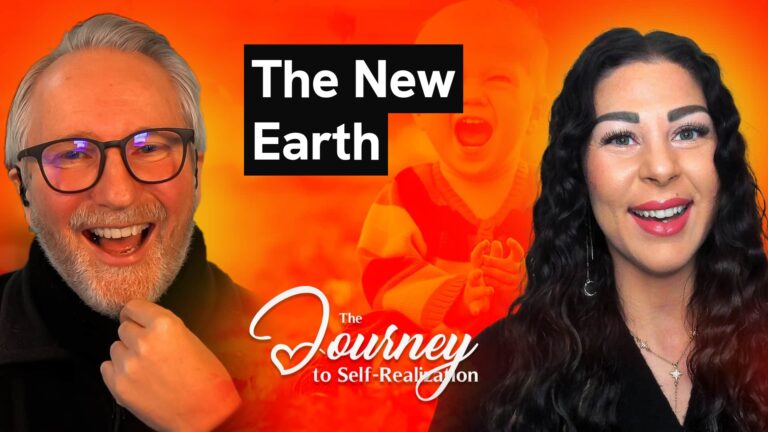
In this twenty-fifth episode, Amina and her teacher and guide, Pål-Esben Wanvig, talk about soul hunting, the ancient shamanic method for bringing back split-off parts of the personality. They explore why the soul itself can never be split, why the ritual alone is not enough, and the groundwork and follow-up that make the results last. It is part of “The Journey to Self-Realization”, a podcast about the bravest journey a human being can set out on: the journey home to yourself.
This episode is an English translation of our Norwegian original, voiced by the digital avatars of Pål-Esben and Amina.
In this episode
- What soul hunting is and isn’t: why the soul is always whole, and why it is parts of the personality that get split off
- Amina’s lost joy in dancing and singing, the soul’s prism, imprints and the pressure cooker
- Compensatory mechanisms, perfectionism, and the masks that hid serious illness, even from doctors
- Why the ritual alone is not enough, and the groundwork: understanding where it comes from, and letting go through forgiveness and karma cleansing
- What forgiveness is and isn’t, and the rune ritual that gives the life structure a new direction
- The ritual itself in the middle world, the practical steps that nourish the returning part, and the client whose depression lifted
- Helping you help yourself, the TikTok brain, and why you need a quieter mind to see the resources you already have
- Why everyone should learn soul hunting, and the little sacred cows that surface later on the path
This podcast is for you if you:
- Seek real depth in your spiritual practice
- Want to understand yourself on a more fundamental level
- Are curious about shamanism but tired of superficial “new age” spirituality
- Have taken many alternative courses but still feel that something is missing
- Feel an inner longing for freedom, love and wholeness
In a time when so many get lost in external methods and promises of quick fixes, this podcast invites you back to the only place where true answers can be found: your own heart.
Listen above, or read the full conversation below.
Transcript
A warm welcome to the podcast “The Journey to Self-Realization”, a primordial shamanic journey of development back to your true nature. This podcast is a collaboration with our favourite magazine, the health and lifestyle magazine Medium, and is devoted to exploring the bravest journey a human being can set out on: the journey home to oneself. We follow Amina, a student at the Yggdrasil Shamanic School, as she goes through a deep primordial shamanic process of development together with her guide and teacher Pål-Esben. It is a raw, unpolished journey of discovery towards true joy in life, deeper meaning, and a life that truly feels good to live.
This episode is an English translation of our Norwegian original, voiced by the digital avatars of Pål-Esben and Amina.
Pål-Esben: Hi, Amina, and a warm welcome to a new episode.
Amina: Hi, Pål-Esben. Thank you, and likewise.
Pål-Esben: And a warm welcome to you too, dear listener. Today, Amina, we’re going to talk about a very interesting and exciting topic called soul hunting. It sounds, let me say, pretty ambitious: going hunting for our soul.
Amina: Yes, it does.
Pål-Esben: We’ll try to break this down and explain what it is, what it isn’t, and not least what results we can achieve if we use this ancient shamanic method, soul hunting, in the right way.
And first, Amina: before you started your process of development, what were your impressions when you heard about soul hunting?
Coming across soul hunting for the first time
Amina: I hadn’t heard of it before. Or rather, I’d heard that shamans could bring back a person’s soul, or parts of the soul. But for me it was a more mystical thing. And I remember when we were about to start that module, the seminar on soul hunting: I was very, very surprised at what it actually was, and at how thoroughly you went into the theory as well, so that we would get very good results. At any rate, that was when I realised a good deal about which split-off parts of my soul had gone missing along the way. It was quite interesting to learn about.
Pål-Esben: Yes, it’s one of the fascinating areas within shamanism, understanding what soul hunting is, not least once you get to grips with it and have learned to use it, or have a shaman who helps you with the process. We don’t need to learn it ourselves to benefit greatly from it. And we’ll come back to your experiences with your clients a little later. It’s also a very powerful tool.
The challenge, which we’re also going to look at in this episode, is that if you just do a shamanic method connected to soul hunting, it’s very, very rare to get permanent, lasting results. Because there are a number of things you have to understand in this context to get results that hold. Not that you feel better for a few days, or a week or two, before the same problem comes back, but that it becomes more permanent. That’s what we’re going to focus on today.
What soul hunting is, and what it isn’t
Pål-Esben: So, Amina, let’s start by explaining what soul hunting is and what it isn’t. It does sound a bit odd that we’re going to go hunting for our soul. And the theory you often find out there is that our soul has been split, that parts of our soul have disappeared, for example through events, through karmic events or whatever it may be. And then, through a method, we’re supposed to search for these split-off parts of our soul and bring them back, so that we become a complete soul.
Well, of course that isn’t how it is. Our soul can never be split. Our soul is always complete. It is our spirit. And our spirit, our soul, is what creates our human experience in time and space: as Amina, as me and as you, dear listener. It’s our soul that has created it. We have the soul’s higher self and so on, and a process in which this game we call life is designed.
So our soul is complete by definition. Nothing can harm our soul, and nothing can split off parts of it. So that’s not what we’re talking about here; we’re talking about something completely different. What we’re talking about is split-off parts of our personality. That’s the correct way to put it. But perhaps it isn’t all that cool to say we’re going to hunt for split-off parts of our personality. Soul hunting sounds better, doesn’t it? More mystical. But in reality we’re dealing with split-off parts of a person’s personality.
And what is that, Amina? Can you give an example of what a split-off part of the personality is?
Amina: Well, now you’ll have to correct me if I’m wrong.
Pål-Esben: This is your exam, you know.
Amina: When I was born, I was born into this life as this joyful child. But I also have, what can you call it, my own prism of gifts and talents, and who I am: my personality.
Pål-Esben: Your real identity, right? As we talked about in an earlier episode, where we talked about the soul, the prism and these things. Your true, real identity, which you’re born with.
Amina: Yes. And let’s say I’m a person with a very creative personality, someone who loves painting, drawing, singing and things like that. I remember that when I was little, I loved dancing and singing. But I was told: “You can’t do that, Amina. We can’t dance in our family. We can’t sing.” That kind of thing. Maybe not so much the singing, but the dancing. And I was told: “You’ve got your dad’s moves, and that just doesn’t work.”
I don’t think my family meant to be nasty when they said it, but something happened in me that made me not want to sing and dance. It made me push that part of my personality down. I had no contact with it. And that also means, and this is just one of the things, that a part of me has been missing, a part I needed in order to feel whole.
Now that I’ve worked with this theme in connection with soul hunting and so on, today I can choose to dance and sing even if it isn’t pitch-perfect, even if I’m never going to be a contestant on Dancing with the Stars. Because I love doing it, right?
The prism, the imprints and the pressure cooker
Pål-Esben: A great example, a brilliant example. Here, too, the child was born into this world with its dispositions, its talents, its gifts, its karma and its real identity, which is generated and created with the soul and via the higher self, and so on. That’s what we call the soul’s prism, which the soul shines through. And the light that splits in this glass prism and hits the wall is our experience of life. We talked about that in detail in the two or three episodes where we discussed the soul and what the soul is.
And what happens is that we’re the perfect version of ourselves when we come in, and then life begins. That’s when our imprints begin. That’s when our parents get going, perhaps with a religious background or other ideas: we can do that, we can’t do that. That’s good, that’s not good. This is how you should be, this is how you shouldn’t be. And that’s what happens in our society today: very early on, this little child is fed with labels. That’s good, that’s not good. You can do that, you can’t do that. Naughty, naughty. Good, good.
And all these imprints often mean that certain parts of the child are suppressed. The real identity, the real prism, the real dispositions, the real talents the child is born with into this world, are either ignored or suppressed. And then you can picture things being pressed down into a pressure cooker. You disidentify from your real identity, or parts of it. And when this becomes more or less permanent, as it did with you, that’s what we call an example of a split-off part of our personality.
In your case, you were told you shouldn’t dance, and perhaps shouldn’t show joyfulness and happiness, along with whatever it was the parents thought a child should be. And then it affected your youth and your adult life. So with these imprints and the influence of the world around you, you had been pushed down into being something less than what you’re really meant to be.
And just to take this example, and we’ll take some rather harsher examples afterwards: how did it affect your youth, your upbringing and your adult life, up until we started the process of bringing back and reintegrating these split-off parts of the personality? What was that like?
Compensatory mechanisms
Amina: Well, there were more things going on here than just that. But I think it’s really lovely that you mentioned joyfulness in connection with it, because I hadn’t actually thought of that myself. It really clicked into place just now: it isn’t just about me becoming a dancer, but about joyfulness. So that was very, very lovely.
But what happened with me was that I got to know compensatory mechanisms well, so to speak. I was very focused on compensating for the parts of my personality that I didn’t have, or didn’t get to live out, right?
Pål-Esben: That were suppressed, right?
Amina: That were suppressed.
Pål-Esben: Pushed away through imprints, experiences, traumas and so on.
Amina: Yes, yes. So that made me very focused on being proper, being perfect. I’ve struggled a lot with perfectionism: with my looks, with how I dressed, with always having perfect make-up and perfect hair. Because if this and that and the other were perfect, then I’d be good enough. And especially when it came to my body and things like that. And of course I realise it doesn’t make me happy anyway. So this has been a very big theme for me.
That’s what comes to mind now. But it has also meant that I’ve spent a lot of time in the darkness, been very far down, been in a lot of suffering, without really understanding that it’s because I have so much pressed down in the pressure cooker. And I was actually thinking about it both yesterday and today. I thought quite a lot about it: goodness, how far I’ve come. Because you’re so busy thinking about everything you could do better. But I look back at just the last few years, the last five years, and see how far I’ve come with my stuff.
But anyway, it made me chock-full of compensatory mechanisms. It meant I’ve struggled a great deal with being in conversations with people, because I believed people didn’t really want to talk to me. So I always ended conversations first, so that they wouldn’t have to talk to me. I was someone who overthought every single conversation I’d had with someone, and felt stupid, felt silly, and thought: oh goodness, did I say that? So that’s what comes to mind now.
Pål-Esben: That’s pretty frightening, because you’re not the only one who struggles with these things. I think it’s more or less something many people struggle with in today’s society: not feeling good enough. Think how strange that is, and how unnatural. Your soul chooses to come into this material form and equip you as a child with an identity and dispositions and talents and joyfulness and all these things. And then life happens in our world, and we end up like this: afraid of not being good enough, afraid of not saying the right words, and believing that we’re bothering others by talking to them.
It’s pretty much beyond belief; it’s about as insane as it can get. And that’s what we call the modern human being.
The shamanic view: outer events, inner compensation
Pål-Esben: And the most important cause, if we take the shamanic view of it for a few moments, is this. Throughout our life, both through how our parents have helped us label what’s good and not good, and what we should and shouldn’t do, and also through experiences in life, experiences of traumatic events, whatever experiences we’ve had, we’ve developed what we call compensatory mechanisms. We’ve talked about that in an earlier episode, and we may take it up in an episode of its own: how we deal with trauma in a shamanic way.
That means it’s outer events that have forced the person, or the child, to try to compensate. For example: Mum and Dad didn’t give the child enough attention while it was growing up. The child sat alone a lot, and then of course the child believes there’s something wrong with it, and so on, as we’ve talked about. And then the child tries in one way or another to compensate for this, so that as an adult you end up totally focused on getting positive feedback all the time. And if you don’t get that positive feedback, you either become furious or depressed.
And you’re more or less completely dependent on the feedback the world around you gives you, for how you’re doing, what feelings you have, what you think and so on. That means we’ve given most of the power over our life to the world around us, and we’re at the mercy of how those closest to us and the people around us interact with us. That makes us shoot up and down emotionally all the time and desperately try… We don’t realise that we’re like this. We don’t realise that this is a compensatory mechanism, the same as an addiction, which has been drilled in through outer circumstances, which have led to this trauma, which in turn has gradually led to a compensatory mechanism.
And as an adult, this runs completely on autopilot. We react up and down, depending on what the world says to us, and what the world does or doesn’t do to us. And that’s how it was with you too, wasn’t it, Amina?
Amina: Yes, very much so, in so many areas, in every area of my life. And these things didn’t show on me either, because I’ve never been someone who complained publicly. I kept quite a lot inside, which made me deeply depressed.
The masks
Pål-Esben: Yes, because you’ve also been trained in this, and you’re very skilled at putting on masks. So you can project and put on a mask so that the people around you think everything is fine. You put on your mask, and then you smile, because you have the energy to activate this mask, but inside it’s completely different.
And it was the same with me. I was so practised at this, and able to put on perfect masks even though I was extremely ill and having a terrible time. I could just get up, take the little energy I had available, and put on this mask, because I didn’t want to bother people with my illness, with my problems. That was my intention. Not that I wanted to hide, but I didn’t want to bother anyone with it.
So it caused a few problems at the start, when I went to the doctor here in Germany, after the doctors in Norway had said there was nothing pathologically wrong with this Wanvig fellow. When I came here to Germany, the problem was that when I was at the doctor’s, I automatically put on this mask. And there’s my wife sitting beside me, and she gets almost frustrated, and sometimes furious with me: “At home you’re in a coma again, you’re so ill. And then, when we come to the doctor to get help, you look as if there’s nothing wrong with you.” And I say: “I can’t do anything about it, because that’s just how I am.” It’s an autopilot that’s been drilled in, which meant that hardly anyone around me saw that I was ill, apart from those very closest to me. And that’s an example of one of these compensatory mechanisms.
Amina: Yes, I’m smiling now, for those who can’t see it, because I recognise myself so much. I also struggle a lot with chronic illness, and I always made myself look nice when I was going out, this compensatory mechanism, even if I had a temperature of 40 degrees Celsius and this, that and the other. And as the doctor always said: “Yes, but you look perfectly fine.” Well, yes, thanks for that, but I don’t feel all that fine.
And that part too, when it comes to illness and chronic illness. For very many years I’ve lived in a way where very few people know that I can have days when I lie in bed and can’t face moving, or I’m in absolute agony, and things like that. Because I believed, or felt, that I was defective. And this is where the perfectionism comes in too, or appearing as if there’s nothing wrong with me. It was very important that nobody found out, because then I’d be seen through: then everyone would realise I was defective. So that’s another side of it. But yes, I really recognised myself in exactly that.
From a perfect birth to autopilot
Pål-Esben: I think a great many people will recognise themselves in this and similar things. We’re just taking a few examples here of how it can feel. So think about it: we’re born pretty much perfect when we come in, apart from the fact that we may of course have genetic things going on. But basically we’re born as a perfect image of our soul and our higher self. And then the world happens. Between the ages of 7 and 14, through the imprints, the traumas and the influences, we’re more or less completely disconnected from our soul. By then we’re fully on autopilot, with our behavioural vectors on autopilot, and our emotions on autopilot, more or less.
That means this applies to absolutely every human being who has lived in this world. As long as you haven’t lived in the forest all your life, just picking blueberries and having a nice time, it applies to every human being. Because very few people in our modern society have grown up in the forest without influences from society, with parents who in turn are influenced and imprinted by society, and their grandparents in turn, and so on. So of course this is also partly epigenetic.
So this applies to all of us. I’ve never met a human being in my life who doesn’t have many suppressed parts of their personality. And these things can lead to examples like the ones you’re describing. They can also lead to every form of addiction, such as addiction to alcohol and other drugs. They can lead to workaholism, to depression, to anxiety disorders, to many, many of these so-called modern, chronic, emotional, mental, psychological illnesses we have in this society we live in.
So when we talk about soul hunting, about what soul hunting really is, it’s something that is very, very helpful for most people. At least for those who are ready to set themselves free from this, who are ready to reintegrate and take back the suppressed parts of their personality, the ones we brought with us and have had suppressed in this life.
Then a shaman’s soul hunting, at least a competent shaman’s, can be extraordinarily important in the healing process for getting back to, for example, joyfulness, as you’re talking about: that you can dance and sing again without being a perfectionist, even sing a bit off-key. I’m probably the role model here, since I’m tone-deaf, but I still sing. In other words, I don’t care what people think and feel about me, so I do what I like, and if I feel like singing, I sing. Then my students will just have to cope with it somehow. You get a little wiser with the years, of course. But that’s what we’re talking about here.
So that’s the background for why soul hunting, done in the right way by a competent shaman, is so important for every human being who wants to set themselves free. But this isn’t one pill that can solve everything. It’s one method of several that you need in this primordial shamanic process of development and path of development you’re going through, and we’ve talked about many, many others in earlier episodes. This isn’t the one thing that will solve everything, but it will be one of the really important rituals we use.
Amina: Yes, absolutely. And when I’ve worked with soul hunting, I’ve also worked with other things beforehand, and not jumped straight into the soul hunting, partly to make sure the groundwork has been done properly.
The ritual alone is not enough
Pål-Esben: Correct. And here is one of the misunderstandings about using soul hunting: people think that the soul hunting alone is enough. Soul hunting is a shamanic ritual where you enter a suitable shamanic astral world and carry out the actual ritual of bringing back this part of the personality, with the help of guides, power animals and so on. It’s a ritual that’s actually very uncomplicated to learn, but the ritual on its own won’t create permanent solutions.
That’s why, in our tradition at the Yggdrasil Shamanic School, we’re very focused on doing the groundwork needed before a shamanic ritual like this, and not least the follow-up work. This is connected to what we talked about in an earlier episode, when we talked about shamanic magic and shamanic rituals.
Because our soul hasn’t come here for things to be easy. We’ve come to one of the most difficult places in this universe to incarnate. That’s why I call the planet we live on the soul’s elite university, or the elite university for souls. Because it’s quite hard for a soul that is almost unlimited to come into a setting where it’s limited by time and space, and where it’s literally deaf, mute and blind and has none of its senses available. And then you’re supposed to try to find your bearings, learn and experience, and finally comes the doctoral thesis: the process of finding your way back home again. In our tradition we do that through the path to oneness and spiritual enlightenment.
So this is a process. When the soul comes into this world, it hasn’t come here for you just to say abracadabra, and then everything is fine. It has come here for us to exercise our free will, and then of course we need to do the work it takes to resolve this.
And that’s one of the challenges in the world we have today: people are constantly on the hunt for the easy solutions. Everything has to be quick; it has to happen now. “I’ve got five minutes. Can’t I fix my problem in five minutes?” And when you ask them, “Well, are you willing to do what it takes, then, so that your soul can learn, and so that you can go through these learning tasks and be free of the karma that has led to this problem?”, the answer is: “What? I’m not willing to do anything. You’re supposed to fix it.”
And of course that’s a setting where we block ourselves. Because believing that we can just wish ourselves healthy and have the universe deliver doesn’t work very well. You can try, but it doesn’t work very well. Just like believing that a shamanic method, a ritual, will just go abracadabra, and everything will be fine. That doesn’t work either. So to make things work with a lasting effect, we as shamans need to see the whole spectrum of what it takes for us to reach the finish line.
Amina: And what you’re saying there is something I attach great importance to: that in my training, from the start, you explained exactly why these things are connected, how they’re connected, and exactly what it takes and what has to be done for the ritual to have the effect you want.
A good year or so ago, I started talking a little on social media about what soul hunting was, because I like to share a bit of what I’m going through and what we’re doing. And then there were some people who wanted a soul hunting session. What I was very particular about then was that we need at least one conversation beforehand and one afterwards, because it isn’t just a matter of doing a ritual and then everything is fine. Say we’re going to bring back a split-off part in a person who loved painting as a child and hasn’t done it since. If the person doesn’t pick up the paintbrush and take these practical steps, or do their part afterwards, if they don’t buy themselves some paper and something to paint with, then it isn’t as if it just goes pop and suddenly the universe has handed them an easel and the whole package. They have to get to know it, and build a relationship with the part we’re bringing back.
Pål-Esben: Yes. Because it’s no problem to lift up a suppressed part of our personality and integrate it for a few moments. That’s very easy. But it disappears, and is suppressed and pushed away again. Within a few hours, a few days, a week at most, it fades back, because it has nothing to take root in.
The groundwork: understanding where it comes from
Pål-Esben: So let’s look briefly at how we see this, and what we do in our tradition. Before we even begin to think about the soul hunting itself, that is, bringing this split-off part of the personality back, we begin to look at it: OK, what are we talking about?
The client has a theme. The theme could be, for example, work addiction or workaholism, an uncontrolled workaholism, since that was one of my things. And then we first need to look at where this comes from. How was it created? Then we look into the modern world, into modern psychology, and look at what the experiences were like as a child. What happened?
Well, in my case, I was a very joyful child when I was little. But then I was imprinted, especially by my mother, who said, not in so many words, but that was the meaning: “Pål-Esben, it isn’t that important that you’re happy. It’s important that you function, it’s important that you’re capable, it’s important that you earn enough money, and it’s important that you survive.” Because that was her experience after going through the war. The Nazis took the farm that belonged to her and her mother, and she had almost no food for several years. So of course, with her imprints, it wasn’t so strange that she wanted a son who would function, who had to have enough money to survive.
And this is an example of imprinting. Of course my mother didn’t do this because she was malicious, but because she wanted the best for me. But the result was an uncontrolled urge to be in action all the time, to make sure I earned enough money. Nothing was good enough, however much money I earned, however good a job I had. Nothing was good enough, because everything could be better. That’s my example.
And then we start by trying to identify where it comes from. In my case it has a great deal to do with my mother and my imprinting. And we only need to have an idea of where it comes from. Going into psychoanalysis and digging and digging and digging into your past is unnecessary in most cases. A conversation about it is enough, so that we have an idea of where things start.
Letting go: forgiveness and karma cleansing
Pål-Esben: The next step is that we need to do something to consciously let go, especially of events or people that have been involved in this setting. Because if we don’t consciously let go of it, it won’t work. And in our tradition we do that through a very effective way of forgiving, which is combined with a form of karma cleansing, all in one. We go back to the setting, place it, and do it in a special way. We cut the negative emotional ties to the past, based on the events we want to let go of emotionally, and forgive everyone involved fully, and ourselves too, for having been in the wrong place at the wrong time, or whatever it may be. Because sometimes we don’t know what our role is in this, and then we simply say: I forgive myself for having been in the wrong place at the wrong time, or something like that.
And unless we’re willing, consciously and actively, to let go of the past, how do you think it’s going to be possible to bring in and reintegrate a part of the personality that has been split off precisely because of your resentment, frustration and so on about those events? That’s why it isn’t possible to get a stable reintegration of a part of our personality without doing the groundwork that’s needed.
And it was the same with you: you didn’t start with the soul hunting either. You did this method to forgive, to let go, to deal with the karmic pressure that comes from these events and experiences and situations that contributed to this splitting off. Wasn’t that where we started with it too?
Amina: Yes. And it wouldn’t have worked, or I wouldn’t have got to where I am today, if I hadn’t done these things. First and foremost getting an understanding of where this lies, and then working with forgiveness and working on letting go, so that I don’t carry it with me any more.
And for me, forgiveness hasn’t been very difficult. I know it is for a great many people. But I also know I’ve had some blind spots, where I’ve thought I’ve forgiven, and then I’ve still carried it with me in one way or another. But at least I haven’t resisted forgiveness. I’ve understood that this is the right thing to do. And when it comes to the big things I’ve experienced in life, like psychological violence, physical violence, rape, neglect, things like that, I wouldn’t have managed it in that way without the methods and the groundwork I’ve learned at the Yggdrasil Shamanic School. Not at all. So the groundwork is hugely important.
What forgiveness is, and what it isn’t
Pål-Esben: Yes. And in earlier episodes we’ve talked about forgiveness, and especially about the misunderstanding here too: that people think they have to accept what has happened. That has nothing to do with forgiveness. Forgiveness is only for setting yourself free. The more you go around bearing a grudge against your past, the more you suffer. So it’s only about letting go of that suffering. It has nothing to do with accepting what has happened, or agreeing with what has happened.
But what forgiveness is, is a big topic that’s often misunderstood. Just to emphasise it here: it isn’t about accepting that someone has used psychological violence against you, or physical violence against you. It has nothing to do with that. But if you’re unable to forgive and let go of it, you’ll carry it with you for the rest of your life, and you’ll suffer from it. And how meaningless is that?
And this is exactly where most people have big problems even being willing to do this karma deletion and forgiveness process with their past. Because they say: “What happened was unacceptable, and if I forgive, it means I accept what happened. I don’t want that, because it creates so much pain in me.” And then you’re in the hamster wheel and don’t stand a chance. Then you’ll carry this rubbish around for the rest of your life, and then you’ll have to try again in the next incarnation.
But I’ve found out, at least, and you’ve found out too: why should I go around carrying this grudge, this stress? Why not let go of it and set myself free from it? Because otherwise, if it’s people we’re talking about, the ones who hurt you in the past, you’re still giving them power over your life. You’re still giving them the power to make you suffer, to be irritated, to be angry, to be ill, whatever it is.
So this is the first part of the process, before we can even think about beginning to do any soul hunting and reintegration, that is, a permanent reintegration of a split-off part of the personality. That’s number one, and it’s the hardest.
The impulse: the rune ritual that sets the direction
Pål-Esben: Number two: then we usually set up a shamanic ritual, very often a rune ritual, since those are the most powerful. In it we send an impulse into the life structure, as we’ve talked about in an earlier episode here about shamanic magic, so that the life structure gets a different, let me say, direction, a different tendency. And that tendency is there to help the reintegration of the split-off part of the personality later on.
In addition we do a couple of other things, a couple of other steps beforehand here. But once they’re done, the client or student is prepared for the soul hunting. And if the groundwork has been done well, it’s only a matter of one soul hunting session, which takes perhaps 30 minutes, before this part of the personality we’re talking about can be reintegrated.
What can take time is step number one here: preparing yourself to understand where this behaviour comes from, the behaviour the split-off part of the personality has led to. The process of understanding it, the process of accepting it, the process of going through it and letting go with forgiveness, and also what we deal with around how we face trauma, which we may take up in an episode of its own.
This whole process can take anything from one day to weeks of preparation before you’re ready to really do this, depending on the person, how hung up they still are on it, and how ready they are to move on in life. There are many factors here. So if we’re working with complex split-off parts of our personality, which show up as complex negative behaviour in our life today, it isn’t done in one conversation. It’s a process you need to go through.
So once we’ve done this groundwork, we do the actual soul hunting. And that’s a ritual which, once you’ve learned it, is actually very uncomplicated to carry out.
Amina: Yes, absolutely. Once you’ve done it a few times, it goes… I won’t say on autopilot, because you have to be more present than that, but it isn’t a difficult business. And it’s very, very exciting, and very rewarding. I find it very rewarding for myself, and I find it very rewarding when I do it for others too. It’s quite magical, quite special and deep, especially when it’s a person who is really ready, and who also feels the process in their own body, even if they perhaps don’t quite understand it or haven’t learned this themselves. It’s very, very lovely.
The ritual itself: the journey in the middle world
Pål-Esben: Yes. Because once you’ve done the groundwork, you also identify with the work and the process. You’ve taken responsibility for your own life; you’ve taken responsibility for the process. Then the client lies down on the couch, our operating table, or sits in a chair; it makes no difference. We first take the client to a special shamanic astral area that we use in our tradition. We place the client there, we guide the client in there, so that they have as many resources as possible available for the integration process itself to take place.
And we as shamans travel to the middle world. We track down this part of the personality that has been split off. We use power animals and other beings that help us bring this split-off part of the personality back to the person. And then we make sure we fetch the resources needed for the integration process to be able to happen at all. And all this happens in perhaps 45 minutes, through a very, very powerful ritual, which often knocks the client out completely. So it’s an intense business.
And afterwards… Even before the ritual, we’ve already talked about the practical steps the client needs to take, that is, practical actions, so that this part can stay. First we knock out what is dark and black and destructive, through the preparations. Then we have a void, and into that void we bring the split-off part of the personality back, and fill the void with it and with light. And for this to become stable, the client needs to take these practical steps that are connected to the part staying there. Because if you ignore that, it will just disappear, since you’ll slip back into old behaviour again. So we need some practical steps that show new behaviour.
Take the simple example you gave. If this split-off part had led to a lack of interest in art and painting and the like, then we do the process, and then it’s important, as I said, that the client gets out their canvas and starts painting, that they actively do something directly connected to the new, integrated part of the personality. Because it needs nourishment. If it doesn’t get nourishment, it will disappear again.
So the process itself is incredibly, incredibly powerful to go through, both as a client, and especially when you learn it yourself and can do it on yourself. What you can experience is pretty much out of this world.
Can you say a little about your own experiences, and with your clients, around soul hunting?
Experiences: when the piece falls into place
Amina: First I have to say that being able to follow that whole journey, and seeing how that space and that place change along the way when you work with it, is pretty powerful stuff. And I notice, at least, that it isn’t about my imagination. I can tell because I see things changing without me being the one making it happen. I help in the process, but I’m not the one making it change. So it’s very, very exciting to be able to observe that. With myself, now it’s probably…
Pål-Esben: Just to say a couple of words about that. Where we are, in this shamanic, let’s call it the astral plane, if we’re going to use a slightly silly word for it, but let’s use it: there we also have the client’s whole personality. When we say soul, we mean the whole personality. We track it down, and that’s where we start. We analyse what it looks like, we see the holes, that is, the parts that have been split off. And then we begin with the split-off part we’re working with. And as we do this integration process, shamanically, you notice that this changes so dramatically, so quickly. And you can see it when this part has been integrated back: how this void is filled, and what happens in the area around the personality, and so on. That’s what you’re talking about here. Pretty spectacular, really.
Amina: Yes. Thanks for the input.
Pål-Esben: I had to put a bit of meat on the bones, for you as a listener, if you’re not familiar with these things already.
Amina: Yes. It’s very, very exciting, and not least what the client notices in themselves along the way. You can tell they’ve been along for part of the journey, without perhaps having been guided to all the places.
I remember one person who had a very deep theme, who struggled a lot with depression and couldn’t get up in the morning; the person worked quite a lot. And then the whole thing changed after the soul hunting. The person saw it as a miracle, and didn’t understand how what we had done could lead to such big results in such a short time. And this is also a person who has made better choices during this period: by getting up earlier, by not working so much.
So it becomes a boost for what you’re doing, a bit like we’ve touched on earlier too, Pål-Esben. You still have to take the practical steps yourself, of course, but it gives you a boost, a tailwind. And I feel that with myself too. It’s perhaps a year or so now since I last did a soul hunting session, but whenever I’ve carried one out, I’ve felt very quickly that something has fallen into place in me: a piece I didn’t know I was missing. And then it’s about getting to know that piece. Or rather, “getting to know” is a bit wrong too, because I’ve felt that it’s a part of me. Let’s say: building a relationship with the part of me that’s back again.
When joyfulness comes back
Pål-Esben: That’s very important. Because these parts can feel a bit strange; after all, they’ve been split off for most of your life. Imagine a person who has never felt joyfulness in their life, and who suddenly begins to experience joyfulness. It’s a very odd thing if you’re not used to it. It can feel very strange at first, and it’s something you have to get used to, because all the masks have to change. How am I supposed to keep my mask on when I feel joyfulness, this smooth mask, the one with no facial expression? How am I supposed to hold on to it when I feel it bubbling inside me? It becomes very difficult.
So it isn’t exactly easy to get used to this part of yourself that you were born with. It can also feel a bit odd and a bit curious, because it often feels as if this is happening without you doing anything specific. You just notice that you’re starting to bubble inside, in this case.
So that’s also something it’s important to make clear to the client: this can have a massive impact on their life. We don’t just need to make sure we do the groundwork and the ritual itself; we also need a bit of help afterwards to go through the integration process, depending on how complex the theme is, of course.
So it’s a good sign when you say you haven’t done much of this over the last year, isn’t it?
Amina: Yes.
Pål-Esben: It’s a good sign, because it suggests that most of your personality has been reintegrated, and that you’ve begun to settle into it. And if, as you go further along your path, you notice something snagging, and you track down a part of the personality that still isn’t integrated, then you know you can go back and carry out the process, and zip, zip, zip, that part is reintegrated too.
Amina: That must be one of the most powerful abilities a human being can learn, if you ask me.
Helping you help yourself
Pål-Esben: Yes. And dealing with these things is about helping you help yourself, so that in time you become minimally dependent on others to be able to live and experience a good life. That has been my motivation behind what I do: to help you and my other students manage on your own. To have all the tools and all the understanding, so that you yourself hold the treasure chest of all the theory, wisdom, insight, methods, techniques and rituals, which you can use on yourself and on those in your family, your friends and so on. That’s what power to the people is, in my eyes.
Amina: Yes. It really strikes me when I think about all the resources I actually have access to, because that’s something I didn’t think about at the beginning. It was a bit like: yes, there was a technique there, a method there, I’ve learned this and I’ve learned that. But I realise more and more how powerful the tools and resources are that I actually have up my sleeve. And I talk a lot about that to my students too. Because you don’t always know what you’re dealing with. And then you can see: OK, if you have this or that challenge, you can try this or that method or technique. Can I use it in that area? Can I use it on that problem? It’s about getting the students to realise what they actually have in their hands. This is pretty powerful stuff.
Pål-Esben: There’s one challenge we humans often have. We often have a great deal of knowledge, a great deal of insight, and we already have skills that we could have used where we stand today to create a better life. The challenge is that we don’t see, and aren’t aware, that we have these skills or talents or resources available. That’s often quite simply because of our imprints and our TikTok brain, which can’t think clearly. We have an attention span shorter than a goldfish’s, somewhere between one and two seconds, and that’s one of the main problems: people who already have resources, insight, techniques and methods don’t see it. It’s foggy, because the brain is so chaotic that it can’t see the wood for the trees.
Calm as a precondition
Pål-Esben: So there’s also, as we’ve talked about before, the importance of calming the mind, so that the madhouse in our heads isn’t completely bananas all the time. But in today’s society that’s very difficult, of course, because of all the input we get. We sit scrolling through our feed all day, going from one emotional extreme to the other, and then we wonder why we’re so stressed, why it’s so chaotic, why we can’t think clearly, why we’re so irritated and aggressive towards people who have different opinions.
And it’s an autopilot, of course, and switching it off is one of the most important parts of a human being’s path of development, so that we can begin to think clearly again. And what’s cool is this: when we think clearly and are able to do so, we see that we actually have all the resources available here and now to take the next step in our process of development. We discussed that under dharmic and karmic synchronicity in an earlier episode, where we talked about karma.
Everything is available, right under our noses. The problem is that we don’t see it, because there’s too much chaos. And then it’s good to have another person to guide you through the process, that is, a teacher, therapist or guide. Because then you can have another person who takes you by the hand and guides you through this step by step, something that can feel impossible and unattainable on your own.
That’s where you were too when we started. It wasn’t exactly quiet in your head. It was a bit all over the place. You’re one of these social media gurus, aren’t you? I don’t use social media myself. Apparently I have a Facebook page somewhere, and an Instagram account where you post a few things from our podcast. But I’m never there, so I can’t comment. But I do see all the people who are on there compulsively, and what happens to them.
And that was the start for you too. Your inner world was chaotic, and you had a great deal of pain, anxiety and problems, as we’ve discussed. But internally there was far too much stress and chaos. You were going round in your hamster wheel. Wasn’t that what it felt like?
Amina: Yes, definitely. I couldn’t tell right from left or up from down at all, and couldn’t find my own solutions to things, which was perhaps logical too. And so many times I’ve come into a conversation with you thinking: good grief, how am I going to manage to… I don’t know what the problem really is, so I come with the whole package, total chaos. And then you help me sort it out: we start there, and then we do this. And I just think: is that all? Oh right, it doesn’t have to be that difficult.
And then we start with one thing at a time. Because very often, when you think everything is wrong and everything is chaos, you get so overwhelmed that you don’t know where to start. Really, really overwhelmed. And then it’s about getting help to fish out the things you perhaps ought to look at and focus on, and not least to understand. First of all: it doesn’t have to be that difficult. But you have to be willing to look at the heart of the matter for what it is, and be willing to try to make these changes.
Never giving up
Amina: And goodness, I never thought I’d manage to sit still for an hour, certainly not in meditation, sitting still by a tree. But I think it’s the same for many people as it was for me, and I hear it from a great many others: yes, but they’ve tried, and they haven’t managed it. Whether they’ve tried for a week, a month or two months, they haven’t managed it. And I think the reason I’ve managed it is that I’ve never given up. Even when a year has gone by and part of me just isn’t content, or I haven’t managed to meditate as long as I’d like to, I’ve never given up. I’ve wanted to give up, and part of me has given up for a day or two, but I’ve got back up again.
So it’s absolutely possible. But sometimes I talk to people in ordinary social settings, where I perhaps share some of my story, for example with those who can’t find calm in their brain, especially with an ADHD brain. You don’t even need to have an ADHD brain, because just sitting still and doing nothing is something people struggle with in society today. And then I’m met with something like: “Yes, but then you can’t really have struggled all that much. Then you can’t really have been in that deep.” And then I realise: OK, here I’ve come across someone who doesn’t want to gain other insights. So OK, that’s what that person thinks. I know how much I’ve struggled.
A path that is possible for everyone
Pål-Esben: But the point is this: what we’re talking about here, this profound primordial shamanic process of development and path of development that we discuss in our podcast, is possible for every human being. But it takes effort. And the hardest part, which most people really struggle with, is the process of calming the mind, calming your thoughts and feelings, so that you can begin to see things clearly, and gradually begin to connect to the natural rhythms around you and the natural rhythms within yourself.
And for many people that sounds unattainable. But if you go through a process and get a bit of help along the way, it’s possible for absolutely everyone. But it’s no good scrolling on TikTok five hours a day and thinking you’re going to learn to meditate. That doesn’t work. Because if you get all this input all the time, which revs up your emotional system and keeps shortening your attention span, it becomes very challenging to learn to sit down and create a quiet mind.
So then you have to be willing to balance things a bit. And gradually you learn how to use the forest: forest bathing, utiseta, meditation and these things, where you use the forest and gradually find more and more calm. But again, you need someone to inspire you and support you along the way. Otherwise it’s so easy to give up. Because in today’s society, the probability that a person gives up the process of creating a quieter mind is more than 99 percent.
That isn’t because the person is untalented or lacks the ability, but quite simply because they’re exposed to so much input, consciously and unconsciously, in their daily life, which creates this chaos. In other words, if you have, say, twelve hours a day that fill your head with chaotic input, it becomes very difficult to counteract that with ten minutes of meditation.
And you had to wrestle with that too. But back to soul hunting: you can learn soul hunting, you can learn all these methods and techniques and rituals. But if you don’t, at the same time, learn to think more clearly, and find more calm so that you can think more clearly, it’s challenging to use what you’ve learned, because you can’t see the wood for the trees.
So that’s something that has to be part of this process. And when we get a bit further on, perhaps we’ll also do a crash course in a cool process for finding more calm and stillness in daily life, one that suits the modern human being. That will be when we slide into the next big topic we’re going to talk about, which has to do with the path to oneness and spiritual enlightenment. I think we’ll do it then, for those who are interested: a crash course showing that this can actually be quite fun and exciting. It doesn’t have to be about focusing, gritting our teeth and disciplining ourselves. No, no, no, this can be much more fun and exciting than that.
Amina: Sounds good.
Summing up: a skill for life
Pål-Esben: Yes, let’s look at that. So, do you have any summarising insights, or anything you’d like to share about soul hunting, Amina?
Amina: Nothing that comes to mind right now. I think I’ve covered the most important things about soul hunting. I’m sure that when we’re finished, when we press stop here, something or other will come up. Isn’t that how it is? There’s often something you could have shared or said. But yes.
Pål-Esben: That’s usually how it is.
Amina: I think we’ve covered most of it. But I would say that this is incredibly, incredibly exciting. So if anyone feels drawn to this, look into it a bit, and perhaps get in touch to find out more about it. You’re very welcome to get in touch for a chat about it.
Pål-Esben: Get in touch with Amina: she’ll be glad to help you.
Amina: Yes!
Pål-Esben: I don’t have the resources, I have so much to do, so it’s good that you’re the helping hand for anyone who wants to try out things like this, or know more about it.
So, to sum up: soul hunting is something that, in my eyes, every human being should learn, quite simply for their own wellbeing. With these tools you learn to understand where things come from, you learn to do the groundwork, and you learn to do the process itself and the follow-up work. And it’s also so exciting to understand once you see the whole picture. Not least, it can make a big difference to your life, as it has for you and for many, many others. In our tradition, soul hunting is important, at least at the start of a process of development, together with groundwork and follow-up, right up until, let me say, 90 percent of the personality has been reintegrated. In most cases that’s more than good enough, because you come across the rest when you get into more complex themes.
When we deal with crystallised karma and these things, we come across the other parts that pop up, little sacred cows, as I call them. Some of them have been grazing far down in the roughest and darkest catacombs. When the sacred cows come up, and they are our learning themes, you get the chance to deal with them. But then you only have the last 10 percent to deal with, because most of the foundation, 90 percent, is usually done in the first twelve months of this process of development, as long as you’re willing to do the work, of course. This doesn’t take year after year after year. It’s an intensive process you go through. Perhaps twelve months, and then you have a very, very different experience of life, in my experience.
So, as inspiration for you, dear listener: there is a solution to most things. And I hope our conversation about soul hunting has been inspiring. We wish you good luck as you continue on your path. And any words of wisdom from Amina to finish?
Amina: No, I don’t have any grand hallelujah moment to finish with. But I hope this has been an educational listening experience for the listeners.
Pål-Esben: Brilliant. In the next episode I’m sure we’ll talk about another very exciting topic, one I don’t know yet, but which Amina is probably saving up over the next few days. Thank you so much for staying with us all the way, dear listener. We really appreciate your feedback, and a five-star rating on Spotify helps our podcast reach more listeners. And thank you so much for being here with me, Amina. I really appreciate it.
Amina: Likewise, Pål-Esben.
Pål-Esben: Thank you for being with us, dear listener. I hope you’ll join us again in the next episode. And until then: have a truly wonderful day, evening, night or morning, wherever you are listening from. Take care.
Outro
Thank you so much for listening to this episode of “The Journey to Self-Realization”, a primordial shamanic journey of development back to your true nature. We hope Amina’s story has inspired you to explore your own journey of self-discovery and development. Remember that the path from suffering to self-realization can be demanding, but with courage, patience and support from a competent guide, mentor, teacher or therapist, almost anything is possible. We wish you all the best on your journey, and we’ll talk again in the next episode.
The Journey to Self-Realization
Nature’s Path to Freedom and Self-Realization
Curious about what primordial shamanism really is, behind the mystique and the misconceptions? In this short online course I tell the story of my own path from skeptical engineer to teacher of primordial shamanism, and give you a first introduction to what I teach: what shamanism and primordial shamanism are and are not, how rituals and rune magic are used in practice, and why the longing for growth matters so much for a good life.
The lessons are recorded in Norwegian; the English version will be ready in November or December 2026. Leave your email on the course page, and I will tell you when it is.