

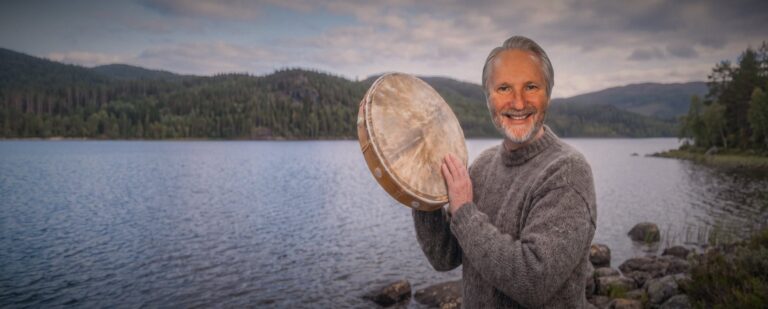
Episode 24 – Relapse in a Process of Development – Why It Is a Key to Deep Growth
When Pål-Esben’s guide confronted him about his pathological jealousy over lunch at a seminar, he ran out of the restaurant like a teenager who had been told off by his dad, and it took three months before he would speak to that guide again. Amina knows the pattern too: as soon as she feels well, she wonders whether she really needs the forest bathing, and one cinnamon bun can quickly turn into ten.
In this twenty-fourth episode, Amina and her teacher and guide, Pål-Esben Wanvig, talk about relapse in a process of development, and why it is a key to deep growth. They explore the gravitational field of our imprints, why breaking free from it takes 18 to 36 months of focus, and the point where you begin to laugh at the circus instead of beating yourself up. It is part of “The Journey to Self-Realization”, a podcast about the bravest journey a human being can set out on: the journey home to yourself.
This episode is an English translation of our Norwegian original, voiced by the digital avatars of Pål-Esben and Amina.
In this episode
- Amina’s relapses: the same pits again and again, the warning signs she learned to notice, and the cinnamon-bun loop
- Pål-Esben’s first wall: the jealousy, the restaurant and the three months of silence
- How we come into the world joyful, the ego as the soul’s adviser, and the gravitational field of our imprints multiplied by a thousand
- The spaceship breaking free from the sun, and why lasting change takes 18 to 36 months of focus
- Being met without judgement, healthy scepticism, and how to judge a teacher by what happens to their students
- The soul’s doctoral thesis, and what primordial shamanism really is
- Laughing at the circus: Amina, her partner and the meal she insisted on making herself
- Why every relapse is an opportunity, why grief still needs its time, and why there is no shame in seeking help
This podcast is for you if you:
- Seek real depth in your spiritual practice
- Want to understand yourself on a more fundamental level
- Are curious about shamanism but tired of superficial “new age” spirituality
- Have taken many alternative courses but still feel that something is missing
- Feel an inner longing for freedom, love and wholeness
In a time when so many get lost in external methods and promises of quick fixes, this podcast invites you back to the only place where true answers can be found: your own heart.
Listen above, or read the full conversation below.
Transcript
A warm welcome to the podcast “The Journey to Self-Realization”, a primordial shamanic journey of development back to your true nature. This podcast is a collaboration with our favourite magazine, the health and lifestyle magazine Medium, and is devoted to exploring the bravest journey a human being can set out on: the journey home to oneself. We follow Amina, a student at the Yggdrasil Shamanic School, as she goes through a deep primordial shamanic process of development together with her guide and teacher Pål-Esben. It is a raw, unpolished journey of discovery towards true joy in life, deeper meaning, and a life that truly feels good to live.
This episode is an English translation of our Norwegian original, voiced by the digital avatars of Pål-Esben and Amina.
Pål-Esben: Hi, Amina, and a warm welcome to a new episode.
Amina: Hi, Pål-Esben. Thank you, and likewise.
Pål-Esben: And a warm welcome to you too, dear listener. Today we have a topic that is perhaps a little different from what we’ve discussed before. It’s a topic that’s a typical challenge, one that everyone on a profound path of development runs into. It is, Amina, relapse in personal development, in self-development. You work hard and make changes, and then suddenly, from one day to the next: here I am, standing in the same pit again.
Amina: An important topic.
Pål-Esben: It’s a rotten feeling, isn’t it? This is something that… I’ve been doing this for a good few years and have taken quite a few students through processes like these, and clients too, for that matter. And I don’t think I’ve yet come across anyone who doesn’t have these relapses.
Things are going well, aren’t they? You get better and better, healthier and healthier, happier and happier, and you handle home life, the kids and your partner in a much better way. And then suddenly, pop, for no particular reason, it all goes down the drain. And you mess up and make all the blunders you made before you started.
Tell us a bit about what your experience was, especially at the start, with these things.
Amina’s experience: the same pits, again and again
Amina: For several years I’d been trying my hand at self-development and keeping at it. And every time I got into some new thing like that, I had the right attitude, I took action, I made changes in my life, and then suddenly, from one day to the next, I was back in the same old thing again. The same conflicts, the same challenges, the same feelings and so on.
And at the time I didn’t understand it. A few years ago I didn’t understand what was happening. Because in my head it just went from one day to the next, it just went from one hour to the next. And I thought it was just something that happened. I didn’t think I had any part in causing it. I hadn’t noticed the subtle things I did or didn’t do that led me to end up in that slump again.
And I’ve been through a lot of things like that on my journey of personality development and spiritual development. There are plenty of episodes to choose from, but there’s one I remember best, because that was when I really noticed what was happening. It was at the beginning, when I started the training with you.
I’ve always struggled with getting very overwhelmed: I get very stressed, a great deal happens, and things go too far. Right up to the point where I just shut myself away in a dark room. I know what I need to do to feel better, but I can hardly manage anything at all.
And then I had a conversation with you about how, oh, now this had happened once again, and so on, and you asked me to pay attention: next time, don’t let it go so far. Start noticing, when you begin to feel it in your body, what has actually changed in practice. If you catch it a little earlier, you don’t have to go that far.
And I remember the weeks after that conversation, when I thought: “OK, that was smart.” I also got some other reflection tasks, and practical steps and changes I was to make. But I remember the time I began to notice it: OK, I’d managed to calm my nervous system, I’d managed to bring the good things back into my life, and so on. And then I began to notice: oh, now I’m getting a bit more stressed. Now I’ve started running a bit on what I choose to call overtime. I’m using more energy than I actually have. And then I had a reference experience: “Whoa, now I can feel that if I carry on like this, I’ll be in that dark valley in a week or so.” And that’s one of my biggest reference experiences on exactly that.
But I’ve experienced several things like that, where I’ve made a choice, I’ve had the right attitude, I’ve had plenty of motivation, written lists and practical steps, and I do all the things that are good for me. But then it comes to a point, and this has really been a recurring theme my whole life: “Oh yes, but I’m doing so well now, I feel so good, my health is good, my nervous system is regulated. Do I really need to keep up the forest bathing? Do I really need to keep eating healthily? Surely I can treat myself to a cinnamon bun or three, because if I’ve already eaten one, I might as well eat ten.” I mean, hello? So that’s the loop I’ve been in.
And there’s also this: it’s very easy to think you’ll never get out of that pit again. I notice it in the people I talk to as well.
Why relapse is natural
Pål-Esben: Yes, and this is the thing, isn’t it? It’s a bit tricky, because you engage wholeheartedly and authentically in your process of development. You’re really serious about doing this properly, you try as hard as you can, and things get better and better and better. And then, out of the blue, you disappear down that hole again and feel as if nothing has happened. That’s what we’re talking about here. This loop that everyone falls into, not just once, but often several times.
And what we’re going to try to talk about and discuss in this episode is why it’s like that, why it’s natural, and not least what you can actively do to counter it, so that it doesn’t have to happen over and over and over again, until the day you simply give up because you believe that, no, a better life isn’t for me. I can’t do this; I fail every single time.
Because it’s a bad thing if you do give up, just because you don’t understand what is actually a very simple mechanism. It has to do with our psyche and with our imprints, and it puts this more or less on autopilot for most people. So let’s break it down a little.
When we go through a profound process of development, that is, the process you’ve been through… I’m not talking about going off and learning some technique or other, some affirmation or other, so that things will get better, and that kind of surface stuff. That isn’t what we’re talking about here. It’s when you dive down and begin to work with your real shadow sides, and face the challenges and what you might call your own demons. And you come across things that are challenging, things that are the main reason why you may be creating a life on autopilot that isn’t very happy and very joyful. That’s what we talk about in this podcast, not surface things.
And it isn’t possible to go into the depths of a process of development without… The purpose of going into the depths is to be able to set ourselves free from suffering. To set ourselves free from limitation. To set ourselves free from the autopilot that has been drilled into us as we grew up, and that has completely disconnected us from the soul and from what we really are. That’s what we’re talking about here.
And when you go through this kind of process of development, you’ll always end up in these situations with relapse and resistance, and now and then you’ll simply feel like giving up. That’s how it is for all of us, me included.
My own first wall: the jealousy and the three months
I remember especially at the start, I think it was the first year or so, while I was in my profound process of development, which is almost a generation ago now. A very, very, very long time ago. And one of my themes at the time, which I’ve talked about before in the podcast, was a pathological form of jealousy. I mean extreme. Truly awful stuff.
And my guide at the time put his foot down about this and told me: “Pål-Esben, you’re jealous, it’s pathological, you’re harming yourself, you’re harming the people around you, here are the reasons why you’re jealous, and it’s something you need to do something about. Otherwise you won’t get any further on the way back to the life you say you want.”
And after I was confronted with this shadow side of myself, because this person was very direct with me, I exploded. I went completely monkey, and I ran out of the restaurant, because we were having lunch during a seminar. I ran out through the restaurant like a teenager who’s been told off by his dad. And I was so furious: “How can he say that?”
And it took me three months before I was willing to talk to that person again. And what do you think was going on in my head? “Oh no, I don’t want anything to do with this.” And in complete chaos, full of projection and transference, my guide became the cause of my problems. I mean, totally monkey. Pure primate.
So that was the first time in my process of development that I reached the point where I thought: “No, I don’t want this. I want to stop this, this was unpleasant, I’d rather do something that has more meaning to it.” And I’ve been through a couple more experiences like that, where it came to a point. And then I thought: “Why is it like this? How can it be that a human being who engages, as authentically and wholeheartedly as possible, in becoming a happier, more joyful human being reaches that point and thinks like this?” It’s a paradox, isn’t it, to say, “No, I don’t want this.” That means: I don’t want to be happier, I don’t want to become more joyful.
How we come into the world
Then we have to look back at how we come into this world. We’ve talked about this in an earlier episode of the podcast. When a child is born into this world, it’s usually joyful. At least if their basic needs are met, most of those who come into this world are joyful. Like the picture I often show: the child sitting in the forest, just throwing leaves and squealing, because it’s such a joy simply to watch those leaves fly down and land on the ground.
And that’s the state we come in with. In that state we have very, very close contact with our soul, with our real nature, with our Sahara. But the user interface hasn’t developed yet, that is, the user interface between the soul and the manifested, material world. Our brain hasn’t developed yet, so we can’t have full access and live it out in our life. And our social intelligence hasn’t developed as part of the user interface, that is, what we call the ego. And it’s a misunderstanding to think the ego is something terrible. We depend on the ego, but not the ego as the soul’s ruler: the ego as the soul’s adviser.
So at the start we come in as joyful beings, deeply, deeply, deeply connected to our soul and our potential. And then the whole business starts: we begin to be imprinted. Our parents say, “Yes, you can do that; no, you can’t do that; that’s good, that’s not good.” Then society comes along, and then the whole lot. And gradually we’re trained to function. Not to be joyful, but to function, and to survive in a society that is pretty chaotic.
If you look at teenagers, for example, it’s very, very extreme. Very rarely do I see a teenager who is joyful. They’re completely tense. Because they have to function: they have to go to school, and they have to function when it comes to getting good grades, because if you don’t have good grades, you won’t get a job and you won’t survive. They have to function in their social setting. Imagine more than a minute going by before they’ve replied to and liked a post: then the other person gets sulky and angry because they aren’t online all the time, and so on, and so on.
I mean, it’s an insane amount of stress. And if you measure a teenager’s nervous system with 24-hour heart rate variability, you’ll be shocked at how chronically stressed they are. And already there, at the age of fourteen, there’s hardly any of the joyfulness left that we had when we were born. More and more of this functioning autopilot is created, and it just gets worse and worse as we grow up. And somewhere between the ages of 7 and 14 we’ve completely disconnected from our soul and our real nature, since by then we’ve become more like functioning machines.
The gravitational field multiplied by a thousand
And I often use this picture: when we as adults set out to break free of this madness, that is, these imprints and this functional robot we’ve more or less become, there’s a gravitational field in this setting that is extreme.
The gravitational field: you can picture the earth having its gravitational field. It makes sure we can walk on our planet, and that when we jump off the fifth floor, we fall down. And when the apple falls, it falls down: that’s gravity. But then you can multiply your gravity by a thousand, to get a metaphorical picture of how strong the gravity of our system of imprints is. We’ve had it drilled into us throughout our childhood, over and over, repeated and repeated, and over time we’ve begun to believe it, and it has become part of our identity. So this gravitational field is also incredibly strong.
And you’ve talked about this gravitational field of yours before, where your imprints meant you weren’t very happy and joyful. Your gravitational field was pretty extreme too, wasn’t it?
Amina: Yes, it was really heavy stuff, when I look back on it today. Good grief, it was such a robotic way of being, just a victim of my own imprints and tendencies. No free will in use at all, no awareness, just an autopilot that… not just an autopilot, robots don’t have feelings, but we humans do. So a suffering robot is what I see when I look back today, yes.
Pål-Esben: And it’s frightening how intense this is. And of course, when you’re right in the middle of the gravitational field, you’re often oblivious to everything else. That’s the challenge: modern people are held inside this insane gravitational field of imprints, which has nothing to do with our real existence, but has to do with functioning in a society filled with madness.
So this is something everyone has, and anyone who is fully inside the gravitational field defends it tooth and nail: their beliefs, their religion, their dogmas, their opinions. You hear it if you watch TV, for those of you who do, and follow a debate on TV, for example. Then you see the monkey show. It’s monkeys, primates, sitting there fighting and shouting at each other because they’ve identified with some opinion or other they hold. Everyone else is a nitwit and an idiot; I’m right.
And people who are fully identified with their own gravitational field sit and listen to this madness, are fascinated by it, even interested in it, and are entertained by it. That gives us an idea of how insane this whole thing is.
Whose fault is it?
And the twist here, of course, is that it’s your fault this happened. You could say that your soul put you in this situation, in this straitjacket, so that you would learn and experience and grow. So you could say that you yourself are to blame for everything, since you are your soul, given that you’ve come into this situation. But seen from a human being’s point of view, it isn’t your fault, Amina, that you were imprinted like that. It’s just a result of the setting you chose to incarnate into: with society, with religion, with opinions, with parents, with the social field around you and everything you’ve experienced. It isn’t your fault that you became the way you were before you started the process with me. It’s almost like an autopilot: it’s something that happens on autopilot to pretty much every human being.
And then we ask ourselves the question: if this gravitational field is as insanely strong as it definitely is, in my experience with many thousands of people over the years, then it isn’t so strange that we meet resistance when we reach a point where we want to start a profound process of development back to ourselves, back to that joyful child. This damned gravitational field kicks in and very often overrides us.
I mean, it’s like an electromagnet. We try to set ourselves free from the gravitational field, or from the electromagnet, and we feel: “Oh, now it’s going better, now it’s going better, now it’s going better.” And then suddenly, whoosh, back we go like a rubber band, and we’re right in the middle of the madness again. And we don’t understand how this can be. “I’ve worked so hard now, and done so well, and suddenly madness is taking over my life again.”
I say it isn’t strange at all, because it’s completely natural, completely normal. For a human being like you to reach the point where they have enough courage, and are ready to really free themselves from this gravitational field, from this electromagnet that keeps us inside this madness: first of all, that takes an enormous amount of courage. It requires full attention and a willingness to invest time, energy and focus in it.
The spaceship breaking free from the sun
Then you can picture that at the start the gravitational field is like the sun. An insane thing. And then you set off in your little spaceship, which is somehow fastened to the sun, and it’s a spaceship that can cope with the heat, since that’s the metaphor I’m using in this example. And then with your little spaceship, which has neither the speed of light nor the ability to bend time and space and so on, as modern spaceships do in our universe today, you try with your jet engines to free yourself from this sun. Because you’d like to head for the earth, since it’s a much nicer place to live, much more joyful.
And you try with your jet engines to set yourself free. Back-breaking work at the start, and then comes the point you talked about at the beginning: “Wow, it’s so good here now.” And then you suddenly stop doing what made you start making your way out of this gravitational field, and kaboom, it gets hot again.
It’s the most normal mechanism, and everyone experiences it: you do things, and things get better, and then for some reason or other you think you don’t need to keep doing what made you happier and more joyful.
Why do so many people think that? Why is it so easy to end up there? It’s because of this gravitational field, this imprinting, this identity. We’ve been given an identity where we think we are what we are, but it has nothing to do with what we are. It’s something artificially created through our imprints, and we slide straight back to the belief system, to the autopilot, to the imprints, into this magnetic field, and we get sucked into it.
And this is something I see very, very, very often: we make great progress. You’ve learned, for example, about awareness, self-responsibility and free will, and you’ve begun to learn the Interrupt Handling Technique and self-regulation, and suddenly you’re treating your kids and your partner in a kinder way. Your relationship has become much better, things are moving forward, and you think: “Wow, this is great.”
And then the monkey kicks in, the gravitational and magnetic field kicks in, and you stop doing everything you’ve been doing to have a better relationship with your partner and a better relationship with your kids. You stop taking charge of your own self-responsibility, you stop actively looking out for triggers that bring you into chaos, and that you can stop through self-regulation, the Interrupt Handling Technique and all that. You simply stop doing everything you’ve learned in order to have a better life, because you think everything is fine now, so surely it will carry on being fine. Which it never will.
18 to 36 months
Because breaking out of this insane gravitational field I’m talking about, this electromagnet, requires meticulous focus over a longer period. It will take somewhere between 18 and 36 months before you break more or less completely free of the electromagnet. It can’t happen in one week; it can’t happen in one month. After 90 days you’ll have incredible results in your life, if you follow the process you’ve been through, but they aren’t permanent. Because this electromagnetic field, or the gravity of these imprints, and this identity, and the dogmas, and whatever has turned you into this robot: it pulls so incredibly hard.
So it also needs attention over a much longer time. And in your case this began to happen at around 12 months, 18 months. How long, roughly, with focus, before it became more and more permanent, before you felt safe and weren’t falling into the traps all the time? How long did it take?
Yes, if we’re going to use a number of months here, just to give the listeners an example: taking off from this sun and getting out of the sun’s gravitational field takes a good few months of focus. Only then do you get out of the gravitational field, and only then can you begin your voyage towards the earth, which has a new and more uplifting gravitational field than the sun, in the metaphor I’m using here. How long did it take you, roughly, before things began to happen, before things began to become more and more permanent, and you no longer had to keep your full focus all the time?
Amina: Around 12 months feels right, give or take, before it became more stable. And not least before it began to… At the beginning, when I had these relapses and ended up down in the pit, I was very hard on myself too. I really beat myself up: “How could this happen, with all the help you’re getting, and all the effort you’ve put into this, and resources, and you do it again and again and again?” And that voice is just so nasty.
Then, gradually, I also began to treat myself in a slightly more loving way: “OK, this happened again, what can we learn from it?” And I also noticed that it became easier and easier to get back up and make that 90-degree turn. It became easier and easier to think: “Oh yes, whoops, damn, I wasn’t quite paying attention just now, this went a bit too fast. Oh well, let me just turn around again.” Something I absolutely couldn’t have managed at the very beginning of my process.
And another thing that has been very interesting in my case is that as time went on, I could see that I was slipping into an old autopilot, but I wasn’t as emotionally swept away by the old tendency I’d caught myself in. It wasn’t as destructive; I wasn’t as identified with that autopilot. And I’ve also worked a lot on not identifying with thoughts, opinions, ethnicity, society, all of that. That has also been very liberating in this process, so I notice that I began to be more generous with myself too. Gradually things ran more and more on what you might call a constructive and positive autopilot, where I was no longer swept away by all that darkness.
But it’s a bit like you say: it’s a hump I had to get over, where I really had to work. “Now I have to focus, body and soul, because I really want to make this happen.” If I hadn’t done that, I wouldn’t have reached the freedom I have today either, where I don’t need to think as much. I don’t need to think as much: “Whoa, now I’m going to meet that person, these are my triggers here, now I’m going to do that, these are my triggers here.”
Of course I can still be surprised by new things about myself that I haven’t seen before. “Whoa, interesting little autopilot, what’s this, then?” And I see it a bit more as something exciting. But I don’t have to carry this template around with me all the time. And of course I’m also getting to know myself better and better all the time, and it’s like you say: it gets easier, the new autopilot becomes simpler.
A new gravitational field takes over
Pål-Esben: Yes, it becomes more and more permanent, and that’s what we want here: for our new state, which is filled with more meaning, more joyfulness, more joy in life, and of course much more meaning, to become more and more permanent. So a new gravitational field takes over as well.
This gravitational field is more connected to our Sahara, our full existence, which I also often use as a metaphor, instead of our being steered by the magnetic field of the grain of sand, which is only a tiny grain of sand of our real existence, with these insane gravitational forces steering us into limitation, into resignation, hopelessness, depression, anxiety, burnout, illness, conflicts, stress.
And that’s what we’re in the process of breaking out of here, in a profound primordial shamanic process of development. It’s one of the more complex processes a human being can go through, because it’s very easy to end up in this gravitational field, it’s very easy to become this functioning being that runs in survival mode in our society. Because it happens all by itself. It happens simply because we’re part of the society we live in.
In the old indigenous cultures this was very different, of course. But we don’t live in an indigenous culture; we don’t live in the middle of nature with people who are deeply connected to nature’s healthy rhythms. We live in the madness. So it happens all by itself, because for us humans, our brain and our biology, it’s very, very easy to be imprinted. The easiest way to steer a human being is to put enough anxiety into them. So we’re very easy to steer. And that’s how we’re steered in the world today, both by the leaders of our society and by the others who hold power in our society. When there’s enough fear in people, it’s very, very easy to steer and control them.
And in a profound process of development we want to break completely free of this. But it takes a little more time. It doesn’t happen in one month or two months. The first 90 days are the first milestone, because that’s when the incredibly positive results begin to happen. And then you need motivation and inspiration and conversations with your teacher, your mentor, your guide, so that you keep finding the way forward.
If you try to do this on your own, for example, you’ll very quickly run into your own resistance and give up, since the gravitational field of the madness is so insanely strong. I come across a lot of people who’ve tried to do this form of development on their own, that is, to walk a path towards becoming joyful again, and who have read books and books and books, and taken a few yoga courses here, and learned about angels there, and learned NLP there, and a bit of astrology there. But the feedback I get is: “It’s very exciting, but no fundamental improvements are happening in my life.”
Of course it turns out like that, because if that’s going to happen, something completely different has to be done. And there’s nothing wrong with that. There’s nothing wrong with the people who try, because people try as hard as they can. It’s just that if we want to drive from Oslo to Trondheim, it doesn’t help much to take the ferry to Kiel in Germany. Then we have to keep our course in the right direction, and understand that this magnetic field, this rubber band, is so strong that it pulls us back, unless we have a process and help to go through that process.
So normally you reach the first milestone after a few months, and you notice: wow, you get a taste of what a better life is, what joyfulness is, what a better relationship with your partner is, and so on. And after about six months you begin to enter the next phase, where things get stronger and stronger, but you still slip into the trap regularly. And then you need a guide, as in your case, and in your case that was me, to say: “Amina, this is natural. What can we learn from these things? How can we keep training our muscles, so that we avoid it happening again?” Then you go into everything you’ve learned and put a strategy in place. We’ve been through that a few times now, Amina.
Being met without judgement
Amina: We have been through that a few times. And I remember that at the beginning I was very afraid of not being good enough, or not doing well enough, because of my imprints. “Oh, now I’m going to see Pål-Esben, and I’ll have to tell him, whoops, I didn’t manage that. Maybe I’m not a good shaman, maybe I don’t fit in here,” and that sort of thing.
But being met the way you’ve met me holds a great deal of healing. Being accepted like that: “Oh yes, Amina stumbled just now.” And then it’s also easier to get back up again: “OK, but that’s fine, you don’t have to be perfect.” That alone has been a lot of healing for me.
And going back a little to something you said: in my case, so many of these feelings of fear, anxiety and frustration have been replaced with more of what I choose to call reality: the primary feelings, more of my true nature, more contact with my soul. That’s an experience, a feeling, I can’t find good enough words for. But it means I have an integrated part in myself throughout the whole process, which makes it even easier.
And it’s a bit like what you mentioned just now, that people… There’s so much to choose from out there, so many of these things to choose between, whether it’s retreats, training programmes or courses. Almost everyone promises the same thing. So people are standing there thinking: “What should I choose?” Things sound almost too good to be true. And then you become a bit unsure: “Should I go down that road, or shouldn’t I? Because the last time I was promised the earth, I was told everything would sort itself out once I’d taken that course. It didn’t.”
That also makes people a bit like: “Is it actually possible? Or is Amina’s story just one of those things: oh, now she’s having some ecstatic experience and thinks she’s found something or other, when really she hasn’t? That it’s just a temporary thing.”
Healthy scepticism, and what to look for
Pål-Esben: Yes. And of course that’s natural too, and I think it’s healthy to be sceptical. And it’s not just that I think so; I’m convinced of it. It’s healthy to be sceptical, because when everyone is promising you the earth, we know that perhaps 9 out of 10 of those who promise the earth will deliver very little of it.
That is, you go on a retreat and think your life will change after being on a retreat for a week, or you go on another kind of retreat over a weekend and think something will change. But that’s not how this happens. It’s back-breaking work, done continuously for at least 18 months, on a daily basis.
And if anyone out there claims it’s possible to do what we’re talking about without this, I’d say I’d be hyper-sceptical. Because I’ve been doing this for more than two decades with many, many, many people, and it takes a bit of doing. This isn’t for those who want to work on the surface with one technique that’s supposed to fix their whole life. It isn’t that. It’s fundamental work that includes the whole personality, and also what lies deeper within our spiritual side, in what we really are, our fundamental nature.
So what do I say when people ask: “Yes, Pål-Esben, I hear what you’re saying, but this must just be Amina, because Amina is pretty special”? Yes, Amina is very special. One of the special things about Amina is that she’s willing to do the work. So I can say that’s the most special thing about Amina: she has been willing to do the work. And many people out there aren’t willing to do the work, because they just want it to be easy. They’re looking for shortcuts, they’re looking for that special something, whatever it is, that’s going to fix their stuff. But life isn’t like that.
And when you have people, or teachers, or guides, or whoever it may be, claiming that what they offer will totally change your life, I’d say: be sceptical, and check what actually happens with their students in practice. That’s the only certainty you can have when choosing a process of development, in addition to having a good vibe with the teacher. That has to be there, doesn’t it? You have to feel that this is something serious.
But the key to whether what the guide, teacher or therapist offers holds water is to look at what happens to the students of that teacher, guide or therapist. That’s where you see the facts. And with me, and the process you’ve been in, I have hundreds of testimonials from extremely happy students. I’ve collected some of them at wanvig.no/referanser, and there you can see what people write, and interviews with students. And then you see that everyone experiences exactly the same as you, over and over and over again.
And that isn’t something I need to say any more. At the start, of course, I was in the position where people had to try it out. More than 20 years ago, people had to trust that what I had to offer was something that… Back then I had no experience to point to. But today, after more than two decades, it’s like this: yes, that’s what I offer. It has been proven over and over, and I find that it works, through and through. So it’s no longer a question. The only question is whether people are willing to make the effort that you and all your fellow students have made, which has led to these transformative results in your lives? And you see the same with your students?
Amina: Absolutely. And I just have to put in a word there: in this process of development, in this training, poor words for it, but that’s what it is, the most important thing of course hasn’t been the seminars and retreats. They’re important, but the most important thing is what I’ve done with it afterwards. What have I done when I’ve come home? Have I slipped back into the same old rut? Have I just lived for the seminars and simply had a nice time? Or have I done something with what I’ve learned, which is when the real seminar begins? That’s at least how I’ve worked with it: “OK, how can I bring this into my daily life?”
And yes, I definitely see it with my students too: how powerful this approach to both personality development and spiritual development is. It’s transformation at record speed, compared with how many years a great many people spend breaking free from the autopilot. Of course some processes of transformation are more intense than others, because so much gets lifted up to the surface. So my experience is that those who are truly willing to dive deep into themselves, their shadow sides, their traumas, their imprints, come up against a great deal that is uncomfortable. But they’ve also been given the tools, and the guidance in using those tools and in how to deal with this in daily life. And as you’ve touched on several times: these one-to-one conversations, this personal guidance, really are the be-all and end-all. And these are such big processes of transformation, and you can see that just from your testimonials, what’s on your website, but now I can also really see behind the curtain. It isn’t just students writing that because, supposedly, they have to be nice to you, Pål-Esben, and keep you happy, and show that they’re happy. It’s something much more than that. And I’m seeing it a bit behind the scenes now, and I’m so grateful that I’ve found this path.
Pål-Esben: You see it from your own experience, not just with yourself, but gradually also in what happens with your students, and you see that you’re able to reproduce exactly the same kind of process you’ve been through, with other people. That means it’s a duplicable system that doesn’t depend on yours truly. I can begin to retire more and step back. I don’t take on so many new students these days either, because others can do that: people who go through this process and take on this process the way you do, for example.
But it’s always a good idea to have a healthy form of scepticism towards everything. And anything that claims it can give results within a week or a weekend or a month, and then your life will change, this special way, this special thing, this special secret, whatever it is: you should steer completely clear of it, because it never works as promised. I’ve never seen it happen.
We have to start learning something. Millions upon millions fell for The Secret: that through a special method and exercise we would learn to wish for something from the universe, and then we’d be able to get what we wanted. Now we have to start waking up and saying that this isn’t how the world works. It isn’t how reality works. If we’re going to create the life we want to have, there’s work that has to be done, and an effort you have to be willing to invest. And surely that must be the best effort and energy you ever spend in your life: setting yourself free from this madness, this autopilot, this suffering, this limitation, so that you can be free.
The soul’s doctoral thesis
In earlier episodes, some of the most recent ones before this, we talked about the soul, and the soul’s epic journey, and not least the elite university for souls, which is what this planet is. Your soul can do many things other than come to this planet, where it limits itself with time and space, and where it is completely disconnected from what it really is. It’s a very harsh thing for a being to do, putting itself in a situation like that. And that’s why I say this is one of the most complex places for a soul to incarnate in the universe we live in.
And if we call this the school or the elite university, it isn’t meant to be easy. Think about this: your soul, which is gigantic, isn’t bound by time and space; it’s free. And it puts itself in a situation where it’s completely disconnected from what it is. And the soul’s task isn’t just to learn and experience. The ultimate task the soul has is to find its way back to what it is.
That means you come here completely blind and deaf; you have none of the senses your soul has. Imagine this: you have none of your physical senses, and you have to find your way home to your senses. You have to find your way home to what you are. You have to find your way home to being able to see, to hear, to taste. It’s close to impossible. And that’s what your soul has set out to do here. And as I say, that’s why this is one of the most complex settings a soul can find itself in: coming into a human form, where it’s completely disconnected from its senses, its resources, its insights, and is utterly lost in the straitjacket and bound by time and space.
And then it gets even worse. When the soul comes into this world, it still has contact with this human being, that is, the child, but no developed user interface, and often nothing else developed either. And then something happens that is also by design, a design the soul made in advance, our souls, that is: through the system of imprints, through what we talked about at the start of this conversation, we become more and more imprinted, more and more like this robot, more and more disconnected. Until we reach that point between the ages of 7 and 14 where there’s no longer any contact with the soul.
That’s done by the soul’s design. Because it wants to put us in the setting where we have the opportunity to learn, grow and experience things that it’s impossible for us to learn and grow from and experience in our free state. For example: your soul can’t experience the taste of strawberries. You can do that as a human being. Nor can it experience fear and anxiety and love and these things, because it’s only within time and space that we can experience these things.
But it’s about so much more, because this is the ultimate learning task the soul is on its way to mastering, whether it takes one incarnation or a million incarnations. It’s taking this step that I call the soul’s doctoral thesis: going from being blind and deaf, unable to taste and all these things, to finding your way back to your full existence again. That’s the ultimate learning task every soul has. Some manage it in this incarnation; some need any number of incarnations to reach the point where they’re willing to do the work it takes.
To break yourself free from this straitjacket, a massive effort has to be made, one that you’re right in the middle of now, Amina, and one that we’ll begin to drill down into in later episodes: namely the path to our Sahara, the path to spiritual enlightenment and self-realization. And those are exactly the things that make up the soul’s ultimate learning task, the soul’s doctoral thesis. And the day you set yourself free from it, there’s no reason to come into the straitjacket any more, because then you’ve learned what you need to learn, and you can do other things that are much more exciting than coming into this straitjacket, in this world we live in. I mean, I could tell you about many other exciting things you can do as a soul besides being on this planet.
Amina: Yes.
Pål-Esben: So that’s what the profound primordial shamanic process of development at the Yggdrasil Shamanic School is about: helping a human being all the way there, if they’re willing to do what it takes. And that’s my wish and my goal for anyone who comes to me today: to guide them all the way. But for that you have to be willing to be guided, you have to be willing to deal with your resistance, you have to be willing to deal with failing, because that’s part of this process of growth.
Totally spectacular, really. The whole thing. And the day you see this game, you can delight in the madness instead of suffering from the madness.
Primordial shamanism: what it really is
Amina: Yes, and play a little with your karma, which I’ve had some experience of. And I must say I’m so looking forward to sharing the experiences I have on that theme. And I don’t know of any other shamanic traditions that take it that far, so this is pretty unique. Yggdrasil shamanism is pretty unique.
Because if I get to know someone new and try to explain what I do, they’re very limited in their thinking about what shamanism is. It’s a bit like: “Oh yes, waving a feather and banging a drum a bit and talking a bit with beings of light and so on.” And then I tell them that yes, that too, and personality development as well. Many people can’t understand how personality development and shamanism fit together either, and certainly not shamanism and the path to spiritual enlightenment and oneness.
So this is pretty unique, and I’m looking forward to telling more about it. Because that’s where you see it, isn’t it: when you think and believe that something is one thing, and then it’s actually something else. You get very locked into “Yes, but shamanism is like this, yoga is like this, oneness is like this, yin and yang are like this,” and then you cut yourself off from a great deal of what it really is. But then again, Yggdrasil shamanism really is one of a kind, so I can understand that people associate it with just power animals and rattles and drums, in a way. But this goes deep.
Pål-Esben: Of course. And that’s why I also call the shamanism we do primordial shamanism, because I want to make a clear distinction between what people think shamanism is and what shamanism really is. Because what is primordial shamanism? To get an idea of it, we have to look at what the older indigenous cultures did.
And I always take the Aboriginal people of Australia as a good example, before the white man came and destroyed their whole culture. They have cultures that go back 60,000 to 70,000 years, as we know from their rock art and the stories handed down through the generations and so on. And there you see a culture that was deeply bound up with nature’s healthy rhythms, where they didn’t even have words for chronic illness and anxiety and fear and demons, or whatever else it is we deal with in our society today. They lived in harmony and in step with nature and with their own nature.
And that’s what we try to do, or offer, through primordial shamanism. It’s a direct path back to nature’s healthy rhythms, which is actually a very fascinating thing in itself. And ultimately, part of nature’s healthy rhythms is your full existence, your timeless and spaceless existence, your full potential, your Sahara, which is the ultimate radiance of your natural, healthy rhythms.
The challenge is that people in today’s society are so disconnected from this that we live in our own cloud cuckoo land, which we’re completely identified with and where we keep all our belief systems. And if you take a modern person and ask them to go out and take a forest bath in nature, they ask: “Can I jog? Can I wear my headphones?” Just sitting down and really making contact with a tree is something most people just… “No, I don’t have time for that. Why would I? It sounds so silly.”
So it’s one of the most basic things we start with, right at the start of a process of development. It’s what we call Shinrin-yoku and forest bathing, and then it takes off from there. But it isn’t about methods and techniques and feathers and drums and all these things. Nice stuff, that too, but that isn’t what it’s about.
It’s about this process of development to take a human being back to what they are, fully and completely. And the day you do that, you understand this game we live in, you understand the circus, and you can begin to delight in the madness instead of being part of the madness. And the day you get there, life changes completely, because then there’s no anxiety, suffering, fear, whatever it is you may experience, because you understand what this really is.
Then you can move into what we call playing with your karma. That is, you step into the setting and experience it, and I think it’s very spectacular and fun to do that too, but I can also step out of my karma and be what I really am. I like both, because I think it’s very spectacular that I get to be in a human form like this, which is called Pål-Esben, of all things. I mean, it’s very, very cool that I can sit here now, in my form, with my senses, my eyes and ears, and talk with you, Amina, and we can have a conversation together about these things. That’s also playing with your karma.
Amina: Yes, absolutely. And that’s something I’ve begun to feel more and more in my body, and that I’m actually a bit in the middle of. Now I’m having a conversation here, now I’m busy with the children here, and then I look forward to coming back to myself again. And then I can just sit completely still for half an hour, an hour, and simply be with more of who I really am. At the same time, and this is hugely important, I’m not meant to abandon my human self, in a way. Integrating both, which is what I’m in the middle of now.
Pål-Esben: And that’s one of the most complex parts we deal with when we go into talking about the path to spiritual enlightenment and oneness in later episodes. It’s the work you need to do through the process of development: making sure that one foot is planted firmly in the manifested, material existence, while the other foot stands in the middle of your Sahara, in the middle of your timeless existence. And then, through the process of development, you need to learn to make peace with this and find harmony around these things. Because that’s a complex process too: the worst thing that can happen is that you tip over to one side and begin to distance yourself from the madness. But then you haven’t understood what it’s about, because your soul has come here to experience the madness too.
Amina: Yes.
When you begin to laugh at the circus
Pål-Esben: And gradually it gets easier as we go through this process of development, and then other kinds of challenges come our way. At the start it’s about our being stable enough, because we go up and down. We go up and down. It’s a wave pattern, but it goes fairly steadily upwards throughout our development, as we talked about in the first part of this conversation.
But as you cross a critical point, which is normally around 18 months, you reach the point where, when you make what you might call a mistake, or fall into the trap, you begin to laugh at yourself. Instead of taking it so brutally seriously that you failed this time, and now you’ve made a mistake, and now you haven’t been good enough. And then you reach a point where you laugh at the madness inside yourself, instead of taking it so seriously and thinking: “Good grief, I walked straight into the trap there.”
“What a circus, Pål-Esben,” I think. “What a damned circus,” when the monkey kicks in, perhaps triggered by a jolt to the first chakra, the root chakra, because my wife has said no to something, or whatever it may be, and I slip into monkeyland for a moment. Then I think: “Wow, what a circus!” And if I’ve crossed the line, I apologise. And then I think: “OK, Pål-Esben, so this was the monkey world. What can you do so that this doesn’t happen again? What can you get better at, so that this doesn’t happen again?” It becomes a completely different way of doing your process of development from the way you did it at the start.
Amina: Yes, yes. I had an experience like that just a few days ago, which I felt like sharing now. And it was such fun, it was such fun to catch myself in it. I was a bit short of time, I had an appointment to get to, I’d been interrupted a bit, and then there were things I had to deal with. So I called out to my partner and asked if he could make me something to eat. And I could hear in his voice that it wasn’t really a very good time, but he could do it.
And there, in my moment of stress, it went like this: “No, you don’t need to do that, I can do it myself.” “No, but I can do it.” “No, no, it’s fine, I’ll do it myself.” I went straight into an old “I can fix everything myself”: I don’t accept help, because people don’t really want to help me, and so on. And I was very stubborn about it: no, I was going to do it myself. So I went downstairs, gesturing at how little time I had.
And my partner stands there looking down at the floor a bit, very much like: “Oh, sorry for existing.” And then he came up, because I’d put the food on, he came up with the food when it was ready, and I said: “No, but I was going to fetch it myself.” And he said: “Oh, right, should I take it back down again, then?” “Yes, you can do that.” And then I just started laughing, and he started laughing, and we were just like: “Good grief, what a circus, we’ve both turned into nine-year-olds.” And we got out of it straight away; there was no need for long conversations, nothing.
But it was an important situation for seeing: whoa, damn, that’s how fast it can happen. These are our old wounds. And it also showed how important it is to notice the old imprints, the old wounds, in relationships too, which can be a great mirror for that, as long as it doesn’t become too destructive. And we both learned a lot from it: whoa, damn, that’s how fast it can happen. But it didn’t go deep into body and soul at all. Still: wow. And I thought to myself: whoa, damn, we’re actually doing well almost all the time, we don’t have big issues like that. So it was very interesting to see how fast it can happen, but also how fast it can pass when you don’t identify so strongly with what’s happening.
Pål-Esben: When you don’t take it so seriously, isn’t that right? We humans take our lives far too seriously. Everything is so serious. And it’s often driven by perfectionism and whatever it is we’ve been trained to be. But gradually you become a bit more relaxed about these things. Then you get to where you are: you fall into the trap, but you quickly identify the madness, monkeyland and the circus. Then you think: “Wow, what a circus. Wow.” And then you clear it up.
And if, like you, you’re lucky enough to have a partner who is also going through a profound primordial shamanic process of development, this is much easier. Then you don’t have to deal with him sulking for days, or even weeks, because he felt overruled and not liked and not loved and all those things. Then you’re spared that. It’s one thing to get out of this yourself; it’s something else if you have another human being you live with who sulks for goodness knows how many days. That’s a bit more complex. So there you’re very lucky to have a partner who has the same kind of idea about life as you do.
Never a bed of roses, but never suffering either
And these things normally happen at around 18 months. It may be somewhere between 12 and 18 months, and then a shift will happen, where you stop taking yourself so seriously and so solemnly. And when you make a mistake, or make a blunder, you think: “Oh, now this was fascinating.” I mean, it’s exciting stuff to get to be a human being. And then you think: “What can I learn from this, so that I become a better version of myself tomorrow?” And as long as you have that attitude, you keep moving forward. Gradually there are fewer and fewer of these things.
But we never reach the point where life is just a bed of roses, and everything is fine and there are no problems. And this is the fantasy thinking that perhaps many people long for in the esoteric world: that you reach the point where there are no more problems in life, everything is a bed of roses, everything is beauty, everything is love. But that will never happen. Because life is life, and shit happens to all of us.
And I’ve told some of my stories in this podcast, in the series we’ve had, and you’ve told some of yours. The question isn’t what happens to us. The question is what we do with what happens to us. That’s the key.
Amina: Yes.
Pål-Esben: And that’s what separates the wheat from the chaff here. Not that everything runs smoothly in our life, with no problems, no challenges, no illness, nothing. No, that’s life. It’s steered by so many different things. But everything comes down to how we become able to handle, experience and respond to what happens to us.
And back then, if something like what happened with your partner a few days ago had happened two years ago, you’d probably have had a very different reaction, and a very different aftermath in the days that followed, than you do now.
Amina: Oh yes, then it would have gone on for a few weeks, believe me. And I’d have held a grudge: “No, I won’t accept help,” and “No, it’s fine,” and “Oh no, you don’t need to lift that, I can do it myself.” I’d have been a bit passive-aggressive for quite a long time, that’s what I’d have been.
Pål-Esben: Emotional punishment, isn’t it? And that’s part of monkeyland for the modern human being.
Amina: Yes.
Summing up: every relapse is an opportunity
Pål-Esben: So to sum this up, Amina: when we go into a profound process of development like the one we discuss in this podcast, you’ll come across relapses and challenges. But every relapse is an opportunity for learning and growth. And when you get help from a mentor, guide or teacher to get you through these relapses, something exciting happens: the muscles get stronger and stronger, you become wiser and wiser, you become steadier and steadier in this. And gradually you drift further and further away from this gravitational field of the madness, and you become freer and freer, and things increasingly run by themselves.
And gradually you reach the point you’ve reached too: when the madness kicks in, you see it as a circus and don’t take it so very seriously. Now and then, of course, serious things happen in life, for example if someone close to you becomes seriously ill and so on. Then it isn’t as if you just sit there and laugh at it. That’s my point here. Now and then really bad things happen, and then we have to go in and do the things we need to do.
If we lose someone we love, for example, we can’t just say: “Oh well, that’s part of the circus.” No, that isn’t what we’re talking about here. Then you need to go through it, since you’re a mammal, with your psyche and biochemistry and brain expressed in a particular way, and your patterns and genetics set in a specific way. Then you need to go through a process of grief and these things, in order to bring something to a close, make peace with things and so on.
So it’s important not to oversimplify this and think that the day you get to where you are now, no downturns can ever happen, or you never experience anything difficult. It’s difficult in itself, but it’s part of it. You don’t have to suffer with it; that’s my point. But a human being who loses someone they love needs around three months to go through a process of grief and these things. It’s part of our genetics, part of how our psyche is built. It has nothing to do with our soul, of course, but it’s part of our user interface, like our body, our psyche and our brain, which we need to deal with and make peace with, and handle in a good way.
So let’s get that said here at the end too: in everything we say, there are always exceptions. Never oversimplify what we say, because we’re trying to compress a topic into an hour or so, and there’s always much more to say about it.
Amina: Yes, absolutely.
Pål-Esben: So my motivation for this conversation was to give hope to those of you who are in the middle of a profound process of development like this. Prepare yourself a little for the fact that this will happen, whether you believe it will happen or not. It will happen, and it will happen any number of times. The art is learning to handle it, and getting the help you need to break through your shadows, which keep you stuck in these kinds of challenges. It’s something we all experience, but then there comes a point where the sun really begins to shine, and then this changes quite radically.
Do you have any words of wisdom to wrap up, dear Amina?
Amina: Words of wisdom to wrap up? Yes, perhaps to inspire the listeners to take a look back at their own relapses. What are they usually about? Which relapses tend to happen? And perhaps make a kind of plan for what you do when it happens. Well, that has helped me, at least. How can I think now? How can I make a shift, a change, in practice? But also, not least: don’t beat yourself up when you catch yourself thinking, whoops, now I’m in a relapse again. Look at it with a bit of humour and think: oh well, then I’ll just have to get up again. And perhaps you’ll need to clean a few grazes and so on, because that can hurt a bit. But accept it, and meet yourself with love and care, and find the courage again to get back up.
Pål-Esben: Exactly. And there’s no shame in seeking help. We humans don’t need to try to fix everything ourselves. It’s much easier if we get competent help from a guide, teacher, therapist or mentor who knows what they’re doing, and that’s what allows things to move much faster, as long as competent help is available, of course. And we don’t need to reinvent the wheel and fix everything ourselves. There are many people out there who are willing to help. Thank you so much for staying with us all the way, dear listener. We really appreciate your feedback, and a five-star rating on Spotify helps our podcast reach more listeners. And thank you so much for being here with me, Amina. I really appreciate it.
Amina: Likewise, Pål-Esben.
Pål-Esben: Thank you for being with us, dear listener. I hope you’ll join us again in the next episode. And until then: have a truly wonderful day, evening, night or morning, wherever you are listening from. Take care.
Outro
Thank you so much for listening to this episode of “The Journey to Self-Realization”, a primordial shamanic journey of development back to your true nature. We hope Amina’s story has inspired you to explore your own journey of self-discovery and development. Remember that the path from suffering to self-realization can be demanding, but with courage, patience and support from a competent guide, mentor, teacher or therapist, almost anything is possible. We wish you all the best on your journey, and we’ll talk again in the next episode.
The Journey to Self-Realization
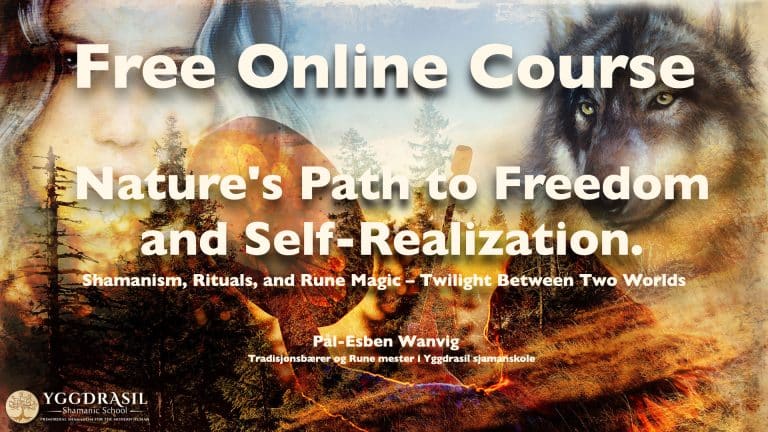
Nature’s Path to Freedom and Self-Realization
Curious about what primordial shamanism really is, behind the mystique and the misconceptions? In this short online course I tell the story of my own path from skeptical engineer to teacher of primordial shamanism, and give you a first introduction to what I teach: what shamanism and primordial shamanism are and are not, how rituals and rune magic are used in practice, and why the longing for growth matters so much for a good life.
The lessons are recorded in Norwegian; the English version will be ready in November or December 2026. Leave your email on the course page, and I will tell you when it is.