

Free Yourself Through Forgiveness! Learn the 7 Pillars of True Forgiveness
Among the most valuable skills a person can develop on their journey towards better health, quality of life, and meaning, is the ability to completely forgive – both yourself and others – because it leads to true freedom! In this article, you will gain a deeper understanding of the true nature of forgiveness, and learn why and how you can forgive both yourself and others from the depths of your heart.
The inability to forgive is arguably the most significant cause of numerous conflicts, hostilities, acts of war, relationship breakdowns, and loss of life’s joy. If we had been taught this crucial skill during our elementary education, both our personal lives and the world around us could have been substantially different.
In this article, you will discover why and how absolutely everything can be forgiven, along with the essential distinction between forgiving and accepting past events. Forgiveness is solely for your own benefit – and it has the power to set you free. Therefore, my recommendation is that you become a master in the art of forgiveness!
When we struggle to forgive, we expend enormous amounts of energy in our daily lives. We carry around irritation, bitterness, frustration, and hatred towards people who have caused us pain – but is it really worth letting others have such control over our thoughts, feelings, health status, and quality of life?
One of the most valuable skills a person can acquire on the path to optimal health, joy, and meaningful existence is the ability to completely forgive both themselves and others – for this is the key to our freedom!
Does this mean I must approve and accept everything others have done to me? Absolutely not! In this article, we delve deep into the subject to provide you with fundamental insights, practical tools, and motivation so you can learn to forgive both yourself and others from the depths of your heart.
Free yourself by forgiving
Forgiveness is a skill that we all must learn. Few are born with the natural ability to forgive, and most of us haven’t received guidance on this through our upbringing or education. There is only one way to know for certain if forgiveness has truly occurred: how you interact with the person in your daily life (we’ll return to this point later).
Attempting to forgive through sheer willpower or self-discipline usually fails because forgiveness often involves intense emotional responses. “Pulling yourself together” or “swallowing your pride” rarely provides solutions – it typically leads to increased stress, internal tension, and suffering.
Since there are many misconceptions about what forgiveness really means, it’s crucial to understand both what forgiveness entails, what it is not, why it’s necessary to forgive everything, and which methods actually work in practice.
My experience shows that many people dive into various techniques without a clear understanding of what they’re actually doing – or why. Additionally, they lack insight into what needs to be in place before one becomes capable of forgiving completely and wholly.
This lack of insight also leaves them without proper criteria to evaluate whether a forgiveness process has been truly successful. Therefore, we’ll begin by examining the fundamental principles before moving on to specific methods that can create lasting results.
A Classic Case
I am a perfect example of what happens when one lacks both insight and tools for forgiveness. Before my burnout in 2003, which nearly cost me my life and led me to the shamanic path, I harbored resentment towards many people who had done things I didn’t like: bosses, colleagues, partners, neighbors, friends, family members, and so on.
When someone had hurt me, I expended considerable energy managing the negative thoughts that constantly surfaced in my mind. I can’t even calculate how many months or years of my life I’ve wasted allowing others to partially control my thoughts and emotions – because that’s exactly what we do when we’re unable to forgive.
I particularly remember the trauma I experienced in my first serious relationship, where we were living together. We had been together for almost three years, gotten engaged, and moved into an apartment that we renovated together. One day, she returned from a trip to Paris and informed me that she had found another man and wanted to leave me. For me, this came as a complete shock, like a bolt from the blue. I was left profoundly shaken by the experience.
About three months after my next partner moved out, I received two letters from a law firm. She had sued me for everything I owned, both personally and professionally. I nearly had a heart attack when I read those letters – how could she do this! The legal fees alone would have bankrupted me.
My hatred and resentment toward both of them continued to influence my life until I was introduced to the concept of forgiveness in 2004. My teacher at the time explained that I would unlikely find happiness with a new partner unless I learned to forgive my previous partners for the ways they had hurt me.
“How can you give your heart to another person when you’ve built a steel wall around it?” he asked me. That marked the beginning of my journey into the art of setting myself free through forgiveness. I must honestly admit that it was challenging at first. But it was worth it! Without this transformation, I couldn’t have lived such an exceptionally happy life with my wife Maria today.
Why is forgiveness so important?
Most people carry varying degrees of emotional burdens that consume significant energy because we struggle to forgive ourselves, others, or situations we’ve experienced. In reality, our inability to forgive only affects ourselves. We might harbor hatred toward someone for their actions, but this hatred ultimately only damages our own well-being.
When you can’t forgive yourself, you create internal sabotage programs that work against your health and happiness. When you refuse to forgive others, you construct walls around yourself and your heart, leading to loneliness and stress.
By forgiveness, I don’t mean accepting another person’s actions. We forgive to release ourselves and become free. The more resentment and hatred we carry, the more resources we waste serving no purpose.
Forgiveness through sheer willpower is extremely challenging because strong emotions are involved. Achieving complete forgiveness from the depths of our hearts is particularly difficult through conscious will alone, as it has limited access to our subconscious mind where most of these experiences are stored.
Forgiveness is mainly for your own benefit
Forgiveness is fundamentally for your own benefit, not for others – it’s the only way you can create inner peace. By allowing yourself to remain hurt because of others’ actions, you surrender a portion of your life’s power to them.
Your negative thoughts and feelings toward those you resent influence how you think and feel about life in general, and indirectly affect your health. Thus, the people you cannot forgive continue to exercise destructive control over your life.
The only person this affects is you! By learning to forgive, we reclaim power over our own lives. We stop allowing those who have hurt us to dictate how we think, feel, react, and behave toward ourselves and others in our lives.

Foundation for genuine spiritual development
Forgiveness heals our own hearts while simultaneously liberating us from the past, allowing us to live fully in the present moment. This forms an essential foundation for authentic spiritual development that cannot be achieved without mastering the art of forgiveness, as the heart serves as the gateway to our soul and essence.
For each person we manage to forgive from the depths of our heart, we release a tremendous burden that has been blocking our path to wholesome health, purpose, and joy in life. You’ve likely experienced firsthand the sensation when such a weight lifts from your heart after forgiving your partner or friend for something they’ve said or done that hurt you.
Forgiveness means that love, not fear, becomes the driving force behind our decisions and actions. Through forgiveness, humans restore the unity between themselves and the creative force, which is a prerequisite for spiritual enlightenment and spiritual self-realization.
The proof of forgiveness
There is no objective measure that can be used to determine if forgiveness was successful, as our heartand subconscious mind are incredibly complex entities.
However, there is one measuring tool that is 100 percent reliable: your daily life. When you encounter someone you’ve attempted to forgive, you’ll quickly notice whether you’ve truly forgiven them or if the forgiveness was merely superficial.
If you feel uncomfortable, attacked, stressed, or “small,” you still have work to do in the forgiveness process. Another sign of incomplete forgiveness is frequently thinking about the person or situation, which triggers negative emotions and thoughts. Often, internal dialogues emerge where you imagine what you want to say and how the other person might react. These scenarios typically involve you emerging as the “winner” or walking away with your head held high, or finally achieving justice.
When you have successfully forgiven someone, you can encounter them and exchange a few words without feeling stressed or uncomfortable. Of course, you may have decided not to maintain close contact with them, but this should be a decision made freely without any pressure or coercion.
Should I forgive everything?
Many ask me whether we should forgive everything and everyone who has hurt or wronged us. The answer is YES – but this doesn’t mean we should accept or condone everything others have done to us!
It’s crucial to distinguish between two different ways of being hurt or damaged: objective and subjective.
Objective wounds: Objective wounds occur when you’ve been hurt in a tangible way, such as through physical violence, bullying, robbery, abuse, torture, or deception. An easy way to determine if you’ve been objectively hurt is to examine reality by describing exactly what happened using your five senses. This approach helps you use clear language that precisely defines what occurred objectively – not what you feel or believe happened.
When you’ve been hurt or damaged in an objective way, you should absolutely not accept the action that was committed! You need to identify what measures must be taken to prevent this from happening again. In such cases, it’s advisable to seek help from a professional (psychologist, therapist, coach).
However, if you stop at this point, you’re still carrying the often enormous burden of resentment, grudge and hatred toward those who hurt you. The only person suffering from this is you. Forgiveness in such cases means setting yourself free. It does not mean accepting the action!
On one hand, it’s about implementing measures to ensure this cannot happen again. On the other hand, it’s about forgiveness to liberate yourself from the burden you’re carrying. This dual approach allows you to both protect yourself and heal emotionally, creating a path forward that honors both your safety and your need for inner peace.
Extreme Torture
I find studying biographies fascinating – it helps put my life and personal challenges into perspective. A while ago, a documentary aired here in Germany about a young girl who endured the most inhumane torture at the hands of Nazi Germany’s infamous doctor Josef Mengele.
After being subjected to the most grotesque human experiments for several years, she managed to escape. Life afterward became a true nightmare. Living a normal life proved impossible, as she couldn’t release herself from these experiences. This affected all her thoughts, emotions, and actions towards herself and others. In the interview, she appeared as an elderly woman with gray hair and a gentle yet determined voice:
“My life transformed a few years ago when I realized that the people who had hurt me still maintained power over my life and were the primary reason why I continued to have an unbearable existence even after decades of freedom. The turning point came when I understood that the only thing they couldn’t control was my forgiveness of them. Forgiveness truly set me free. It allowed me to feel and think normally again, live happily with my partner, and enjoy the smiles and laughter of my grandchildren…”
A similar narrative emerges from the work of psychologist Dr. Viktor Frankl, who in his book Man’s Search for Meaning describes how he survived the Holocaust by affirming life even under inhumane conditions.
The only person who suffers from refusing to forgive is the one who has been hurt. When people in such extreme situations manage to forgive, it provides hope for everyone. However, no forgiveness is possible without first using free will to make the choice to forgive. This marks our first step toward setting ourselves free!
Watch Eva Mozes Kor tell her profound story.
I recommend watching the entire video (15 min.) You can find more information about Eva Mozes Kor here.
Subjective Wounds
Subjective wounding occurs when a person’s ego-based values are challenged—whether through criticism of their self-constructed identity, their negative self-image, or their worldview. Most people try to conceal their fragile or distorted self-image from others, and when this protective façade is threatened by sincere or probing questions, it can feel like an emotional injury.
Examples of this include accusations of stupidity, ugliness, laziness, or incompetence. Because the ego is fundamentally rooted in fear, any attack on its value system is experienced as an existential threat. This often triggers powerful emotional reactions such as irritation, anxiety, hatred, resentment, envy, and similar responses.
The greatest challenge in initiating a forgiveness process when the ego feels subjectively wounded is its strong defensive mechanisms and deep fear of change. Without experience in forgiveness work—or without proper guidance—the process can become lengthy and difficult, as the ego resists anything that threatens its established identity.

Misconceptions about Forgiveness
“If someone strikes you on the right cheek, turn to them the other cheek also” (Matthew 5:39) is one of the religious doctrines that has permeated Western culture so deeply that many people unconsciously adopt victim roles. In practice, this verse is often interpreted as a call to silently endure violations of our dignity and integrity, in the hope that the offender will eventually understand our passive, pacifist message and change their behavior.
But if this does not happen, we end up sending an entirely different message: You may repeat your behavior without consequences. What you did is acceptable. And for many, the next violation only becomes worse.
Forgiveness is not the same as “turning the other cheek.” Turning the other cheek implies giving others permission to treat you however they want. True forgiveness does not require you to tolerate abuse, accept harmful behavior, or diminish your own boundaries.
Forgiveness does not mean:
- acting as if nothing happened
- accepting boundary violations
- remaining in the victim role
- forcing yourself to believe that the person who hurt you is inherently good, and they surely had valid reasons for their actions against you
- gritting your teeth and staying silent about your experiences
- taking the blame for what happened
- assuming that “it had to be this way”
- thinking that the responsibility lies equally with both parties
- believing that “one simply has to learn to endure it“
- forgetting the incident and ignoring your own feelings (pretending nothing happened)
Many people I meet are unwilling to forgive others because they believe forgiveness means consenting to what happened. This is a major misunderstanding that hinders the process of setting yourself and your heart free.
What About Revenge?
When someone wrongs us, the temptation for revenge often becomes overwhelming. With “An eye for an eye and a tooth for a tooth” (Matthew 5:38), the biblical God encourages vengeance. However, revenge has never yielded positive outcomes – while it might provide momentary satisfaction, it invariably leads to long-term suffering.
My wife Maria worked for several years as a social pedagogue with serious criminals, including murderers. One of her clients had murdered his daughter’s abuser and paid the price with 20 years in prison. She asked him if it was worth it.
“I lost the best years of my life, I only saw my daughter during occasional visits, and my marriage fell apart. I sacrificed everything dear to me because of my desire for revenge.”
None of her clients ever found happiness through revenge. Similarly, I’ve never encountered anyone who achieved happiness through vengeance, as it consistently creates significant emotional and karmic burdens.

Forgiving Yourself
Being able to forgive yourself is an essential foundation for truly forgiving others. The aspects of ourselves we reject, suppress, or judge inevitably shape — and often complicate — how we relate to the people around us.
At times, it can be difficult to recognize what we actually need to forgive ourselves for. In such cases, a gentle starting point can be to forgive yourself simply for being in the wrong place at the wrong time, or for not knowing then what you know now. When self-forgiveness takes root, the heart — our heart chakra — opens in a profound way, making every other form of forgiveness far more accessible.
However, authentic self-forgiveness can be challenging without first exploring the layers of guilt, shame, fear, and the moral or religious belief systems that shaped how we learned to judge ourselves. Only by bringing these patterns into awareness can self-forgiveness truly unfold.
The Consequences of Forgiveness
You do not forgive for the sake of the one who hurt you. You forgive for your own wellbeing — because carrying hatred, resentment, or bitterness harms you, not the other person. In this way, every genuine act of forgiveness is an expression of profound self-love. Only through forgiveness do you show a sincere intention to treat both yourself and others with kindness, compassion, and integrity.
Here are some of the most important consequences of true forgiveness:
- Greater joy and vitality. Forgiveness reconnects you with a deeper zest for life and a renewed ability to experience genuine pleasure.
- Healing of emotional pain. Old wounds begin to dissolve when resentment is released.
- Healing of anger. The fire of anger gradually transforms into clarity and inner calm.
- Freedom from the urge for revenge. Forgiveness dissolves the destructive impulse to “even the score.”
- A powerful antidote to conflict and war. On both personal and global levels, forgiveness is one of the most effective tools for preventing and resolving conflict.
- A deeper opening of the heart. Through the heart chakra and its capacity for love, forgiveness allows you to live with more passion, joy, and emotional openness.
- Reduced dominance of the ego. Forgiveness weakens the ego’s illusions that status, wealth, and power are the paths to happiness.
- Support for physical health. Forgiveness can help maintain a healthy heart and support healing processes when illness is present.
- Benefits to vital organ systems. The circulatory system, kidneys, lungs, and large intestine may all benefit — a principle reflected in the fire, wood, and metal elements in Traditional Chinese Medicine.
- Strong, lasting relationships. In all relationships, people inevitably hurt each other at times. Without forgiveness as a living practice, unresolved resentment accumulates and can eventually destroy even the strongest bond.
- Greater ability to care for oneself. Those who forgive themselves can better support their own wellbeing, success, and health. Those who don’t subconsciously invite repeated problems.
- Essential for teamwork. Effective collaboration is impossible without mutual forgiveness.
- Healthy families depend on forgiveness. A family can only remain whole over time when forgiveness is a natural, ongoing practice.
What happens when I don’t forgive?
The consequences of withholding forgiveness are far-reaching and often far more damaging than we realize. Here are some of the most significant effects:
- You suffer — continuously. Unforgiven wounds drain your energy and keep you tied to the past.
- The people around you suffer. Pain that is not healed tends to spill over onto partners, children, colleagues, and friends.
- Your mental and physical health declines. Unresolved resentment fuels anxiety, depression, tension, and inflammation.
- Your joy and zest for life are suppressed. It becomes difficult to feel genuine happiness, passion, or enthusiasm.
- A persistent stress response weakens your immune system, making you more vulnerable to illness and chronic conditions.
- Your personal and spiritual development becomes blocked. Growth is impossible when the heart remains closed and weighed down by old hurts.
In reality, there are no valid reasons not to forgive — except the ego’s fear of change and its desire to cling to the familiar.
And the only person who can prevent you from forgiving… is you.
Forgiveness in Practice
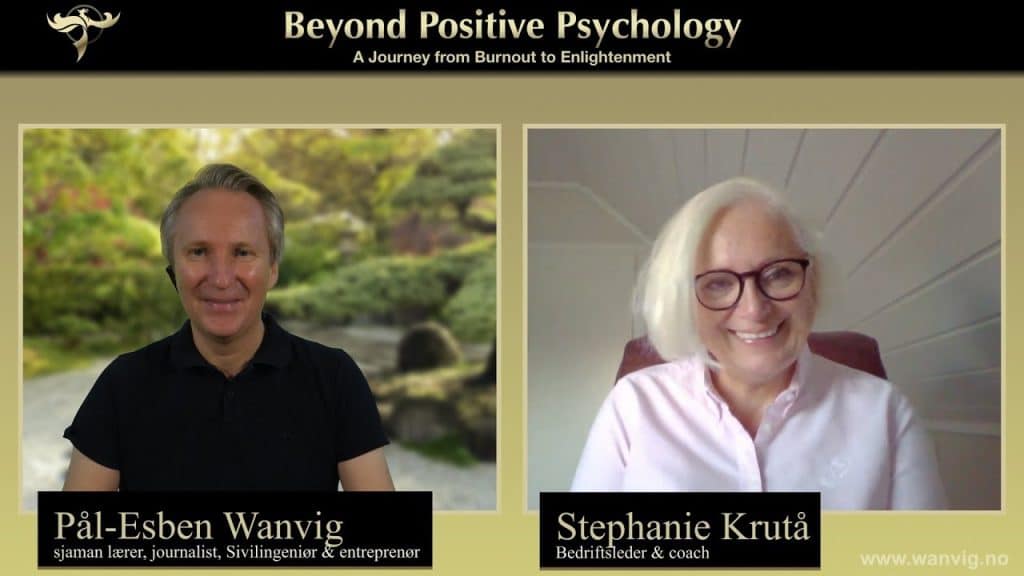
A few years ago, Stephanie endured one of the most unimaginable experiences a person can face: She watched her husband collapse and die right in front of her — only moments after they had reached the summit of a mountain they had climbed together. The shock was overwhelming. In the aftermath, her inner world froze completely. For four long years, she lived emotionally paralyzed — without joy, without drive, unable to move forward.
In this interview, Stephanie speaks with striking honesty about how she became trapped in grief, shock, and trauma — and how she slowly found her way back to life. A turning point came when she learned to release not the memories, but the pain. Through the deep, heart-centered work we did together, she discovered how the transformative force of forgiveness can free a soul bound by sorrow.
What had imprisoned her for years began to dissolve. And within just a few months, she felt her spark return. Her joy, energy, and motivation gradually awakened again — like light breaking through after a long winter.
Stephanie’s story is a powerful reminder of how genuine forgiveness can open a doorway to healing, inner peace, and a renewed life. It shows that even in the darkest moments, the heart holds a pathway back to wholeness. Read the interview here.
Is there a shortcut?
For a long time, I tried to forgive my former partners using nothing but willpower and mental discipline. The results were, unsurprisingly, minimal. Through applied kinesiology, it’s actually possible to test whether true forgiveness has taken place – and in my case, it became clear that my “forgiveness” had barely scratched the surface.
The reason is simple: Forgiveness cannot be forced by the mind when the heart is still wounded.
The emotional pain stored around the heart – disappointment, betrayal, grief, fear – cannot be pushed away, reasoned away, or commanded away. You cannot open your heart by tightening your grip.
What eventually transformed my life was a deep, heart-based shamanic method for forgiveness – a method that anyone can learn (see below). This is not a mental exercise but a profound energetic process that dissolves the emotional knots holding us back, layer by layer.
As an engineer, I approached this with healthy skepticism. A “shamanic method” for forgiveness sounded abstract and unscientific to someone trained in logic and measurable outcomes.
Yet to my astonishment, after only three to four weeks of practicing ten minutes a day, the emotional weight I had carried for years began to lift – fully and completely.
The experience was overwhelming.
It felt as if a heavy armor I didn’t know I was wearing simply fell off. Today, when I think back on these people and the past events, there is no anger, pain, or resentment – only gratitude for the lessons that shaped me. I learned to separate actions from the person behind them, and to understand the true liberating power of forgiveness.
This breakthrough ignited something in me. I decided to initiate a systematic process of forgiving every person who had ever hurt me – including my parents.
Phase 1, “Liberate Yourself with the 7 Pillars of Forgiveness” (see below), I completed with the help of a coach.
Phase 2, using the shamanic forgiveness method, I did on my own – ten minutes a day, steadily, consistently.
The results were remarkable: I became freer. More balanced. More joyful. More alive. With every layer of emotional weight released, my inner strength grew. And ultimately, the biggest realization emerged:
Forgiveness was never about them – it was about reclaiming my own freedom.
In my work as a shamanic teacher and guide, forgiveness has become one of the core pillars of what I share. I offer all my students and clients the opportunity to learn this method – a practice that can be mastered in just a few hours through an online course – because time after time, I witness how profoundly it changes lives.
The feedback I receive is often deeply moving: reconciled families, healed wounds, reduced anxiety, renewed inner peace, and a completely new outlook on life.
The value of true forgiveness is immense.
It is one of the most powerful keys to a happy and liberated life.
Liberate Yourself with the 7 Pillars of Forgiveness
My advice is simple: become skilled at freeing yourself through the art of forgiveness. At the beginning, the process may feel slow or unfamiliar. Like any new discipline, it can be invaluable to receive guidance from an experienced mentor – whether a therapist, psychologist, coach, or spiritual teacher – who can help you navigate the deeper layers of the journey.
The forgiveness work is structured in two essential phases:
Phase 1: Awareness and Insight, where you build a foundation of understanding, followed by
Phase 2: Forgiveness, where the actual transformational work takes place.
Phase 1: Awareness and Learning
In the first phase, the focus is on clearly defining what has occurred, implementing measures to prevent recurrence, and gathering insights from your experience.
1) Commit to forgiveness! Everything begins with making a conscious decision to forgive using your free will. Understanding what forgiveness truly means and why it’s crucial makes this decision much easier. With practice, it becomes second nature!
2) Objective description: Determine whether you’re dealing with objective or subjective wounds by describing the events clearly and precisely. Use your five senses. Avoid abstract language and words like I feel, believe, wish, etc.
3) Minor or serious? Establish whether you’re dealing with minor issues and surface-level matters or a serious, deeply impacting event. You can handle everyday minor incidents independently, but serious events require professional guidance and support.
4) Objective or subjective wound?
Objective wounds: Can the situation or incident be resolved? If not: What measures need to be implemented for your protection?
Subjective wounds: Was there intentional harm? Is the other person willing to maintain a harmonious relationship moving forward? Which negative self-image perceptions were triggered? How can these be healed?
5) Allow yourself space: When you’ve been hurt, it’s crucial to care for yourself as a wounded individual. Give space to your pain and fully experience what has happened. Accept that you’ve been hurt, as this acceptance enables you to begin the forgiveness process. By ignoring what has occurred, we deny ourselves this opportunity for healing.
6) Extract wisdom. Transform your experiences into stepping stones for personal growth. Even the darkest moments in our lives can yield valuable insights and positive outcomes, much like my own journey after a near-fatal burnout in 2003. It’s enlightening to study biographies of individuals who have transformed their deepest traumas into powerful catalysts for positive change. Take inspiration from remarkable figures like Eva Mozes Kor and Viktor Frankl, who turned their profound suffering into beacons of hope and transformation.
Phase 2: Forgiveness
7) Choose a forgiveness method that truly matches the depth of the wound you carry.
There are many approaches available—such as NLP, systemic constellations, and various shamanic methods for deep, heart-based forgiveness. Whichever method you choose, it must be able to reach into the deepest layers of your heart, your emotional patterns, and your karmic structure. The deeper the wound, the more essential it becomes that your chosen method can transform it at a profound level.
Methods that work only on the conscious or subconscious mind can provide relief, but they have clear limitations. After many years of experience, I have seen that the most comprehensive and lasting results arise when talk therapy is combined with targeted shamanic energy work—because transformation then occurs simultaneously in the psyche, the body, and the energy system.
And remember this: The only true proof that forgiveness has succeeded is how you relate to the person you are forgiving—in everyday life, and in your inner world.
When you can think of or meet this person without tension, without bitterness, without inner resistance, and without your heart contracting—
then you have truly forgiven.
Only then are you free.
Online Course: Forgiveness from the Depths of Your Heart with The 4 Shamanic Heart Guides
In this online program, you will learn an exceptionally powerful method of forgiveness rooted in The 4 Shamanic Heart Guides — a deep, heart-centered healing approach activated through an energetic initiation ritual with the teacher. From the very first day, the method begins to create measurable, transformative shifts in your emotional and spiritual well-being.
This course gives you a clear and grounded understanding of what genuine forgiveness truly is, why everything can be forgiven, and how you can release the emotional burdens that have weighed you down for years. You will discover how the heart functions as our “third brain,” how unresolved trauma can be healed at its roots, and how the 4 Shamanic Heart Guides help you restore both your inner harmony and your relationships with others.
This training is designed for those who wish to open the heart’s inner treasure chamber and experience the profound freedom that comes from forgiving from the deepest layers of the heart.
Forgiveness from the Depths of Your Heart with The 4 Shamanic Heart Guides is part of the online course Awaken Your Inner Primal Shaman: An Introduction to Deep Primordial Shamanic Healing and Nature’s Healing Rhythms. (coming soon..)


